
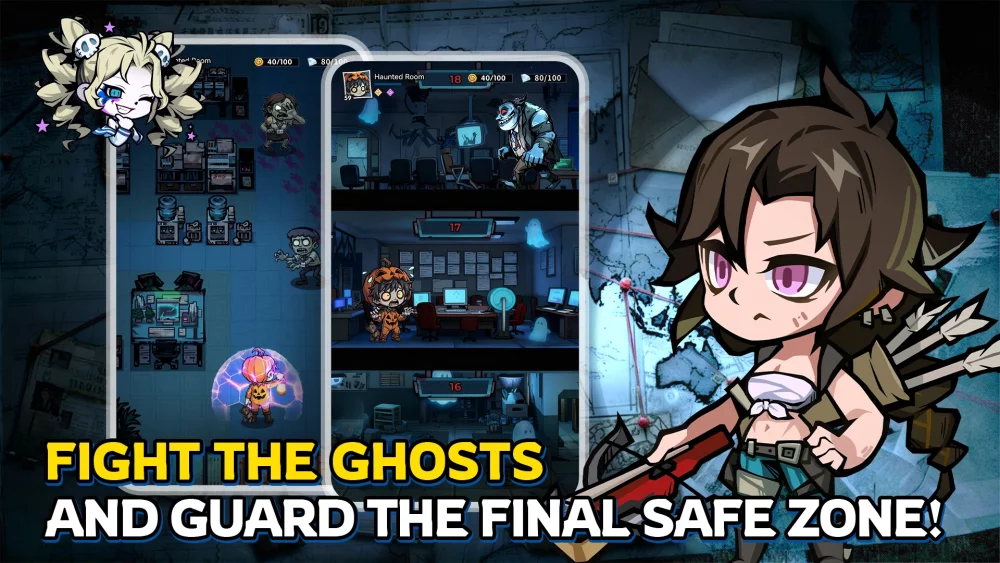
Surviving and thriving in Knock Knock: Room Defense requires more than just raw firepower; it demands a disciplined approach to resource management and strategic positioning. In a game where progression walls can appear suddenly, the difference between stalling and scaling often comes down to how you spend your currencies during the critical first 14 days. This guide provides an authoritative framework for new players to build a resilient account, avoid common traps, and prepare for the mid-game transition.
The 14-Day Foundation: Strategic Resource Hoarding
The most common mistake new players make in Knock Knock: Room Defense is the "instant gratification" cycle—spending premium currency as soon as it is earned. During your first two weeks, your primary goal is to establish a "stockpile mentality."
- Avoid Early-Game Pulls: While standard banners are available, wait for rate-up events or "Limited Time" banners that offer higher drop rates or guaranteed pity systems for top-tier heroes.
- Currency Prioritization: Focus on hoarding premium gems and summon tickets. Only spend these when you can hit a "pity" threshold or when an event provides bonus materials for spending.
- Shop Efficiency: Not all shop items are created equal. Prioritize daily gold-bought materials that are essential for gear upgrades. Avoid using premium currency on basic consumables that can be earned through daily gameplay.
By resisting the urge to summon for marginal power gains early on, you ensure that when the game’s meta shifts or high-difficulty boss encounters arrive, you have the resources to pivot your lineup immediately.
Strategic Hero Investment: Quality Over Quantity
In Knock Knock: Room Defense, spreading your resources across every hero you unlock is a recipe for stagnation. To push through difficult stages, you must adopt a "Core Carry" strategy.
Identifying Your Core Team
Focus on a core group of 3–5 heroes who provide distinct utility:
- The Tank/Wall: Heroes capable of holding breach points and absorbing damage.
- The Crowd Controller (CC): Essential for slowing down waves and grouping enemies for area-of-effect (AoE) damage.
- The DPS Carry: Your primary damage dealer. This hero should receive 80% of your upgrade materials, gear, and experience investment.
Why this works: A single high-level hero will consistently outperform five mediocre, low-level heroes. By funneling resources into a dedicated core, you maximize your combat power (CP) relative to the difficulty of the current stage, allowing you to bypass bottlenecks that stop players who level indiscriminately.
Mastering Room Defense Mechanics
Success in Knock Knock: Room Defense is not just about stats; it is about spatial awareness. As a tactical strategy game, the layout of your room is your most effective tool for survival.
- Choke Points: Identify the spawn paths of enemies. Position your tank heroes at the entry points of your room to force enemies into a single file, making them easy targets for your AoE damage dealers.
- The "Kite" Strategy: If a boss is too strong to face head-on, use your faster units to draw aggro away from your primary damage dealers. Moving your units during a breach can change the enemy AI's pathing, buying you precious seconds of DPS time.
- Failure Analysis: When you lose a stage, don't just retry. Analyze the breach point. Did your heroes die because they were overwhelmed by numbers, or because they were focused on the wrong target? Shift your positioning, adjust your hero formation, and try again.
Navigating the Progression Curve
The game’s progression is designed to test your patience. You will inevitably hit "walls" where enemy levels significantly outpace your own. When this happens, stop trying to brute-force the level.
The Daily Routine for Growth
- Dailies First: Always complete your daily quests. They are the most consistent source of progression materials.
- Resource Farming: Utilize sweep functions or manual farming on stages that provide gear upgrade materials.
- Experimental Runs: Use your remaining stamina to test different hero combinations in lower-level stages. This helps you understand synergy without risking your progress in higher chapters.
- Gear Upgrades: Ensure your primary carry is equipped with the best available gear. A well-geared hero can carry a team through stages they would otherwise fail.
Avoiding Common Pitfalls
- The "Future-Proof" Trap: Don't obsess over "future" content you haven't unlocked yet. Focus on the immediate mechanics of your current chapter. By mastering the fundamentals—positioning, ability timing, and resource conservation—you will naturally be prepared for whatever comes next.
- Neglecting Synergy: Always check your hero skills. Some heroes provide buffs to specific unit types (e.g., increased defense for tanks). A team that works together is always more effective than a team of high-stat heroes with no synergy.
- Ignoring Shop Discounts: Check the shop daily. Often, there are heavily discounted upgrade materials that provide massive long-term value. Buying these early saves you thousands of stamina points later in the game.
Conclusion: Building for the Long Term
The first 14 days in Knock Knock: Room Defense are about setting the rules for your account's success. By hoarding resources, focusing your investments on a core team, and treating room positioning as a tactical puzzle, you will find that you can progress significantly further than players who rely on luck or impulsive spending.
Remember, this is a game of efficiency. Every resource saved today is a strategic advantage tomorrow. Focus on your local goals, master the room defense mechanics, and you will find yourself well-positioned for the mid-game and beyond. Stay disciplined, observe enemy patterns, and treat every failure as a lesson in how to better defend your room.

Free Knock Knock: Room Defense Codes
Current active codes and how to redeem them.

Sarah Williams
Sarah specializes in RPG and collection games, explaining team building, character growth, and beginner-friendly ways to avoid expensive early mistakes.
COMMUNITY
Player Comments
39 players commented on this guide.
I tried this today and it worked better than my old setup.
I wish I had read this before upgrading the wrong thing.
The explanation is clear, especially for beginners.
This helped me understand resources much better.