
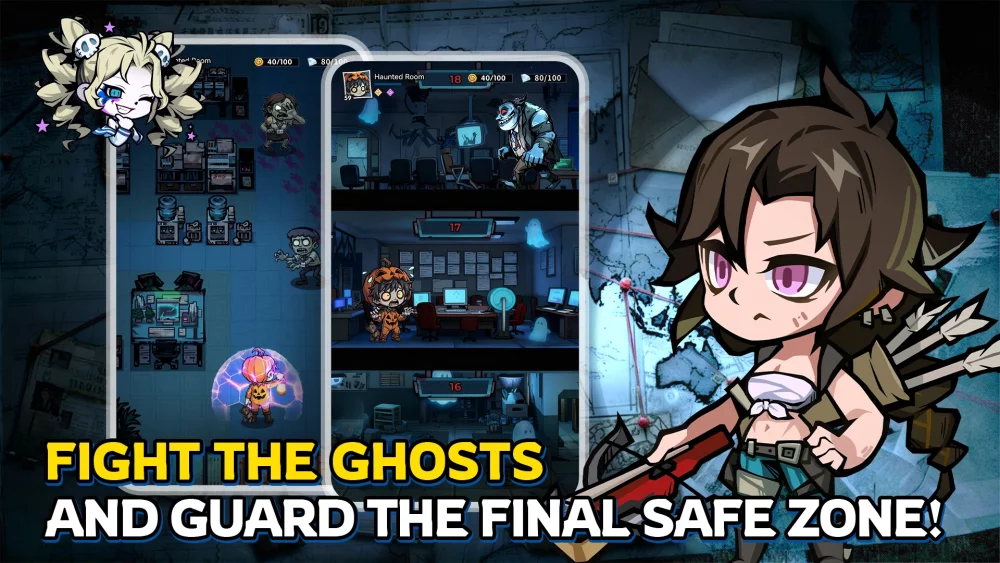
To dominate the current meta in Knock Knock: Room Defense, players must prioritize high-scaling defensive units and capitalize on time-sensitive resource injections. Success in this tactical strategy game relies on managing the balance between door durability, gold generation, and hero-specific ability cooldowns. This guide provides the definitive 2026 framework for hero selection, investment priorities, and resource management to ensure your room remains unbreached during late-game survival challenges.
The 2026 Hero Meta: Understanding Performance Benchmarks
In Knock Knock: Room Defense, the hero meta is defined by "stalling potential"—the ability to delay ghost breaches while simultaneously boosting your economy. As of 2026, the game’s scaling has shifted to favor heroes that mitigate damage to the door while providing utility that frees up your focus for room upgrades.
S-Tier: The Meta-Defining Heroes
These heroes are essential for pushing into high-difficulty stages. They generally provide either an area-of-effect (AoE) slow or a massive gold-generation multiplier.
- The Architect (Gold Specialist): Provides a passive income boost that allows you to reach high-level door upgrades 20% faster than standard characters.
- The Warden (Crowd Control): Features an active ability that freezes ghosts at the door, buying critical seconds for your defenses to regenerate.
A-Tier: Reliable Support
These heroes are highly effective when paired with specific room layouts. They are less versatile than S-tier units but provide reliable performance in standard and survival modes.
B-Tier and Below: Niche Utility
These heroes typically require significant investment to reach the performance levels of base-level S-tier units. Use these only if your specific room configuration demands their unique, narrow skill set.
Strategic Hero Investment Priorities
A common mistake in Knock Knock: Room Defense is spreading upgrade resources across a wide roster. To maintain an edge, you must adopt a "Tall Investment" strategy. Focus your gold and shards on a single primary hero who can carry your defensive line through the mid-game.
Selection Criteria for Upgrades
When deciding which hero to level up, evaluate them against these three pillars:
- Skill Scaling: Does the hero’s ability improve significantly in duration or damage reduction at higher levels?
- Resource Synergy: Does the hero work well with your preferred tower/turret setup? If you use high-damage, low-fire-rate turrets, you need a hero that offers crowd control to keep enemies grouped.
- Versatility: Can this hero hold their own in the "Infinity Train" mode, or are they only useful in base-building campaigns?
Maximizing Resources with Gift Codes
Gift codes in Knock Knock: Room Defense act as vital "meta-accelerators." Developers release these strings during events to help players bypass the initial resource grind.
How to Effectively Utilize Codes:
- Monitor Official Channels: Codes are often hidden in community Discord servers, developer social media posts, or seasonal update logs.
- Input Timing: Always input codes immediately after a new patch drops. Because these codes often have usage caps, early adopters gain a massive advantage in upgrading their starter gear.
- Strategic Spending: Use the diamonds or materials acquired from gift codes specifically for "Enduring Upgrades"—such as permanent door health buffs or base-level income increases—rather than temporary consumables.
Mastering Room Defense Mechanics
Beyond your hero choice, your room management determines your survival. The game’s difficulty is non-linear, meaning enemy health pools will jump significantly every five stages.
Essential Strategy: The "Stall and Scale"
- Early Game (Stages 1–10): Focus entirely on gold generation. Do not over-invest in door health early if your income is low; get the upgrades that increase your passive interest.
- Mid Game (Stages 11–30): Begin rotating your hero's active abilities to align with ghost "rush" waves. Do not waste abilities on lone ghosts.
- Late Game (Stages 30+): At this point, your door will take damage. Use your hero’s CC (crowd control) ability to reset the ghost attack animation. Each reset provides an extra window for your turrets to deal damage.
Common Mistakes to Avoid
Even with high-tier heroes, poor tactical execution will lead to failure. Avoid these common pitfalls:
- Panic Upgrading: Don’t upgrade your door under pressure. Wait for a lull in the ghost activity to optimize your spending.
- Ignoring Passive Bonuses: Always check the passive effects of your equipped gear. Sometimes, a lower-tier hero with a +10% attack speed passive is better than a high-tier hero with no synergy.
- Over-relying on Tier Lists: Remember that Knock Knock: Room Defense is a game of synergy. A Tier-A hero who synergizes perfectly with your current room layout will always outperform an S-tier hero who is fighting for space in your build.
Final Decision Making: When to Reset or Push
If you find yourself consistently failing at a specific stage, stop pushing. Use the "Reset" mechanic if available, or farm lower-difficulty stages to grind out the necessary shards to level your primary hero. Progress in Knock Knock: Room Defense is a marathon, not a sprint; by consistently applying these 2026 meta-strategies and maintaining your resource stockpile, you will significantly reduce the time required to clear even the most challenging boss encounters. Always prioritize upgrading your hero’s active ability first, as this is the most reliable tool in your kit for clutch survivability.

Free Knock Knock: Room Defense Codes
Current active codes and how to redeem them.

James Brown
James focuses on Android gaming on PC, emulator setup, controls, performance tuning, and practical troubleshooting for longer play sessions.
COMMUNITY
Player Comments
92 players commented on this guide.
Good guide for Knock Knock: Room Defense players. The heroes part was useful.
Can you add more details about heroes in a future update?
This guide answered the exact question I had.
This saved me time in the early game.