
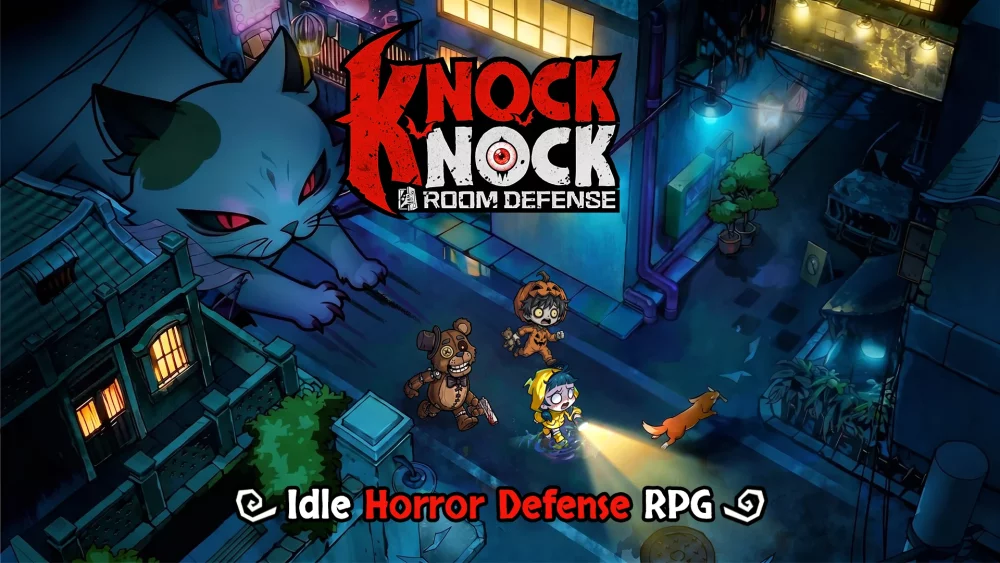
When engaging with a tactical strategy game like Knock Knock: Room Defense, the integrity of your game client is the foundation of your success. Players often encounter unofficial, "beta," or modified versions of games that promise faster progression or unlocked rosters. However, these experimental builds frequently lack the polished balancing, complex AI logic, and robust resource management systems that define the official experience. To truly master the high-difficulty stages of Knock Knock: Room Defense, you must ensure your gameplay takes place in a stable, developer-supported environment. Playing on unauthorized builds not only risks your save data but also warps your understanding of the game's core meta, leading to "false expertise" that fails when applied to the official game.
The Danger of "Reskin" and Experimental Builds
Experimental versions of Knock Knock: Room Defense often leverage the game's aesthetic to attract players, but they rarely replicate the functional depth of the original. These builds are frequently "proof-of-concept" projects or unauthorized mods that focus on visual spectacle rather than the intricate hero-positioning and room-reinforcement mechanics required for survival.
If you are playing a version that feels like a simplified reskin, you are likely missing out on the granular decision-making loops that make the official game rewarding. To determine if you are playing an authentic build, watch for:
- UI Inconsistencies: Look for stuttering, incorrect font rendering, or HUD elements that appear "stretched" or misaligned.
- Placeholder Logic: If ability descriptions read like generic text or if certain UI buttons are non-responsive, the build is likely an unfinished internal test that lacks the logic gates of the full game.
- Core Loop Integrity: The primary objective in Knock Knock: Room Defense is balancing resources against incoming breaches. If you find that waves lack rhythm or that your room defense feels disconnected from your hero placement, you are likely playing an incomplete version.
Why Inconsistent Resource Scaling Ruins Progression
Resource management is the backbone of Knock Knock: Room Defense. The official game is calibrated so that every gold, diamond, or energy expenditure is a high-stakes decision. Unofficial versions frequently disrupt these metrics, either by inflating currency drops or rendering secondary resources useless.
While "infinite" resources might seem beneficial for testing, they destroy the tactical learning curve. In the official game, you must learn to prioritize room upgrades over hero summons during specific waves. If an unofficial build grants you excess resources, you bypass the need to master these timings. When you eventually transition to the official version, you will find yourself struggling because you never developed the fundamental habit of efficient resource allocation.
Evaluating Hero Roster Integrity and Balance
One of the most significant risks of using modified versions is the corruption of hero ability scaling. In the official version of Knock Knock: Room Defense, every unit is meticulously tuned to fill a specific defensive niche—some excel at crowd control, while others are high-damage glass cannons.
In many beta or modded iterations, these heroes may possess inflated stats or broken skill triggers. You might find a hero who feels "god-tier" in a modded version, only to realize they are completely different in the official game. Relying on these skewed interactions creates bad habits. To ensure you are learning the correct meta, always:
- Check Official Patch Notes: Verify if a hero's performance is consistent with the latest official developer updates.
- Observe Skill Cooldowns: If a hero’s ultimate ability triggers significantly faster than the in-game cooldown text suggests, the version you are playing is likely bugged.
- Test in Controlled Environments: Use standard stages to see if your hero's damage output aligns with their base stat profile.
Identifying "Ghost" Mechanics and Bugs
Experimental builds are notorious for containing "ghost" mechanics—features that appear to be active but have no actual impact on gameplay. For example, you might equip a relic that is supposed to boost room durability, but notice no change in how long the walls hold up during a breach.
These issues are hallmarks of builds that have not undergone rigorous Quality Assurance (QA). If you encounter a stage that feels mathematically impossible to clear despite having a high-power team, do not assume it is a "skill issue." Often, the logic gate for that level is broken in the modded build. Before concluding that a stage is poorly designed, cross-reference your experience with official, stable gameplay footage. If the mechanics behave differently, you are playing a build that lacks the proper logic gate for that specific encounter.
Strategies for Validating Your Build
To ensure you aren't wasting your time, treat your gameplay as a diagnostic process. The goal is to ensure your strategic choices result in predictable, consistent outcomes. If the game feels "random" or if your defensive setups produce wildly different results under identical conditions, the version is too unstable for reliable progression.
Use these three steps to validate your client:
- The Consistency Run: Play the same early-game stage three times with the exact same hero deployment. If the wave spawns or enemy behaviors vary significantly, the version is likely unstable.
- Feature Parity Check: Navigate through the hero synthesis and shop menus. If these menus are missing critical tabs or look noticeably different from official promotional content, the build is likely a "leaked" or "test" version.
- Community Cross-Referencing: Search for the version number shown in the title screen or settings menu. If you cannot find the version mentioned on official developer channels or authorized community forums, it is likely an unauthorized, unstable, or potentially malicious build.
Conclusion: Why Official Versions Matter
Your goal in Knock Knock: Room Defense is to master the tactical nuances of room defense, hero synergy, and resource management. These skills take time to refine, and they only translate into success if the underlying mechanics are stable and authentic. By sticking to the official version of the game, you ensure that every hour spent strategizing is an hour of genuine mastery. Avoid the temptation of "test" builds that offer shortcuts; they ultimately act as a bottleneck to your development as a tactical player. Always prioritize the official, developer-supported release to ensure a fair, consistent, and rewarding experience.

Free Knock Knock: Room Defense Codes
Current active codes and how to redeem them.

Sarah Williams
Sarah specializes in RPG and collection games, explaining team building, character growth, and beginner-friendly ways to avoid expensive early mistakes.
COMMUNITY
Player Comments
87 players commented on this guide.
The tips are practical and easy to follow.
This guide answered the exact question I had.
The explanation is clear, especially for beginners.
Good guide for Knock Knock: Room Defense players. The resources part was useful.