
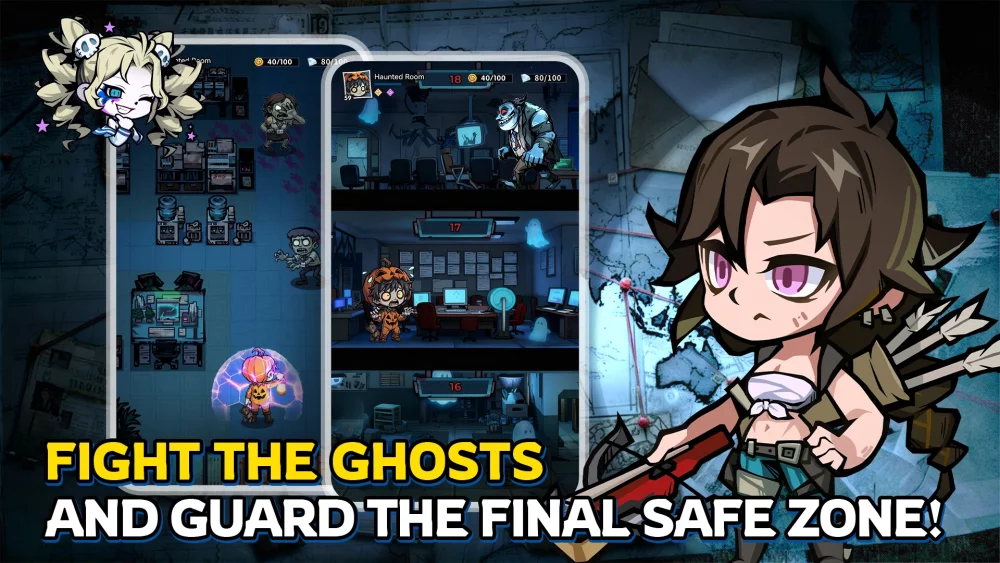
Clearing the gauntlet of main stages 224 through 237 in Knock Knock: Room Defense requires a fundamental shift in your tactical approach. As enemy health pools and movement speeds scale aggressively during this bracket, you can no longer rely on broad, balanced base building. Survival in these stages demands a rigid focus on resource efficiency, surgical hero positioning, and the discipline to prioritize damage output over defensive durability.
The Core Mechanic: High-Density DPS Zones
The primary challenge between stages 224 and 237 is the sheer durability of the ghosts. Standard defense patterns—spreading heroes across multiple rooms—will almost certainly lead to a breach, as individual units will lack the DPS to kill high-health enemies before they move to the next room.
To counter this, adopt a High-Density DPS strategy. Instead of occupying every available room, cluster your highest-damage heroes in the rooms immediately adjacent to your door. By forcing the ghosts to move through a "kill zone" of concentrated fire, you maximize the uptime of your strongest units. If a ghost survives the first room, they should be entering your second-most upgraded room already heavily damaged. This layering technique effectively turns your base into a funnel rather than a series of disconnected rooms.
Mastering Room Economy: The "Bed-First" Rule
Your economic foundation is the most common point of failure for players in the 224–237 range. In these stages, the gold cost for hero upgrades scales rapidly. If your "Bed" level is not high enough to support these costs, you will find yourself stalling while ghosts chip away at your door.
- Prioritize the Bed: In the first 30 seconds of any stage in this bracket, your primary goal is to max out your Bed level. Everything else is secondary.
- Avoid Over-Investing in Doors: A common trap is spending gold on door health too early. A door upgrade only delays the inevitable if your damage output isn't high enough to kill the ghost. Only upgrade the door if you are seconds away from a total breach and need to buy time for a hero upgrade.
- The Gold-for-Damage Conversion: Every piece of gold spent on a defensive structure that doesn't contribute to damage is gold you could have spent on a hero upgrade. Aim to keep your defensive investment at the bare minimum required to survive, and pump the rest into hero DPS.
Managing Aggressive Ghost Behavior
Ghosts in the 224–237 progression bracket exhibit more sophisticated AI behavior. They frequently ignore secondary, low-threat rooms and prioritize paths that lead directly to the door. You must adapt your defensive layout to this behavior:
- Observe Pathing: In the first wave of a new stage, watch where the ghosts congregate. Do not place high-health "tank" heroes in empty, ignored rooms. Move them to the path the ghosts are actually taking.
- Manual Skill Timing: If you have heroes with active crowd-control or burst-damage abilities, do not use them as soon as they come off cooldown. Wait until the ghost is deep within your "kill zone" to ensure maximum impact and to prevent the enemy from reaching the door during the animation delay of your hero’s next attack.
- Consolidate, Don't Expand: It is better to have three rooms with maxed-out heroes than six rooms with level-one heroes. Expansion is a trap in these stages; focus your gold on perfecting your best units.
Strategic Trade-offs and Troubleshooting
If you hit a wall at stage 237, the game is telling you that your current base stats—not just your strategy—have reached a plateau. When your best tactical efforts fail, follow this checklist to break the ceiling:
- Check Hero Synergy: Some heroes provide passive buffs to room damage. Ensure your high-DPS units are placed in rooms where their specific passives are active.
- The Farming Loop: If you cannot clear the stage after five attempts, stop pushing. Revisit stages 210–220 to farm gold and upgrade your permanent hero levels. Knock Knock: Room Defense is an incremental game; attempting a stage that is clearly above your gear score is a waste of time.
- Evaluate the "Fail Condition": If the ghosts are breaking your door too quickly, you need more DPS, not more door health. If your heroes are dying, you need better positioning. If you are running out of gold, you need a higher-level Bed.
Summary of Best Practices
To master the 224–237 range, remember that Knock Knock: Room Defense rewards the aggressive player who manages their economy like a clock. Keep your active room count low, funnel your enemies through your most powerful units, and never neglect your Bed level. By focusing your resources on a core group of high-impact heroes rather than spreading your efforts thin, you will turn the tide of these stages and maintain your momentum toward the end-game content.
If you find yourself stuck, always prioritize permanent hero upgrades over temporary stage-specific defenses. Your progress is tied to your account-wide strength, and consistency in your farming routine is the ultimate key to success.

Free Knock Knock: Room Defense Codes
Current active codes and how to redeem them.

James Brown
James focuses on Android gaming on PC, emulator setup, controls, performance tuning, and practical troubleshooting for longer play sessions.
COMMUNITY
Player Comments
89 players commented on this guide.
This helped me understand strategy much better.
Good guide for Knock Knock: Room Defense players. The strategy part was useful.
Nice guide. I am checking the other Knock Knock: Room Defense articles next.
This saved me time in the early game.