
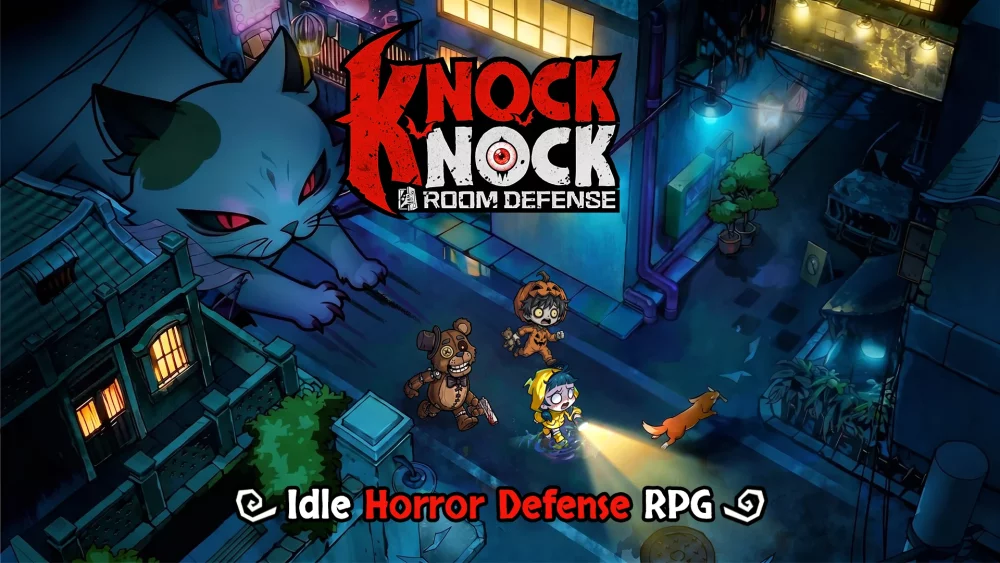
In Knock Knock: Room Defense, the transition from stage 40 to 51 represents the game’s first major difficulty spike. At this point, the brute-force tactics that carried you through the early game no longer suffice. These stages feature aggressive boss units with high health pools and rapid-fire door damage, requiring players to pivot toward micro-management, precise economic scaling, and optimal hero positioning.
To successfully push through this threshold, you must treat every stage as a tactical puzzle where resource allocation dictates your survival. Whether you are a free-to-play (F2P) user or a low spender, mastering these specific mechanics will prevent you from hitting the dreaded "power wall."
Understanding the Stage 40–51 Difficulty Spike
The primary reason players struggle between stages 40 and 51 is the boss's ability to overwhelm early-game defenses before your economy can support high-tier upgrades. In these stages, the boss doesn't just attack the door; it forces a "timed race." If your door integrity falls below 50% within the first 90 seconds, you are likely failing the economy check.
The game’s scaling at this level rewards players who understand the "break-even point"—the moment when your passive gold income from your bed exceeds the cost of your next door upgrade. For these stages, your goal is to push your bed to the highest possible level without letting the boss break your door. If you find yourself losing, it is rarely due to a lack of raw stats; it is usually due to a lack of investment in your income-generating structures during the early phase of the match.
Optimizing Your Hero Lineup for Crowd Control
In the mid-game, raw damage is often less valuable than utility. To beat bosses in the 40–51 range, your lineup must include at least one hero capable of "Hard Crowd Control" (stuns or slows).
- The Utility Slot: Use heroes that provide a debuff to the boss’s attack speed or movement speed. By slowing the boss, you effectively increase your door's lifespan, giving your DPS heroes more time to output damage.
- The Defensive Anchor: Always include one hero who provides passive door healing or shielding. This acts as a safety buffer when the boss triggers its "enrage" phase, typically occurring in the final 30 seconds of an encounter.
- Synergy Check: Avoid stacking heroes that all serve the same purpose. A team of three DPS units is often worse than a team of one DPS, one crowd-controller, and one defensive support.
Mastering the "Even-Split" Economy Strategy
Resource management is the backbone of Knock Knock: Room Defense. During stages 40–51, you should adopt the "Even-Split" method to ensure you aren't over-investing in one area at the expense of another.
- Phase 1 (0:00–1:30): Dedicate 80% of your income to upgrading your Bed. A higher-level bed is the only way to generate enough gold to keep up with the exponential cost of door repairs in the later stages.
- Phase 2 (1:30–3:00): Pivot to an even split between Door Reinforcement and Hero Skill activation. Do not upgrade the door to max immediately; only upgrade it to a level where it can survive two boss hits.
- Phase 3 (3:00+): Dump all remaining gold into DPS-boosting structures. By this point, your bed should be at a level that supports continuous, high-cost repairs.
If you find yourself constantly needing to repair the door, you have likely under-leveled your bed. A high-level bed allows you to repair the door while simultaneously upgrading it, which is the secret to surviving the final boss push in stage 51.
Leveraging Redemption Codes and Daily Tasks
For F2P and low-spend players, redemption codes are not just bonuses—they are essential gear-check bypasses. Developers frequently release codes that provide diamonds and gold, which should be immediately funneled into your most impactful heroes.
- Where to find codes: Keep an eye on official social media channels and community Discord servers.
- The "Daily Loop": Never miss your daily tasks. In the 40–51 range, the incremental stat bonuses gained from daily mission rewards provide the "hidden" power needed to survive the boss’s final phase.
- Resource Hoarding vs. Spending: Do not hoard your diamonds. In Knock Knock: Room Defense, the value of immediate progress (getting past stage 45, for example) is higher than the value of saving for a "better" hero later. Use your diamonds to buy upgrade materials for your current primary team.
Common Mistakes to Avoid
Many players fail because they fall into predictable traps during high-difficulty stages:
- Ignoring Door Health: Players often focus too much on hero skills and neglect the door's base durability. Remember: if the door breaks, your hero skills don't matter. Always upgrade the door as a priority if you see the "Low Health" warning icon.
- Inconsistent Hero Rotation: If you are stuck on a specific boss (e.g., stage 48), don't just keep hitting "Retry" with the same team. Swap out your lowest-performing hero for one that specifically counters that boss's mechanics.
- Over-committing to Early Damage: If your heroes deal high damage but die instantly, you are ignoring the game’s defensive scaling. You must balance your hero's damage output with the defensive structures in your room.
Final Tactics for Success
If you are still struggling after applying these tips, perform a "re-roll" of your strategy. Exit the stage and re-examine your hero pool. Sometimes, a hero with a lower rarity but better utility (like a slow-effect) is vastly superior to a high-rarity hero that only offers raw damage.
Lastly, pay attention to the boss's attack patterns. Most bosses in Knock Knock: Room Defense have a "tell"—a visual cue before they unleash a massive attack. When you see this, save your hero's active ability to interrupt or mitigate that specific attack. Mastering the timing of your skills is the final hurdle to clearing stage 51 and moving into the end-game content.

Free Knock Knock: Room Defense Codes
Current active codes and how to redeem them.

Michael Smith
Michael covers live-service games, events, reward systems, and efficient daily routines, turning frequent updates into clear actions for players.
COMMUNITY
Player Comments
104 players commented on this guide.
I tried this today and it worked better than my old setup.
Good guide for Knock Knock: Room Defense players. The resources part was useful.
The tips are practical and easy to follow.
Can you add more details about resources in a future update?