
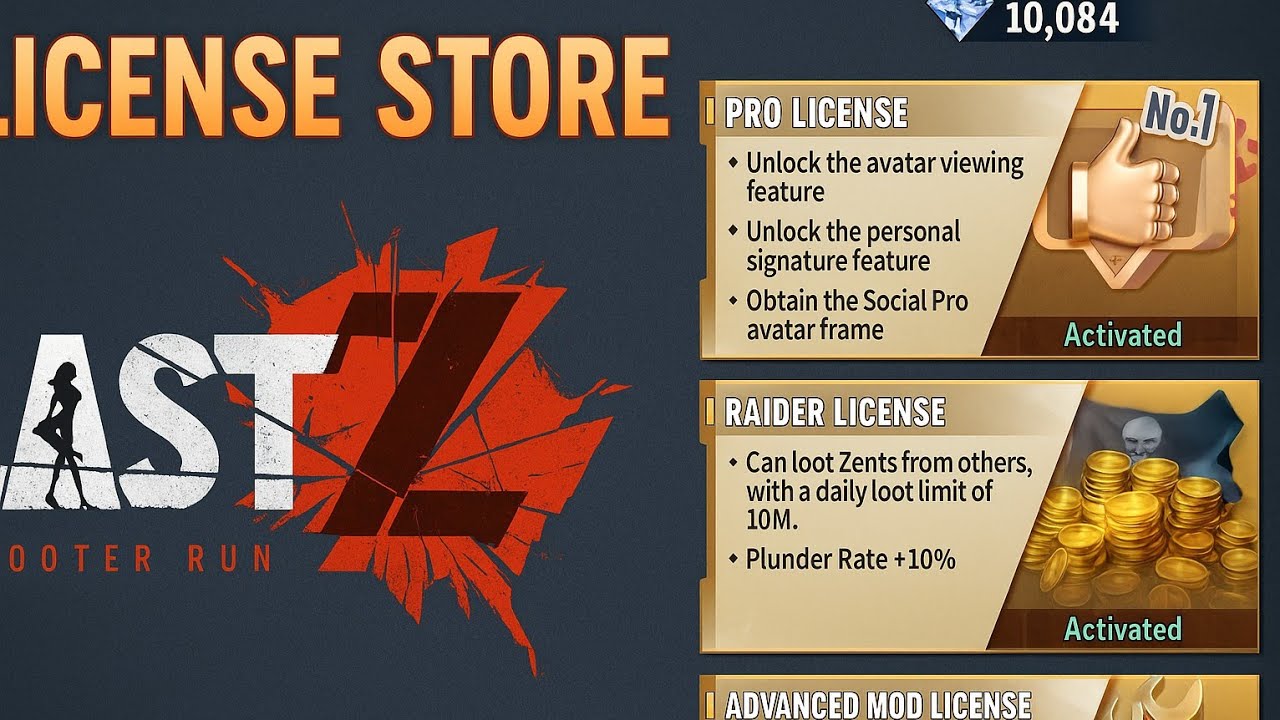
In Last Z: Survival Shooter, the License Store is the most critical marketplace for transforming your account from a struggling survivor into an apocalyptic powerhouse. While the game provides many ways to acquire resources, the License Store offers a curated selection of rare components that are otherwise difficult to obtain through standard gameplay. To succeed, you must move beyond impulsive shopping and treat your currency as a strategic investment. By focusing on hero-specific fragments and high-tier combat materials, you ensure that every point spent translates into permanent stat increases rather than fleeting, low-impact consumables.
Understanding the License Store Rotation Mechanics
The License Store in Last Z: Survival Shooter does not offer a static inventory; it operates on a dynamic rotation that rewards players who plan their resource spending according to the shop’s refresh cycles. Because the availability of top-tier items fluctuates, spending your currency the moment it becomes available is a tactical error.
Instead, you should monitor the refresh timers closely. This allows you to maintain a "war chest" of currency, ensuring you have the capital ready when high-value hero fragments or rare equipment components appear. Treat the License Store as a long-term progression engine. If you constantly spend your currency on low-rarity items, you will inevitably find yourself empty-handed when a rare, account-defining item rotates into stock. Consistently maintaining a reserve is the hallmark of an advanced player.
Prioritizing Hero Fragments for Exponential Power
The most valuable assets available in the License Store are hero fragments. These are essential for star-upgrades, which unlock powerful passive skill bonuses and significantly increase base combat stats. A common mistake among newer players is spreading their currency across fragments for multiple heroes. This approach dilutes your potential, resulting in several mediocre heroes rather than one elite unit capable of carrying your team through difficult PvE stages or PvP encounters.
To optimize your progress, identify your primary damage dealer and your essential support unit. Focus your License Store purchases exclusively on these two characters until they reach their next significant star-tier. When evaluating fragments in the shop, ask yourself: "Does this hero anchor my current formation?" If the answer is no, the fragments represent a wasted investment. By narrowing your focus, you will reach higher star levels much faster, resulting in a more immediate and noticeable spike in your overall Combat Power (CP).
Managing Currency and Setting Spending Thresholds
Effective currency management requires strict self-discipline. It is easy to exhaust your reserves on minor speed-ups or standard resources early in the week, only to discover that the specific fragments you need appear toward the end of the rotation. To prevent this, implement a "minimum balance" rule. Determine a baseline amount of currency that you will never dip below, unless a truly rare, high-priority item appears.
Consider these tactical rules for managing your shop budget:
- The Fragment Buffer: Always keep enough currency in reserve to buy a full stack of fragments for your primary hero. Do not touch this buffer for convenience items.
- Cost-Efficiency Analysis: Compare the cost of buying an item in the License Store against the energy or time required to farm it in the world map. If an item can be earned easily through daily missions or raiding, do not waste store currency on it.
- Avoid "Just in Case" Buying: Only purchase items that directly address your current progression bottleneck. Buying items for a future project you haven't started yet leads to resource stagnation.
Navigating Common Purchasing Traps
A frequent pitfall for players in Last Z: Survival Shooter is the temptation to purchase cosmetic items or high-volume, low-impact resources. While these items might provide a marginal boost, they rarely offer the long-term utility required for endgame survival. Focusing on these low-value items will stall your progress, as you will consistently find yourself short on the specialized materials needed for higher-level gear promotions.
Another trap is the "Discount Delusion." Just because an item is available at a reduced price does not mean it is a good deal for your account. If the item does not contribute to your current power threshold—such as upgrading a specific weapon or enhancing a hero's skill—then it is an unnecessary drain on your resources. Always prioritize items that solve a specific problem you are currently facing, such as a lack of upgrade materials for your primary gear set.
Strategies for Advanced Resource Allocation
As you progress into the mid-to-late game stages of Last Z: Survival Shooter, the requirements for gear promotion and hero leveling become significantly more expensive. At this stage, the License Store becomes your primary source for rare upgrade materials.
Expert Tip: Keep a notebook or a spreadsheet of your current hero upgrade requirements. When you see specific materials in the shop, compare their cost to your current stockpile. If you are only a few items away from a major breakthrough, prioritize those items above all else. This "target-oriented" purchasing strategy ensures that your currency is always moving you toward a concrete milestone.
Furthermore, always check the store immediately following a major game update. Developers often adjust the inventory or pricing during these times, and being the first to identify a shift in the meta—such as a new hero becoming the "must-have" unit—allows you to secure their fragments before other players have adjusted their spending habits. By staying proactive and maintaining your reserves, you turn the License Store from a simple shop into your most reliable tool for dominating the apocalypse.
Free Last Z: Survival Shooter Codes
Current active codes and how to redeem them.

Emily Johnson
Emily writes practical mobile strategy guides with a focus on resource planning, base progression, and the early decisions that shape a long-term account.
COMMUNITY
Player Comments
116 players commented on this guide.
This saved me time in the early game.
Good guide for Last Z: Survival Shooter players. The heroes part was useful.
The tips are practical and easy to follow.
This guide answered the exact question I had.