
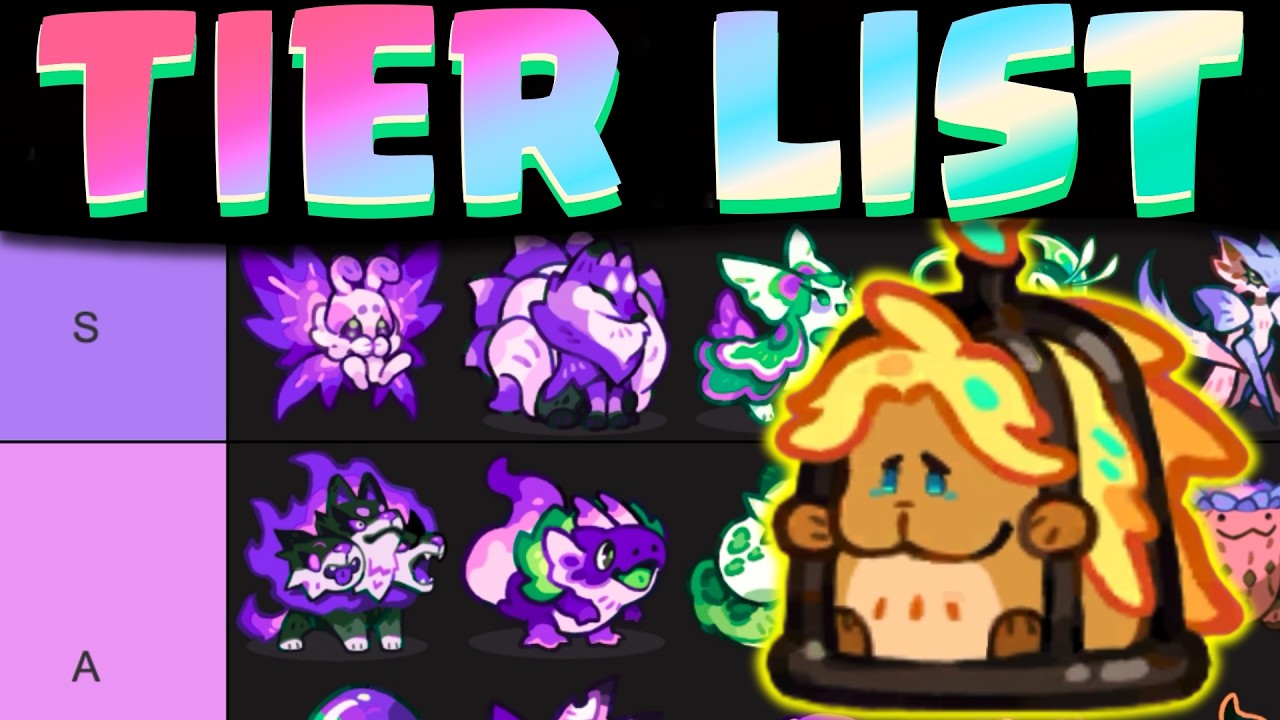

To excel in Clash of Critters, players must constantly adapt to shifting power dynamics caused by balance updates, new unit arrivals, and increasingly difficult zombie horde waves. Currently, the undisputed spotlight is on the newly introduced Tatari Cavyzap, a unit configuration that has completely altered team-building priorities and the game's overall tier list.
Because Clash of Critters blends creature collection with physics-based pinball combat, raw stats are only half the battle. Success requires understanding how your Critters bounce, trigger jackpots, and synergize their abilities to wipe out the undead. This comprehensive guide explains how to integrate the Tatari Cavyzap setup into your squad, provides a fully updated tier list, and breaks down the advanced pinball strategies you need to dominate the arena.
Understanding the Tatari Cavyzap Power Spike
The introduction of the Tatari Cavyzap represents a major shift in how players should approach team composition. Cavyzap is an Electric-type Critter, and its "Tatari" variant (or synergy configuration) elevates its base mechanics to an entirely new level.
How the Mechanics Work
In Clash of Critters, you deal damage by launching your units across a pinball-style table. Every time your Critter hits a bumper, a peg, or triggers a Jackpot, they unleash attacks on the advancing zombies.
The Tatari Cavyzap excels because of its Chain Lightning ability, which triggers upon every bumper impact. While older meta units relied on hitting the zombies directly with their physical mass, Tatari Cavyzap can safely bounce between top-board bumpers, accumulating massive combo multipliers and raining screen-wide area-of-effect (AoE) damage down on the horde.
Why You Need to Build It
By focusing on this unique interaction, you maximize your board presence without risking your Critters falling straight down the center drain. When implementing this configuration, prioritize leveling Tatari Cavyzap over your legacy single-target units. The chain lightning interaction is specifically designed to bridge the gap between early-game utility and late-game scaling. If you are struggling to clear higher-level zombie horde content, pivoting your current team to include this setup will provide the immediate power boost necessary to push through difficult milestones.
Clash of Critters Updated Tier List
The latest tier list update heavily emphasizes units that possess high mobility, reliable skill execution during pinball sequences, and synergy with the Tatari Cavyzap meta. As the game evolves, units previously considered mid-tier have transitioned into must-haves due to hidden scaling mechanics that favor rapid-fire, high-bounce playstyles.
Compare your current roster against these rankings to ensure you are investing your evolution materials wisely.
S-Tier: The Meta Dominators
S-Tier units offer unparalleled utility and consistent damage output. They are essential for clearing late-game content and triggering chain reactions on the pinball table.
- Tatari Cavyzap: The current king of the meta. Unmatched AoE damage through bumper-triggered chain lightning. Best used against massive zombie swarms.
- Ember Fox (Awakened): The perfect single-target counterpart to Cavyzap. Ember Fox gains a stacking damage buff for every Jackpot triggered, making it the ultimate boss-killer for elite zombies.
- Tidal Turtle: While slow and heavy, Tidal Turtle is the ultimate defensive anchor. Its high mass allows it to smash through heavy zombie barricades, and its splash damage slows enemy movement speed by 30%.
A-Tier: Reliable Performers
These Critters can be slotted into most teams to provide consistent support, reliable combos, or niche counter-play.
- Gale Hawk: Boasts the highest movement speed in the game. Gale Hawk is incredibly useful for rapidly hitting multiple targets and easily triggering the Jackpot, though its base damage is relatively low.
- Venomancer Viper: Applies a stacking poison debuff to zombies. Excellent for long, drawn-out horde modes where you need passive damage ticking away while your main units are bouncing.
- Lunar Lepus: A fantastic support unit that occasionally spawns extra bumpers on the lower half of the board, preventing your other Critters from draining and keeping combos alive.
B-Tier: Situational and Early Game
These units require specific support or team compositions to become viable. They are great for beginners but typically fall off in late-game progression.
- Bramble Bear: A solid early-game tank that absorbs incoming zombie projectiles, but its heavy weight makes it difficult to keep on the pinball board for long combo chains.
- Sparky Slime: A budget version of Cavyzap. It has decent electric damage but lacks the Tatari synergy multipliers needed for endgame horde waves.
C-Tier: Avoid Investing
- Basic Starter Critters: Units that lack an evolution path or secondary abilities. Do not spend premium upgrade materials on these once you pull A-tier or above units.
Mastering the Pinball Combat System
Using top-tier Critters is only half the battle; how you launch them determines your success. Clash of Critters is heavily reliant on physics, and understanding the board is crucial.
Hitting the Jackpot
The game frequently prompts you to "Score big with every shot!" by hitting the Jackpot. The Jackpot is usually a moving target, a specific sequence of glowing bumpers, or a hidden ramp at the top of the arena. Hitting the Jackpot does two things:
- Damage Multiplier: It instantly multiplies the damage of all active Critters on the board by a massive percentage.
- Ultimate Charge: It rapidly fills the ultimate ability meters for your squad.
Always aim your initial launch to pass through the highest density of scoring pegs or directly toward the Jackpot ramp. With a unit like Tatari Cavyzap, hitting the Jackpot while the unit is trapped in a cluster of bumpers will result in a screen-clearing lightning storm.
Launch Angles and Trajectories
Do not just pull the plunger back all the way and hope for the best. Pay attention to the angle of your flippers and the initial launch lane. A "soft plunge" (pulling the launcher back only halfway) is often the best strategy to drop a heavy Critter like Tidal Turtle directly into a specific cluster of zombies, rather than overshooting them.
Adapting to Zombie Horde Modes
The zombie horde modes serve as the true test of your team’s durability and damage ceiling. Unlike standard arena encounters, these modes require a mix of crowd control and high-burst damage to prevent your defense line from being overwhelmed.
Wave Management
Zombies will spawn in waves and slowly march toward the bottom of the screen. If they cross your defensive line, you lose health. The Tatari Cavyzap configuration is particularly effective here because its chain lightning prioritizes targets closest to the bottom of the screen.
When preparing for these events, ensure your squad is positioned to maximize ability uptime. Use support units like Lunar Lepus to block the drain, allowing your damage dealers to stay on the board longer.
Stalling Tactics
If you are waiting for an ultimate ability to charge, use high-mass A-tier or B-tier units to physically body-block the zombies. Launching a heavy unit directly into the front line of the horde will knock them backward, buying you precious seconds to set up a Cavyzap Jackpot combo.
Strategic Resource Allocation and Evolution
With the meta shifting toward the Tatari Cavyzap build, it is vital to stop over-investing in legacy units that have fallen out of favor. You need to collect over 100 unique companions to complete your roster, but your evolution materials and upgrade resources are strictly limited.
Where to Spend Your Resources
Spending resources on units that do not contribute to your primary team’s synergy is a common pitfall. Focus your upgrade efforts on the core components of your squad to ensure you are not bottlenecked when the next difficulty spike occurs.
- Max Out Your Carry: Pour 70% of your experience resources into Tatari Cavyzap (or your primary S-tier damage dealer). In Clash of Critters, an over-leveled carry can often solo-clear mid-game content.
- Evolve for Abilities, Not Just Stats: When you evolve a Critter, they often unlock a new passive ability. Prioritize evolving units whose new passives directly buff your main damage dealer (e.g., evolving a support unit that grants an electric-damage bonus).
Before committing resources, evaluate whether a unit serves a specific, irreplaceable role in your current formation. If a unit is easily replaceable by a character in the Cavyzap lineup, save your materials.
Trade-offs, Limitations, and Mistakes to Avoid
While the Tatari Cavyzap setup is currently dominant, it is not without limitations. Players relying solely on this configuration may find themselves vulnerable if an upcoming patch introduces zombies with Electric-resistance or direct nerfs to these specific units.
Common Mistakes
- Ignoring Board Layouts: Every stage has a different pinball layout. A strategy that works on a board with tightly clustered bumpers will fail on a wide-open board. Adapt your launch strength accordingly.
- Forgetting Defensive Sustain: The Cavyzap meta is highly offensive. If you lack the necessary gear items to boost your health pool, you must supplement your team with secondary units like Tidal Turtle that offer defensive sustain to compensate.
- Chasing Every Meta Shift: Always weigh the cost of transitioning to a meta-build against your current progress. If you are already deep into building a top-tier Fire-based team (around Ember Fox), it might be more efficient to finish that project rather than starting from scratch with Cavyzap.
Adaptation is important, but consistent progression in Clash of Critters is often achieved by refining the team you already have, mastering the pinball physics, and landing those crucial jackpots when the zombie horde closes in.

Emily Johnson
Emily writes practical mobile strategy guides with a focus on resource planning, base progression, and the early decisions that shape a long-term account.
COMMUNITY
Player Comments
88 players commented on this guide.
I wish I had read this before upgrading the wrong thing.
The tips are practical and easy to follow.
Can you add more details about updates in a future update?
I tried this today and it worked better than my old setup.