
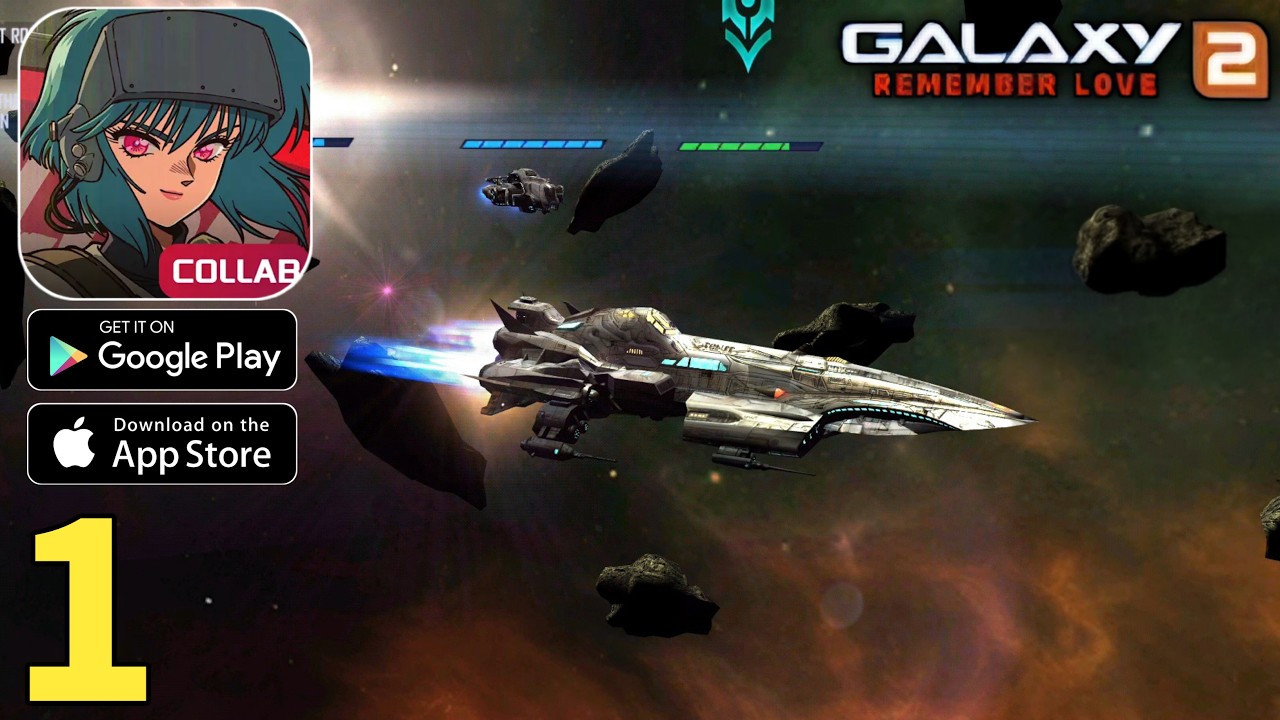

Success in Galaxy Reavers 2: Remastered relies on your ability to command your warships with precision during high-stakes, real-time tactical engagements. Unlike traditional strategy games that rely on static formations, Galaxy Reavers 2: Remastered demands dynamic movement and constant micro-management to achieve victory. By mastering the movement interface and understanding the specific target acquisition behavior of your fleet, you can significantly reduce incoming damage while maximizing your offensive output. This guide provides the expert knowledge required to navigate early missions and optimize your fleet for long-term survival in the galaxy.
Mastering Real-Time Fleet Movement
Effective combat in Galaxy Reavers 2: Remastered is defined by your ability to manipulate ship positioning dynamically. The touch-and-drag interface is your most powerful tool; you must actively pull your vessels across the 2D plane to dodge incoming fire and reposition for better firing angles.
- Avoid Clumping: Always keep your fleet spread out. Enemy capital ships often possess Area-of-Effect (AoE) weaponry that can cripple your entire fleet if they are bunched together.
- Buffer Tactics: Position your heavier, high-armor warships toward the front of the engagement. Use them as a "meat shield" to absorb direct fire, protecting your more fragile, high-damage carriers or support vessels behind them.
- Flanking Maneuvers: Even in early stages, moving your ships behind the enemy line forces their automated turrets to pivot. This creates a "dead zone" where enemy ships cannot fire effectively, buying your primary batteries valuable time to recharge.
Managing Weapon Cooldowns and Target Priority
Every warship in Galaxy Reavers 2: Remastered features distinct weapon systems, each operating on individual cooldown timers. A common mistake for new commanders is firing all weapons simultaneously, which leaves the entire fleet defenseless during the subsequent recharge phase.
Instead, practice staggered firing. By managing the engagement, you ensure that at least a portion of your fleet is always capable of dealing damage while others are cooling down. Furthermore, target prioritization is the key to efficient combat. Always identify the most immediate threat—typically the enemy unit with the highest DPS or a ship currently targeting your weakest vessel—and focus your entire fleet's fire on that singular target. Eliminating one high-threat target quickly is mathematically superior to spreading your damage across an entire enemy formation, as it reduces the incoming DPS much faster.
Utilizing Special Abilities for Tactical Advantage
Beyond basic auto-attacks, your warships possess unique active abilities that can turn the tide of a losing battle. These skills often function on a global cooldown or require specific energy thresholds to activate.
- Wait for the Right Moment: Do not waste powerful missile barrages or energy shields at the start of a skirmish. Save them for when your ships are directly engaged in the thick of an enemy interceptor swarm or when an enemy capital ship signals its primary weapon charge.
- Visual Cue Awareness: Pay close attention to the visual cues on the battlefield. When an enemy ship begins to charge its primary weapon, you should immediately trigger your defensive maneuvers or move your fleet out of the projected impact zone. Timing these activations correctly ensures that your fleet remains combat-effective throughout the mission.
Optimizing Fleet Composition for Early Missions
As you progress through the opening chapters of Galaxy Reavers 2: Remastered, you will be introduced to various ship classes. A balanced fleet is essential to counter the diverse enemy compositions you will encounter. Relying on a single ship type is a recipe for disaster, as specialized enemies—such as fast, kite-heavy interceptors—can easily dismantle homogenous fleets.
Build your early-game fleet by balancing these three distinct roles:
- Frontline Tanks: Ships with high hull integrity and heavy armor ratings designed to absorb incoming fire.
- Support/Utility: Crucial for managing crowd control, deploying debuffs, or providing passive healing/recharge to the fleet.
- DPS Interceptors: Necessary for hunting down fast, elusive targets that attempt to kite your main formation or flank your rear.
Adapting to Environment and Range Constraints
Combat zones in Galaxy Reavers 2: Remastered vary significantly in size and layout, dictating the effectiveness of your equipment. You must adjust your formation based on the weapons currently equipped on your ships.
- Range Management: If your primary armament is long-range artillery, maintain distance at all costs. If enemies close the gap, retreat while firing to keep them in your optimal range bracket.
- Environmental Funneling: If you find yourself overwhelmed by superior numbers, use the map boundaries and environmental debris to funnel enemies into a narrow path. This restricts their movement and allows your fleet to concentrate their fire on one or two ships at a time, effectively negating the enemy’s numerical advantage.
- The 50% Rule: Always monitor individual health indicators. If a specific vessel drops below 50% integrity, rotate it to the back of the formation immediately. This allows your support systems to stabilize the unit or prevents the enemy from securing an easy kill, which is essential for maintaining your star rating in campaign missions.
By applying these tactical principles, you will move beyond basic skirmishing and start controlling the battlefield with the precision of a seasoned commander. Remember that in Galaxy Reavers 2: Remastered, the most advanced weaponry is secondary to the quality of your tactical execution. Keep your fleet mobile, focus your fire, and always monitor your cooldowns to dominate the galaxy.

Sarah Williams
Sarah specializes in RPG and collection games, explaining team building, character growth, and beginner-friendly ways to avoid expensive early mistakes.
COMMUNITY
Player Comments
127 players commented on this guide.
I wish I had read this before upgrading the wrong thing.
Nice guide. I am checking the other HOT articles next.
I tried this today and it worked better than my old setup.
Can you add more details about strategy in a future update?