
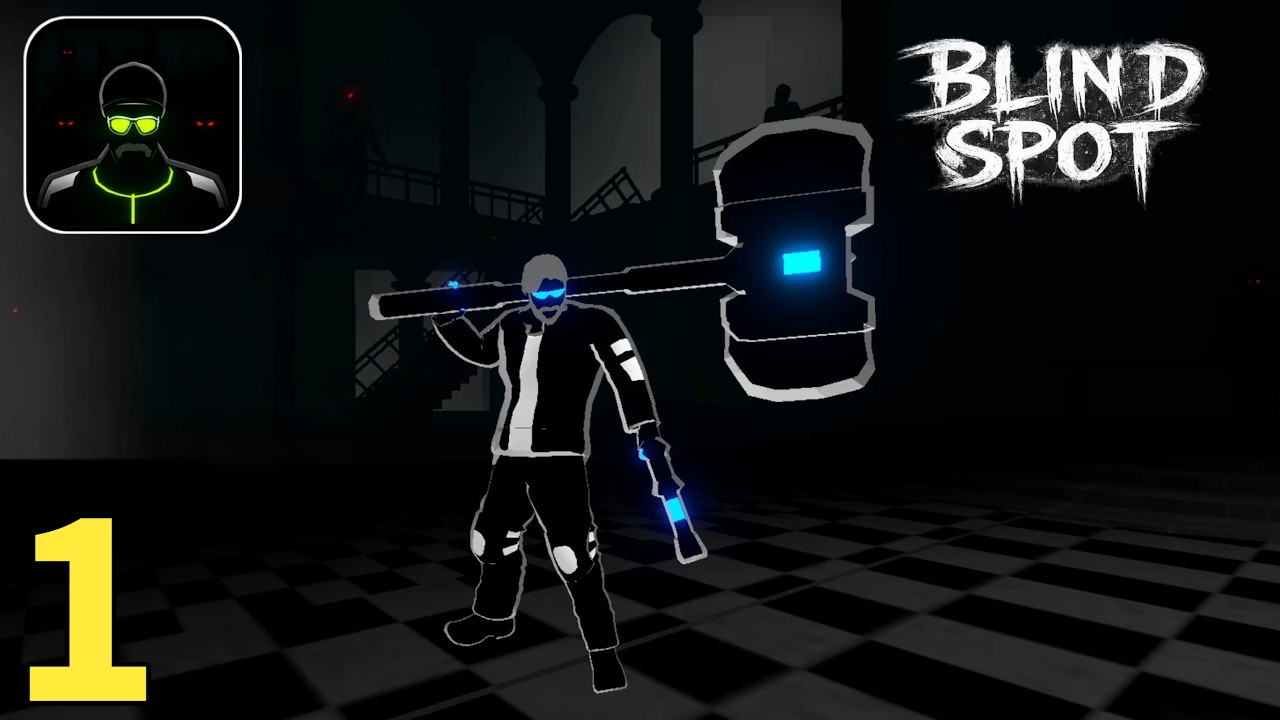

Survival in Blind Spot requires a calculated approach to visibility, as your light serves as both a primary navigation tool and a beacon for the undead. In this fast-paced horror action game, players must master the trade-off between illuminating their surroundings and remaining hidden from roaming threats. Whether you are exploring the initial environments or preparing for intense boss encounters, understanding how to control your light source is the key to surviving the game's three distinct stages.
Balancing Visibility and Stealth
In Blind Spot, your light is your greatest weapon, but it acts as a double-edged sword. While it is essential for seeing your path through dark, claustrophobic environments, it simultaneously alerts zombie-like creatures to your presence. The core mechanic involves managing your exposure time; keeping the light active for too long makes you a clear target for enemies, while extinguishing it leaves you vulnerable to environmental hazards and surprise attacks.
To survive, you must prioritize short, deliberate bursts of light. Use your light to identify enemy positions or environmental objectives, then immediately switch it off to reposition yourself in the shadows. This rhythm of "flash and move" allows you to maintain situational awareness without constantly drawing the attention of nearby threats. Players who rely too heavily on constant illumination will find themselves surrounded by waves of enemies, as the creatures are highly sensitive to light sources.
Navigating the Three Eerie Stages
The game is structured across three unique stages, each increasing in environmental complexity and enemy density. Progression relies on learning the layout of these stages while managing your limited resources. The transition between stages often introduces new enemy behaviors, requiring you to adapt your defensive strategy. By focusing on memorizing spawn points and chokepoints, you can minimize the amount of time you spend exposed in the open.
When moving through these environments, always look for natural cover or darker corners where you can safely extinguish your light. Because the game is designed with a fast-paced horror intensity, remaining stationary for too long is rarely a viable option. Instead, treat each stage as a pathfinding challenge where the primary objective is to reach the next safe zone or boss arena while avoiding unnecessary combat encounters that drain your health.
Engaging Enemy Waves and Bosses
Combat in Blind Spot is not about sustained fire, but rather tactical engagement. When faced with waves of zombie-like creatures, your goal should be crowd control rather than direct confrontation. Use your light to lure enemies into specific areas, then maneuver around them. If you must engage, do so sparingly, ensuring that you have an exit strategy ready before you activate your light source to aim or strike at incoming threats.
Boss encounters serve as the final test for each stage, requiring a mix of precision and resource management. These encounters are designed to be significantly more difficult than standard mob waves, often forcing you to keep your light on for longer durations to hit weak points. Before entering a boss arena, ensure you have practiced your movement patterns, as you will need to dodge incoming attacks while maintaining visibility on the boss's movement.
Strategic Resource and Light Management
The core limitation in Blind Spot is the reliance on your light, which is both a survival utility and a liability. Efficient players manage their light-usage thresholds to ensure they are never caught in complete darkness without an escape route. Because the game is offline and lightweight, focus on refining your reaction times to enemy movements rather than relying on external upgrades.
Ultimately, your success hinges on your ability to:
- Identify environmental cues that indicate approaching enemy waves.
- Master the timing of toggling your light to maximize stealth.
- Prioritize mobility over combat, especially when navigating tight corridors.
- Recognize when to abandon a risky area rather than fighting every enemy in your path.
By prioritizing these strategies, you can effectively manage the game’s difficulty curve and progress through all three stages without becoming overwhelmed by the increasing density of the undead.

Emily Johnson
Emily writes practical mobile strategy guides with a focus on resource planning, base progression, and the early decisions that shape a long-term account.
COMMUNITY
Player Comments
122 players commented on this guide.
The explanation is clear, especially for beginners.
I wish I had read this before upgrading the wrong thing.
This saved me time in the early game.
Nice guide. I am checking the other HOT articles next.