
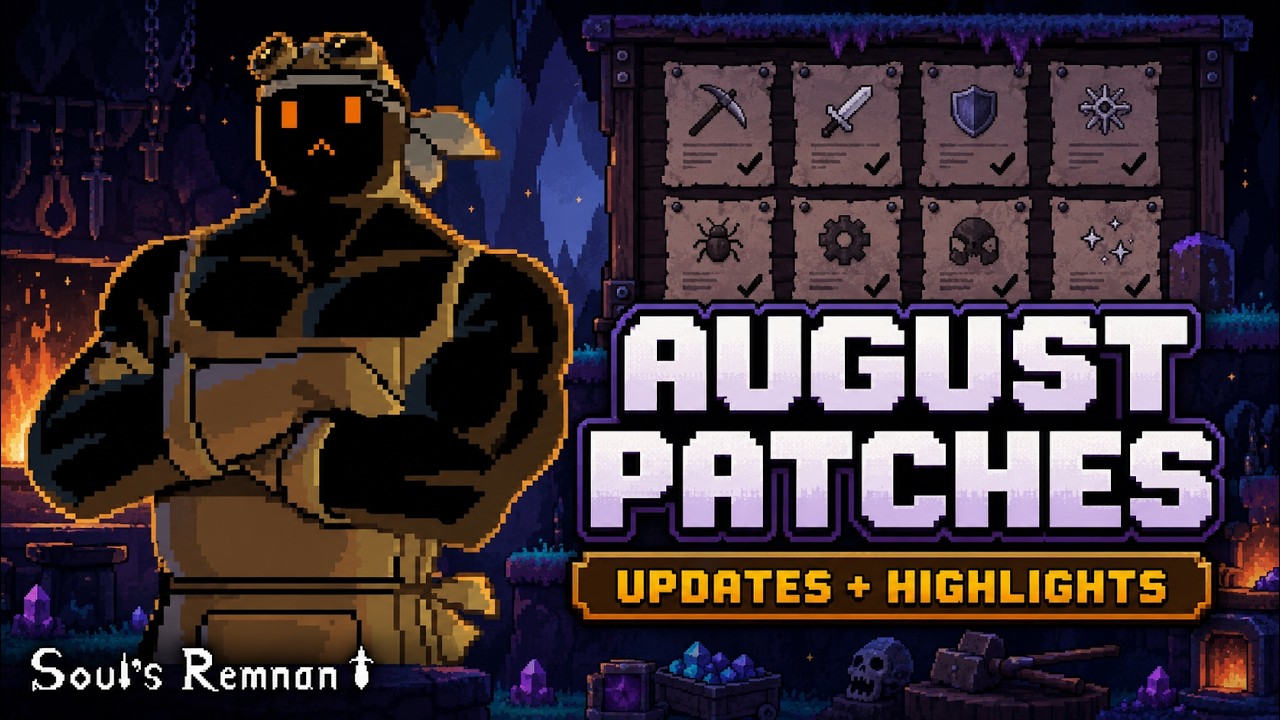

August 2026 was a transformative month for Soul’s Remnant, characterized by rapid-fire iterations that fundamentally altered the game’s economy, combat balance, and risk profiles. For players looking to stay ahead of the curve, treating the game as a static environment is a recipe for failure. The frequent updates—from the launch patch on August 14th through the end-of-month adjustments on August 31st—require a flexible approach to resource management and character safety. This guide breaks down the essential strategies for navigating the current Soul’s Remnant landscape, ensuring your progression remains steady regardless of the patch cadence.
Understanding the August 2026 Patch Cadence
The developers, Sage and Rajah, implemented a highly aggressive patching schedule throughout August. This "live-tuning" philosophy means that game mechanics are rarely static. Understanding the timeline of these changes is the first step in protecting your progress.
- Launch Phase (Aug 14–16): Initial stability updates focused on foundational game systems. Players who ignored these early hotfixes often faced inventory desyncs or inconsistent drop rates.
- Mid-Month Balancing (Aug 18–22): This period saw significant adjustments to mob scaling and item values. This is when the "Radiant Mirage" market began to show its volatility.
- Late-Month Content (Aug 28–31): The final week focused on end-game tweaks and the introduction of the Fishing Contest. These patches often introduce new meta-defining gear or utility items.
Expert Insight: Do not treat early-month patches as "finished" code. In Soul’s Remnant, the first week after a major update is a testing ground. If you are a high-level player, prioritize observing community feedback before committing large amounts of currency to newly introduced items.
Mastering the Radiant Mirage Market
Radiant Mirage experienced extreme price volatility in August, largely driven by developer adjustments to drop rates and vendor availability. Managing these fluctuations is essential for maximizing your gold-per-hour (GPH).
How to Trade During Volatility
- Monitor the Patch Notes: Every time a patch mentions "drop rate," "vendor cost," or "resource availability," expect a market swing within 24 hours.
- The Liquidation Strategy: When prices spike due to reduced supply, do not hold your assets in anticipation of further gains. Sell into the hype.
- The Accumulation Strategy: Conversely, if a patch increases the ease of farming Radiant Mirage, prices will crash. Use these windows to stockpile materials for future crafting, as the market usually corrects upward once the initial supply glut is absorbed.
Why this works: The Soul’s Remnant economy is highly responsive to supply-side shocks. By prioritizing immediate reinvestment over long-term speculation, you insulate yourself from the risk of sudden developer adjustments that could render a hoard of items worthless overnight.
Survival Standards for HCIM Players
The Hardcore Ironman (HCIM) mode in Soul’s Remnant is unforgiving, and August’s patches proved that even "minor" updates can be fatal. The widely publicized death of a high-profile HCIM account on August 22nd served as a warning: never trust a patch-day environment.
Safety Protocols for HCIM
- The 48-Hour Rule: Following any major patch or hotfix, pause all high-risk PvE content for at least 48 hours. Use this window to monitor forums and Discord channels for reports of "ghost" damage or unintended mob respawn rates.
- Re-Test Your Routes: If a patch notes mention "AI behavior" or "combat scaling," assume your current pathing is compromised. Run your routes in a safe, non-HCIM environment or with lower-tier gear to ensure the game’s logic hasn't changed.
- Inventory Management: Always carry extra utility items for escapes. Patch-induced bugs often affect movement speed or ability cooldowns, making standard survival routes more dangerous than usual.
Capitalizing on the August Fishing Contest
The Fishing Contest, which concluded on August 31st, highlighted the importance of non-combat progression. While many players focus exclusively on combat, participating in seasonal events is the most reliable way to diversify your account's resource pool.
Strategies for Success:
- Pre-Event Preparation: Never wait for the event start to acquire the necessary gear. If the contest requires a specific tier of fishing rod or bait, ensure you have these items in your inventory at least 48 hours before the event begins.
- Inventory Optimization: High-volume events often lead to "clutter" in your inventory. Clear out all non-essential items before starting to ensure you don't lose precious event time walking back and forth to bankers or vendors.
- Focus on Exclusives: These events often provide unique cosmetic or utility items that cannot be obtained through standard gameplay. Prioritize these rewards above raw currency, as their value often appreciates significantly in the months following the event.
Long-Term Progression Strategy
The primary lesson of August 2026 is that Soul’s Remnant demands adaptability. The "meta" is not a static list of best-in-slot items; it is a moving target.
Essential Habits for Continued Success:
- Diversification: Do not tie your entire net worth to one set of gear or one specific crafting item. If the developers nerf that item, your progress will stall. Keep a balanced portfolio of resources.
- Cross-Referencing: After every update, perform a "Gear Audit." Compare your current setup against the patch notes. If a core item you rely on received a significant value or power adjustment, it is time to pivot your goal.
- Community Engagement: Because the game is evolving rapidly, player reports are often more accurate than initial developer documentation. Join active community hubs to see which strategies are actually working post-patch.
By aligning your gameplay with the developers' balancing trajectory—rather than fighting against it—you ensure that your progress remains sustainable. In Soul’s Remnant, the players who succeed are not necessarily those with the most time to grind, but those who best adapt their strategies to the ever-shifting landscape of the game’s economy and mechanics.

Michael Smith
Michael covers live-service games, events, reward systems, and efficient daily routines, turning frequent updates into clear actions for players.
COMMUNITY
Player Comments
49 players commented on this guide.
The explanation is clear, especially for beginners.
Can you add more details about base building in a future update?
I tried this today and it worked better than my old setup.
This saved me time in the early game.