
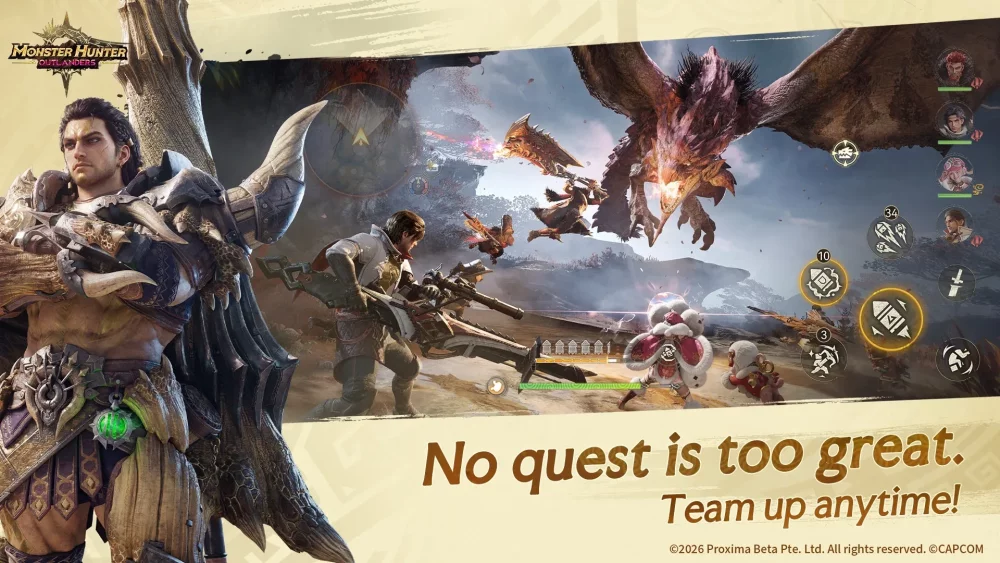
In Monster Hunter Outlanders, your effectiveness in the field is dictated not just by your mechanical skill with a weapon, but by the strength and versatility of the hunters you bring to the fray. The gacha system serves as the primary gateway to acquiring these specialized units. However, indiscriminate spending is the fastest way to hit a progress wall. To dominate the game’s challenging roster of large monsters, you must shift your mindset from casual rolling to tactical resource allocation.
The Logic of the 30-Pull Strategy
In the current landscape of Monster Hunter Outlanders, the "30-pull session" has emerged as a community-tested benchmark for early-to-mid-game progression. When you commit to a 30-pull cycle, you are essentially increasing your sample size to ensure that your account isn't left with a one-dimensional roster.
Performing these sessions serves three distinct purposes:
- Probability Normalization: While RNG is always a factor, pulling in blocks of 30 allows you to mitigate the variance of single-pull attempts, providing a more reliable influx of both high-rarity units and "pity" materials.
- Roster Foundation: By pulling in larger chunks, you increase the likelihood of obtaining characters across different weapon archetypes, preventing you from being locked into a single playstyle that may be ineffective against specific monster types.
- Dupe Synergy: In Monster Hunter Outlanders, duplicate pulls are rarely a waste. They often convert into materials required for hunter ascension or skill enhancement, which are critical for scaling your power into the endgame.
Before initiating a 30-pull, verify that you have enough currency to repeat this process at least once in the future. Never drain your entire wallet on a single banner; the "meta" in mobile action games shifts rapidly, and you need the liquidity to pivot when a new, more powerful threat appears.
Building a Versatile Roster: Beyond Raw Power
A common mistake new players make is chasing "top-tier" DPS units without considering elemental synergy. Monster Hunter Outlanders is designed around exploiting monster weaknesses. A high-rarity character with an neutral affinity will often be outperformed by a lower-rarity character that exploits a monster’s elemental vulnerability.
When analyzing your roster after a pull session, categorize your hunters into three functional pillars:
- The Breakers: Hunters equipped with high-impact weapons (like Hammers or Greatswords) meant for staggering monsters and breaking specific parts.
- The Elementalists: Units whose primary utility is applying status ailments (Poison, Paralysis, Sleep) or dealing high elemental damage to exploit specific monster weaknesses.
- The Sustainers: Hunters who provide party-wide buffs, stamina regeneration, or defensive utility.
If your roster lacks an Elemental Specialist for a specific element (e.g., Ice or Thunder), your priority should be to save your currency for a banner featuring that archetype rather than pulling for a redundant DPS unit.
Evaluating Trade-offs and Opportunity Costs
Every piece of currency spent on the gacha is a piece of currency not spent on weapon crafting, armor forging, or inventory expansion. This is the core "opportunity cost" of Monster Hunter Outlanders. Before confirming a pull, ask yourself these three critical questions:
- Is this a "Must-Have" or a "Nice-to-Have"? Does the featured hunter offer a unique mechanic—such as a new move set or a unique party buff—that you currently lack? If you already have a strong unit for that element, the marginal gain of a new unit is likely not worth the expenditure.
- Am I hitting a wall? If you are successfully clearing current content, there is no immediate pressure to pull. Save your resources for when the game introduces a tier of monsters that your current gear cannot handle.
- Are my materials aligned? A new character is only as strong as the gear they are equipped with. Ensure you have the monster parts and zenny required to upgrade their equipment immediately; otherwise, a top-tier pull will remain a benchwarmer.
Strategic Timing and Meta Awareness
Timing is the difference between a successful progression path and a stalled account. In Monster Hunter Outlanders, developers frequently rotate banners to coincide with limited-time event hunts or boss releases.
The "Wait-and-See" Approach: Do not pull on the first day of a new banner. Allow the community and content creators to test the character's viability in actual combat. Observe how the hunter performs against the current "Radiant Prismatic Dragon" or similar high-difficulty bosses. If the consensus is that the unit is a "game-changer," then proceed with your 30-pull strategy. If the unit is deemed niche or underwhelming, your currency is better spent elsewhere.
Monitoring the Update Cycle: Keep a close eye on the game’s roadmap. If an update is coming that introduces a new monster class, wait to see if that monster has a glaring elemental weakness. Aligning your pulls with upcoming content ensures that your investment remains relevant for as long as possible.
Common Mistakes to Avoid
- The "Sunk Cost" Trap: If you haven't pulled the featured unit after 30 or 60 pulls, do not force the issue. Accept the results, bank the materials, and wait for a different banner.
- Ignoring 3-Star and 4-Star Units: Don't get blinded by the rarity color. Many mid-tier units have specific utility skills that become incredibly powerful when leveled up correctly.
- Over-focusing on One Weapon Class: While you might love the Long Sword, Monster Hunter Outlanders demands adaptability. A player who can use three different weapon types effectively will always progress faster than a player who only knows how to use one.
Conclusion
Mastering the gacha in Monster Hunter Outlanders is about discipline and foresight. By utilizing the 30-pull strategy, prioritizing elemental diversity over raw rarity, and carefully evaluating the opportunity costs of every banner, you can build a formidable hunting party capable of taking down any threat. Remember: you are not just collecting characters; you are building a toolbox. Choose the right tools for the job, and the most difficult hunts will become manageable milestones on your path to becoming a legendary hunter.

Free Monster Hunter Outlanders Codes
Current active codes and how to redeem them.

Emily Johnson
Emily writes practical mobile strategy guides with a focus on resource planning, base progression, and the early decisions that shape a long-term account.
COMMUNITY
Player Comments
112 players commented on this guide.
Can you add more details about resources in a future update?
The explanation is clear, especially for beginners.
This saved me time in the early game.
Good guide for Monster Hunter Outlanders players. The resources part was useful.