
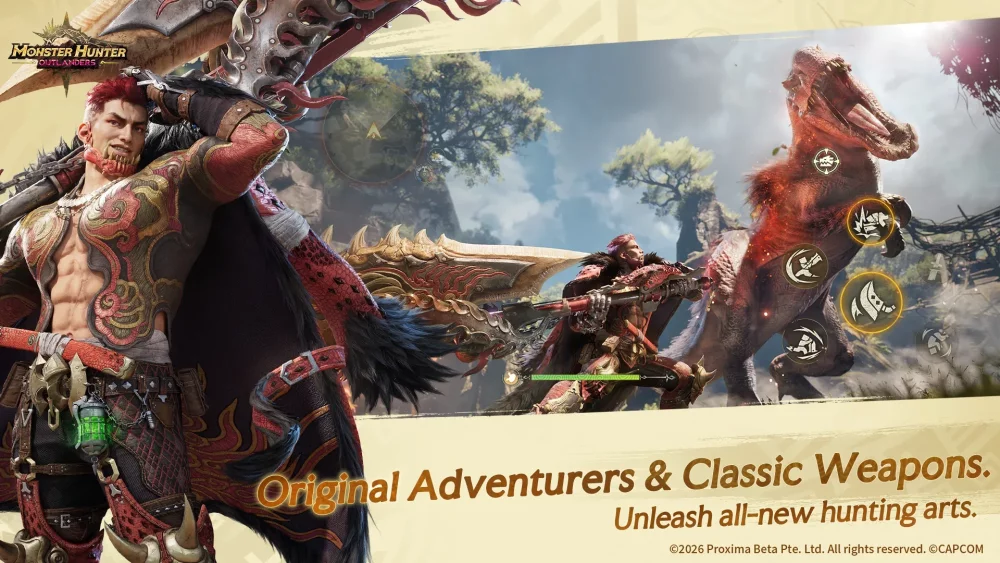
Free-to-play hunters in Monster Hunter Outlanders should avoid forging raw non-elemental weapons, duplicate Fire-type gear, and off-class secondary weapons before fully upgrading their primary carry. Radiant-tier forging and refining require extensive amounts of Zenny, monster carves, and enhancement stones. Spreading these limited resources across redundant or unoptimized weapons halts hunting rank progression and stalls damage output against endgame bosses.
The 3 Radiant Weapons to Avoid
1. Duplicate Fire Weapons When Using Midori
Do not forge secondary Fire-element Radiant weapons such as a Fire Greatsword, Fire Longsword, or Fire Heavy Bowgun if you actively field Midori. Midori serves as a dedicated Fire-element ranged carry who reliably triggers Fire-weakness mechanics with her bow kit.
Crafting another Fire weapon creates role redundancy without expanding your roster's coverage. Fire-resistant monsters heavily penalize Fire damage, rendering duplicate investments ineffective. Keep Midori as your sole Fire damage dealer early on and direct subsequent forging materials toward missing elemental types like Water, Thunder, or Ice.
2. Non-Elemental Raw Radiant Weapons
Avoid investing in raw, non-elemental Radiant weapons. While raw weapons feature high base physical attack during early leveling, endgame Radiant encounters enforce strict elemental absorption thresholds.
Late-game bosses feature reinforced armor phases and stagger bars tied directly to matching elemental weakness triggers. Pure physical weapons forfeit critical elemental stagger windows, making it difficult to interrupt dangerous boss attacks or sever high-value monster parts before phase transitions occur.
3. High-Maintenance Off-Class Weapons Early
Do not craft demanding secondary weapon types like Greatswords or Heavy Bowguns before maxing your primary carry's weapon level. These weapon archetypes require dedicated Otomo companion skills, tailored Visage setups, and specific armor skill thresholds to perform reliably.
A partially upgraded Radiant weapon underperforms compared to a fully refined carry weapon. Splitting upgrade stones and Zenny between Midori's bow and an unoptimized secondary leaves both characters underpowered for timed arena challenges.
Recommended F2P Radiant Weapon Priority
Follow a linear crafting path that secures single-target damage before expanding your elemental roster:
| Priority Level | Target Investment | Strategic Purpose | Resource Impact |
|---|---|---|---|
| Priority 1 | Midori's Primary Bow | Maximizes sustained Fire DPS and clears early high-tier boss checks | Concentrates initial Zenny and rare carves on a single carry |
| Priority 2 | First Counter-Element Weapon | Covers Midori's elemental disadvantages (such as Water or Ice) | Broadens roster coverage without overlapping Fire damage |
| Priority 3 | Utility Ranged Weapon | Adds crowd control and safe farming utility to party hunts | Functions effectively at base forge tier with low refine needs |
| Avoid | Raw Weapons & Duplicate Fire | Lacks elemental coverage and overlaps existing roles | Depletes Zenny and upgrade stones without solving hunt checks |
Next Progression Steps
- Max Midori's Bow Refinements: Funnel all available enhancement stones and monster carves into Midori's primary weapon until its refinement level matches your current hunting tier.
- Identify Your Roster's Elemental Gap: Check upcoming boss encounters for Fire-resistant targets to determine whether your second forge should be Water, Ice, or Thunder.
- Stabilize Zenny Income: Upgrade gathering facilities before branching into secondary weapon classes to prevent resource bottlenecks.

Free Monster Hunter Outlanders Codes
Current active codes and how to redeem them.

Michael Smith
Michael covers live-service games, events, reward systems, and efficient daily routines, turning frequent updates into clear actions for players.
COMMUNITY
Player Comments
74 players commented on this guide.
The explanation is clear, especially for beginners.
Good guide for Monster Hunter Outlanders players. The strategy part was useful.
I tried this today and it worked better than my old setup.
This guide answered the exact question I had.