
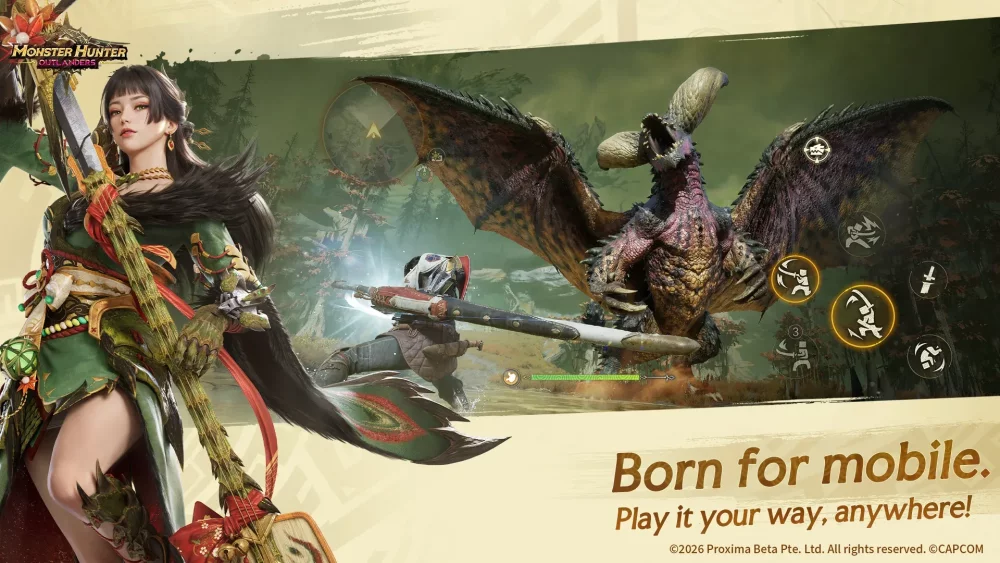
Monster Hunter Outlanders represents a massive shift for the franchise, bringing the high-octane, monster-slaying action of the mainline series to mobile devices with a focus on open-world exploration and seamless cooperative play. Whether you are a veteran of Monster Hunter World or a newcomer curious about the portable experience, understanding how this title adapts the series’ signature loop is essential for hitting the ground running.
Understanding the Monster Hunter Outlanders Release Status
As of the current development cycle, Monster Hunter Outlanders is being positioned as a global mobile experience. Unlike previous mobile spin-offs that focused on limited mechanics or augmented reality, Outlanders aims to replicate the full-scale hunting loop—tracking, preparation, combat, and crafting—within a persistent, expansive environment.
While developers have not yet pinned a firm global launch date, the game is currently undergoing regional testing phases. For players looking to get their hands on the game as soon as possible, the most reliable path is to monitor the official Monster Hunter Outlanders social media channels and the App Store or Google Play Store pre-registration pages. Pre-registering is not just a way to receive a notification; it often grants exclusive vanity items or starter resource packs that can significantly speed up your progression during the early-game grind.
The Core Gameplay Loop: How It Differs from Console Titles
If you have played Monster Hunter on console or PC, the primary adjustment you will need to make in Monster Hunter Outlanders is the pacing of the "Hunt-Gather-Craft" cycle. On mobile, the game is optimized for both short, bite-sized sessions and longer, intensive raid-style hunts.
- Exploration: You are dropped into a massive map. Unlike the segmented zones of older games, Outlanders utilizes a more fluid, interconnected environment. Use your scoutflies or tracking tools early to identify monster footprints and pheromones.
- Preparation: Before engaging a monster, you must check your loadout. Elemental weaknesses are more pronounced here. If you are hunting a monster weak to fire, ensure your weapon tree is optimized for that specific element before leaving the hub.
- The Hunt: Combat is built around the "Weight and Impact" philosophy. Attacks have commitment time. Do not button-mash; observe the monster's telegraphs, dodge, and look for openings to perform your weapon’s "Special" or "Silkbind" equivalent.
- Crafting: After a successful hunt, your materials are converted into armor and weapon upgrades. In Outlanders, resource management is streamlined to allow for faster inventory sorting, but the core requirement—carving monsters to build better gear—remains the heart of the progression system.
Mastery of Weapons: Choosing Your Playstyle
Monster Hunter Outlanders features a variety of iconic weapon types, each requiring a different mental approach. If you are struggling with a specific monster, the solution is often to switch weapons rather than just upgrading your gear.
- Great Sword: The master of burst damage. This is for players who enjoy memorizing monster patterns and finding the exact second to land a "True Charged Slash."
- Dual Blades: Best for players who prefer high mobility and elemental damage. You will need to manage your "Stamina" bar carefully to avoid being caught in a recovery animation during a monster's enraged state.
- Light Bowgun/Heavy Bowgun: Perfect for those who prefer a tactical, ranged perspective. You must manage your ammunition types—piercing, spread, and sticky ammo—to exploit specific monster hitzones.
- Sword and Shield: The most versatile pick for beginners. It allows you to use items without sheathing your weapon, making it the safest choice for learning the game’s combat rhythm.
Advanced Hunting Strategies
To succeed in the end-game of Monster Hunter Outlanders, you must stop thinking of the monster as a health bar and start thinking of it as a mechanical system.
Understanding Part Breaking
Almost every monster has breakable parts (horns, tails, wings). Focus your damage on these specific zones. Breaking a part not only yields additional rare materials upon carving but often creates a "flinch" state that interrupts the monster's attack sequence. If you are struggling to survive, prioritize breaking the tail or wings to reduce the monster's reach and mobility.
Environment Interaction
Outlanders emphasizes environmental awareness. Look for traps, terrain that can be used to mount monsters, or even environmental hazards (like falling boulders or explosive flora) that can deal massive damage to your target. Luring a monster into a specific area is often the difference between a successful hunt and a time-out.
Cooperative Play Dynamics
When playing with others, roles become more fluid. If you are playing a weapon with a shield (like Lance or Gunlance), your job is to draw "aggro" and keep the monster facing you so that your teammates with high-damage, low-defense weapons can safely attack the weak points. Coordination via pings and quick-chat commands is vital for coordinating traps and status effects like paralysis or sleep.
Common Mistakes to Avoid
- Overcommitting to Combos: New players often try to finish their entire combo string. If you see the monster winding up for a roar or a stomp, cancel your combo and dodge. A missed attack is better than taking a hit that puts you at half health.
- Neglecting Armor Skills: In Monster Hunter, armor is not just about defense stats. The skills attached to your armor (e.g., Attack Boost, Critical Eye, Evade Window) are the primary way to increase your character's power. Always prioritize sets that synergize with your weapon type.
- Ignoring Item Crafting: Do not rely solely on the shop. Learn to craft your own Mega Potions, Traps, and Tranq Bombs while on the map. Carrying the maximum amount of crafting materials ensures you never run out of supplies during a long expedition.
- Failing to Eat Before a Hunt: The canteen is your best friend. Always eat a meal before departing to gain buffs to your maximum health, stamina, and elemental resistances.
Decision Making: Should You Craft or Upgrade?
A common point of confusion is whether to forge a new weapon or upgrade an existing one. In Monster Hunter Outlanders, the upgrade path is almost always superior to forging. Upgrading allows you to carry over elemental affinities and specific skill bonuses that are difficult to replicate on base-level weapons. Only forge a new weapon if you are branching out into a completely different element or weapon type that your current tree does not support.
Final Thoughts for Aspiring Hunters
Monster Hunter Outlanders is a game of patience and incremental growth. You will fail hunts, and you will get stuck on specific monsters—this is intentional. The satisfaction of the game comes from the moment you finally learn a monster's moveset so well that you can dodge every attack without thinking. Stay focused on your gear progression, participate in as many cooperative hunts as possible to learn from other players, and always prioritize survival over greed. Your journey to becoming a top-tier hunter starts with the basics: observe, adapt, and strike when the time is right.
Free Monster Hunter Outlanders Codes
Current active codes and how to redeem them.

Sarah Williams
Sarah specializes in RPG and collection games, explaining team building, character growth, and beginner-friendly ways to avoid expensive early mistakes.
COMMUNITY
Player Comments
135 players commented on this guide.
The explanation is clear, especially for beginners.
Good guide for Monster Hunter Outlanders players. The updates part was useful.
This saved me time in the early game.
Can you add more details about updates in a future update?