
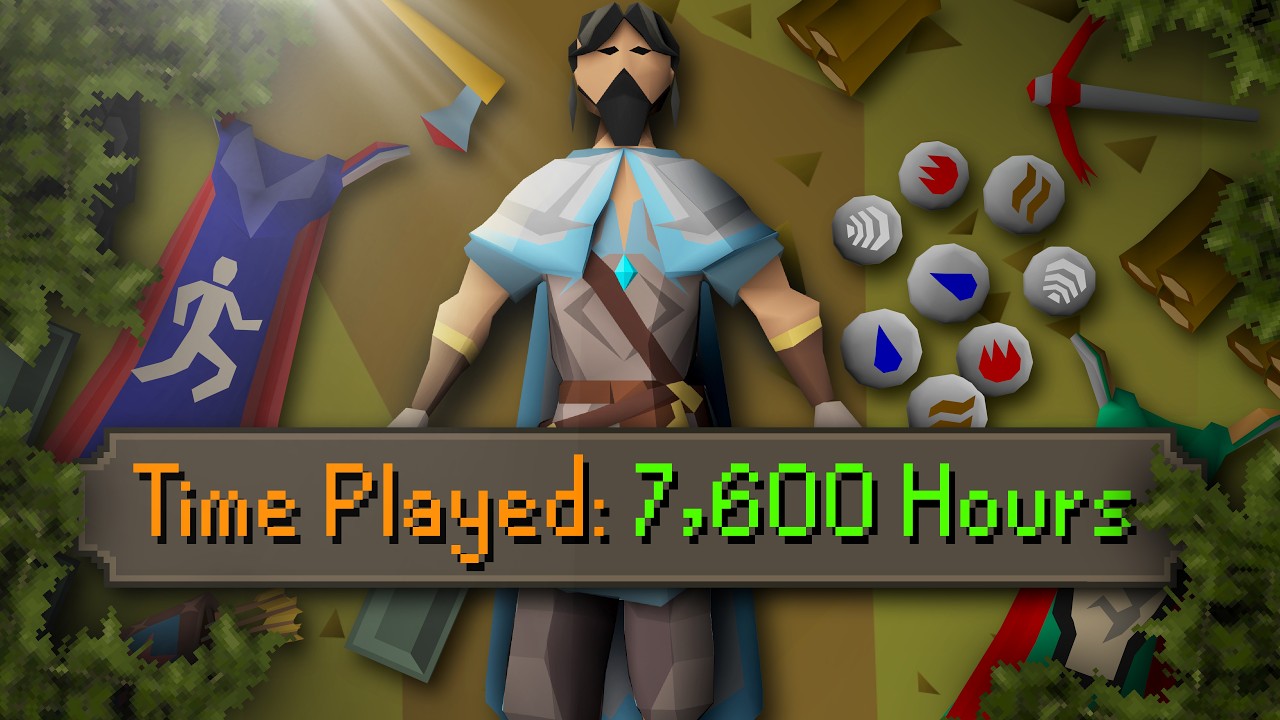
Transitioning into Old School RuneScape (OSRS) requires a fundamental shift in mindset, particularly for those coming from theme-park MMORPGs where content is gated by gear resets or linear expansions. In Gielinor, there is no "beating" the game in the traditional sense. The sheer scale of progression—spanning 24 distinct skills and thousands of hours of gameplay—can feel overwhelming to new and returning players alike. To avoid the common "burnout trap," you must stop viewing the game as a race to the endgame and start viewing it as a journey of personal accomplishment.
The Efficiency Trap: Why "Optimal" Often Equals "Miserable"
The most common cause of burnout in Old School RuneScape is the obsession with "EHP" (Efficiency Per Hour). While the community often creates meta-guides for the fastest way to reach level 99, these methods are frequently the most repetitive, click-intensive, and soul-crushing activities in the game.
If you force yourself to perform a "tick-perfect" training method that you personally despise, you are essentially paying for progress with your own enjoyment. Once the game becomes a chore, your motivation will inevitably crater.
The Expert Insight: If you find yourself dreading your login session, you are likely chasing someone else’s definition of success. It is almost always better to choose a "sub-optimal" method that you find relaxing or engaging than to grind an optimal method that makes you want to quit. You will eventually reach your goal; the extra time taken is a small price to pay for actually enjoying the process.
Structuring Your Sessions: The "High-Low" Balance
A sustainable playstyle in Old School RuneScape relies on balancing your mental energy. If you spend three hours in a high-intensity Raid or a complex boss encounter, you will be exhausted. Conversely, if you spend six hours clicking on a single fishing spot, you will be bored.
To maintain long-term motivation, try rotating your activities during a single session:
- Active Progression (High Engagement): Focus on Questing, Slayer tasks, or bossing. These activities require focus and offer immediate, tangible rewards like experience drops or rare loot.
- Passive Skilling (Low Engagement): Activities like Woodcutting, Fishing, or Alchemy allow you to engage with outside media, like podcasts or audiobooks. These are essential for "winding down" after intense combat sessions.
- Social & Economic Check-ins: Spend time at the Grand Exchange or engage with your Clan. Old School RuneScape is a social game at its core; interacting with others reminds you that you are part of a living world rather than just a number-crunching machine.
Setting Concrete, Tiered Milestones
When the final destination is a level 99 skill or a max-cape, the progress bar can feel like it isn't moving at all. To keep your dopamine levels consistent, replace long-term, vague goals with short-term, concrete milestones.
Examples of Effective Milestone Scaling:
- Short-Term (1-2 days): "Get 500k gold for a new gear upgrade" or "Complete one medium-difficulty quest."
- Mid-Term (1-2 weeks): "Reach level 70 in a skill to unlock a new tier of armor" or "Unlock a specific Achievement Diary reward."
- Long-Term (1-3 months): "Achieve the requirements for a major quest like Dragon Slayer II or Song of the Elves."
By breaking your journey into bite-sized pieces, you create a constant feedback loop of success. Each milestone serves as a checkpoint that validates your effort, making the "marathon" feel like a series of rewarding sprints.
The "Long Game" Mindset and Comparison Envy
One of the biggest hurdles for new players is looking at high-level players with "max" accounts and feeling behind. It is vital to remember that most of those players have been building their accounts for years, sometimes over a decade.
Why Comparison Envy is Toxic:
- Different Starting Points: You are comparing your Chapter 1 to someone else’s Chapter 20.
- Content Creator Bias: Streamers and YouTubers often have high-level accounts for content creation purposes. Their "efficiency" is their job, not a requirement for your gameplay.
Focus exclusively on your own account's progress. Use the community (wikis, Reddit, and Discord) to learn how to play, but ignore the pressure to match the pace of others. Your Old School RuneScape journey is entirely your own.
Knowing When to Take a Break
There is no shame in logging out. Old School RuneScape is designed to be a long-term hobby, not a temporary distraction. If you feel the burnout setting in—if you find yourself logging in just to check your farming patches out of obligation rather than interest—stop.
Taking a break for a week, a month, or even a year is perfectly fine. The game’s content will remain exactly where you left it. In fact, many players find that a period of absence provides a "refresh" that makes the game feel exciting and fresh again upon their return.
Summary: A Checklist for Sustainable Play
To ensure your longevity in Gielinor, periodically audit your playstyle against these criteria:
- Am I enjoying the current task? If not, switch to a different skill for a few hours.
- Is my goal too broad? If it feels daunting, break it into smaller, daily objectives.
- Am I comparing myself to others? Redirect that energy toward your own account’s recent achievements.
- Am I playing for the wrong reasons? If you are playing out of a sense of duty, take a break.
By prioritizing your own enjoyment over raw efficiency and curating a balanced mix of activities, you will find that Old School RuneScape remains a rewarding and deeply satisfying experience for years to come. The game is a marathon; run it at a pace that keeps you looking forward to the next mile.
Free Old School RuneScape Codes
Current active codes and how to redeem them.

Sarah Williams
Sarah specializes in RPG and collection games, explaining team building, character growth, and beginner-friendly ways to avoid expensive early mistakes.
COMMUNITY
Player Comments
84 players commented on this guide.
I tried this today and it worked better than my old setup.
This helped me understand strategy much better.
The explanation is clear, especially for beginners.
I wish I had read this before upgrading the wrong thing.