
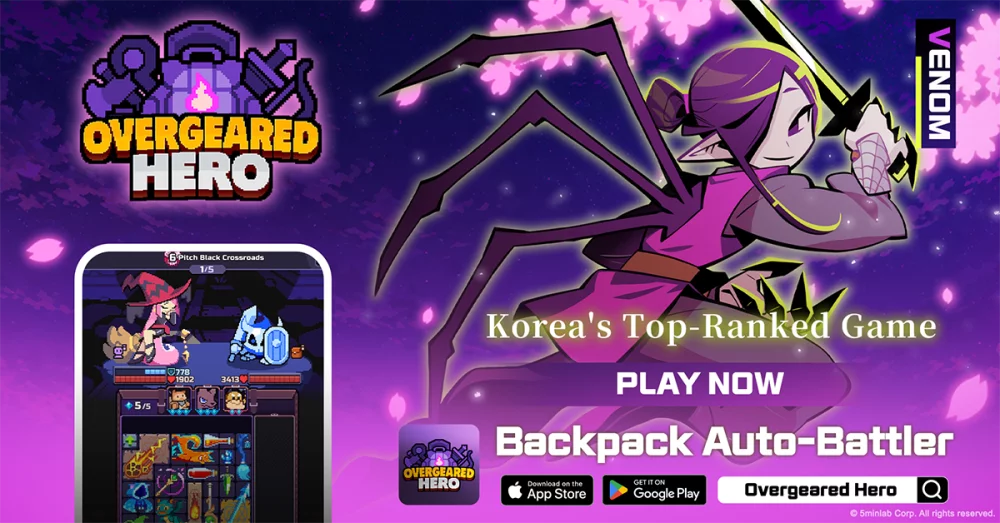
Clearing Chapter 105 in Overgeared Hero represents a significant milestone where the game’s difficulty curve shifts from passive progression to active, high-level optimization. At this stage, the enemies possess refined attack patterns and massive health pools that punish "jack-of-all-trades" backpack builds. To succeed, you must move beyond basic item collection and master the mechanics of synthesis priority, spatial efficiency, and resource economy. This guide provides the tactical blueprint required to navigate the Chapter 105 difficulty spike and stabilize your late-game performance.
The Hierarchy of Synthesis in Chapter 105
The most common mistake players make in Chapter 105 is holding onto a cluttered inventory of mid-tier items, hoping for a "perfect" late-game roll. In reality, the combat math of this chapter demands immediate, high-impact power spikes.
Why Synthesis Priority Matters
In Overgeared Hero, stats do not scale linearly; they scale exponentially through rarity tiers. A single Legendary-tier item often provides more effective combat utility than four Rare items occupying the same grid space. When you reach Chapter 105, your goal is to identify your "Core Carry" gear—items that provide flat percentage-based damage increases or life-steal—and funnel all available resources into upgrading these specific pieces.
- Aggressive Merging: Never let two identical items sit idle if you have the grid space to merge them. The passive bonus of a higher-tier item almost always outweighs the situational utility of two lesser ones.
- The 3:1 Rule: If you are holding three items that share a synergy trait, prioritize merging two into a higher tier before considering the third. This keeps your "damage engine" running while you hunt for the final piece to complete the set.
Spatial Efficiency and Backpack Layouts
Your backpack is your battlefield. In Overgeared Hero, placement isn't just about storage; it is about activating adjacency bonuses that dictate how your hero interacts with the enemy wave.
The Anchor and Buffer Strategy
To survive the intense incoming damage of Chapter 105, utilize your grid to isolate your high-value damage dealers while creating a "Buffer Zone" for your defensive gear.
- Frontline Anchors: Reserve the leftmost columns of your backpack for gear that provides high armor or damage reduction. Because these items act as the "anchor" for your hero’s stats, placing them in the path of enemy focus fire (visually represented by the game’s combat flow) helps mitigate incoming burst damage.
- Synergy Clusters: Group items that share the same "Set" or "Element" together. Overgeared Hero applies hidden multipliers when items of the same type are adjacent. Create a 2x2 or 3x3 block of these items to maximize your total DPS output.
- The "Empty Space" Myth: Do not fear empty grid spaces. A clean, organized backpack allows for faster mid-combat merging when you receive drops from defeated enemies. A full backpack is a death sentence in the later waves of Chapter 105, as it prevents you from synthesizing new gear to counter evolving threats.
Managing Resource Constraints Under Pressure
As the waves progress in Chapter 105, the rate at which you acquire new items will fluctuate. If your inventory is clogged with low-rarity components, you lose the ability to adapt.
- Purge the Weak: If an item is not contributing to an active synergy or a high-tier merge, sell it for gold. The gold allows you to reroll the shop or upgrade existing items, providing a higher ROI than holding onto "maybe" gear.
- Mid-Combat Reorganization: Don't be afraid to pause or use the downtime between waves to completely clear a section of your backpack. Move your "Core Carry" items to the center of the grid and push secondary support items to the periphery.
- Prioritize Utility: In Chapter 105, look for gear that offers crowd control or attack speed. Even if these items are a lower tier than your damage gear, their ability to break enemy attack animations is essential for survival.
Adapting to Enemy Damage Patterns
Chapter 105 introduces "Elite" enemy types that specialize in bypassing standard armor. If you are dying quickly, check the enemy's attack animation during the failure screen.
- The Swarm Counter: If you are losing to sheer numbers, pivot your synthesis toward Area-of-Effect (AoE) items. Even a mid-tier AoE weapon can clear small fodder enemies, keeping them from distracting your hero from the main target.
- The Boss Counter: If you are reaching the end of the wave but failing to kill the boss, you lack single-target DPS. Sell your defensive "filler" items and focus on raw damage multipliers. Chapter 105 bosses are DPS checks; if you cannot kill them within a specific timeframe, you will eventually be overwhelmed.
Long-Term Scaling and Stat Optimization
Finally, look at the Chapter 105 experience as a training ground for your permanent account stats. Overgeared Hero features a codex system where every item you synthesize contributes to your "Mastery" rank.
Even if you fail a run, every merge you performed contributes to your permanent progression. Check your codex regularly to see which items provide the best permanent stat buffs. Sometimes, the best strategy is to focus on crafting new, unique items that you haven't mastered yet, rather than just trying to clear the chapter with your current loadout. By balancing "run-winning" synthesis with "codex-filling" synthesis, you ensure that every attempt at Chapter 105 makes your hero stronger, regardless of the immediate outcome. Use the official Overgeared Hero Discord to compare your final backpack layouts with other high-level players, as seeing how others organize their synergies can often provide the "aha!" moment needed to finally clear the chapter.

Free Overgeared Hero Codes
Current active codes and how to redeem them.

Emily Johnson
Emily writes practical mobile strategy guides with a focus on resource planning, base progression, and the early decisions that shape a long-term account.
COMMUNITY
Player Comments
86 players commented on this guide.
The tips are practical and easy to follow.
This helped me understand heroes much better.
I wish I had read this before upgrading the wrong thing.
I tried this today and it worked better than my old setup.