
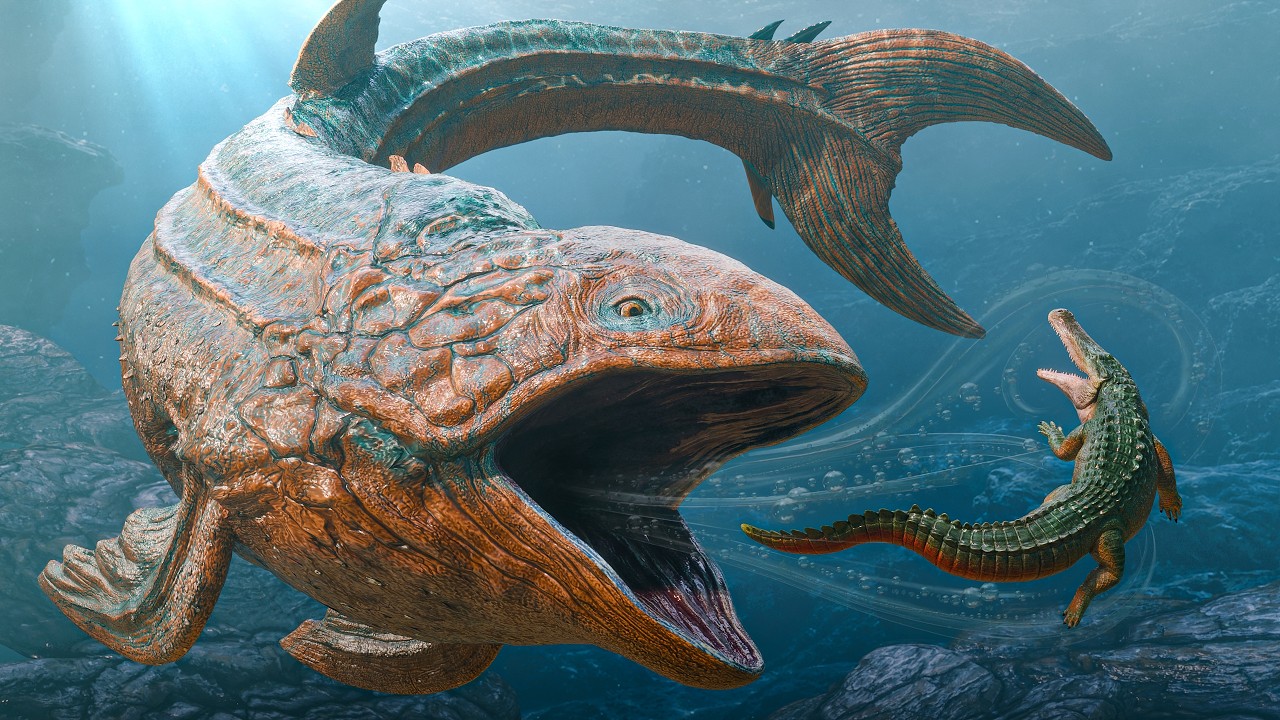
To survive as a Leedsichthys in Path of Titans, rely on defensive positioning near underwater terrain, conserve your stamina for combat maneuvers, and deter faster marine predators using your wide tail swing radius. Because your massive size prevents stealth and limits your turn rate, open-water survival depends on managing your movement states and forcing attackers into predictable approach angles.
Stamina and Movement Management
Conserving stamina is your top priority when traversing open water. The Leedsichthys features a large stamina pool, but exhausting it leaves you completely defenseless against agile marine carnivores. Use passive cruising as your standard travel speed, and never spend stamina on long-distance sprinting.
| Movement State | Stamina Impact | Recommended Use | Tactical Risk |
|---|---|---|---|
| Passive Cruising | No drain | Long-distance travel and threat scanning | Slower response to sudden ambushes |
| Sprint Swimming | Rapid drain | Repositioning in combat and breaking attack runs | Extreme vulnerability if depleted |
| Stationary Treading | Steady recovery | Resting against underwater rock walls | Static target if caught in the open |
When you stop to regain stamina, submerge completely and back your flanks against a solid underwater cliff or reef formation. Face your head outward toward open water so you can spot incoming threats early and swim directly forward without making a slow, wide turn.
Navigating Aquatic Biomes and Managing Oxygen
Depth and local terrain dictate how safely you can travel across the ocean. While deep pelagic zones provide the clearance needed for your wide turn radius, they leave your underbelly exposed to strikes from below. Cruise at intermediate depths below surface glare to keep the seabed in view while retaining quick access to the surface.
- Reefs and Rock Pillars: Travel alongside coral structures and sea arches. Solid rock protects your flanks and stops faster carnivores from circling your blind spots.
- Trenches: Cross deep trenches directly and quickly. Low visibility in deep chasms conceals diving apex predators.
- Surface Skimming: Replenish your oxygen quickly and descend immediately. Lingering at the waterline exposes your dorsal ridge, alerting coastal and semi-aquatic carnivores to your location.
Foraging for Food
Sustain your hunger meter by targeting schools of small fish and aquatic flora clusters located across continental shelves and coastal shallows. Because grazing and feeding slow your swim speed, only feed after verifying the immediate perimeter is clear. Treat feeding grounds as brief pit stops: replenish your hunger, then immediately return to deeper water to prevent coastal predators from trapping you against the shoreline.
Combat Defense and Choke Points
The Leedsichthys relies on defensive spacing and rear-facing offensive strikes rather than chasing opponents. Avoid head-on collisions, as your primary offensive tool is your tail rather than a raptorial bite.
- Maintain Forward Momentum: When engaged by faster predators like mosasaurs or plesiosaurs, swim forward in broad, controlled arcs. Angle your body so an attacker must cross your rear swing path to reach you.
- Time Your Tail Swings: Strike with your tail just as a pursuing predator commits to an attack run. Hitting an attacker during their forward charge deals heavy damage and applies knockback.
- Disrupt Tail-Riders: If a predator maneuvers directly behind your tail to bite continuously, combine a short burst of sprint swimming with a sharp downward dive to break their angle.
- Retreat to Choke Points: If outnumbered, swim toward underwater canyons, wide-mouthed sea caves, or tight rock channels. Funneling attackers into narrow passages removes their speed advantage, forces them into a single-file line, and ensures your tail swings hit the lead pursuer.
- Hold Position: Remain inside your defensive terrain until attackers exhaust their stamina or disengage. Never pursue a retreating carnivore into open water.

Free Path of Titans Codes
Current active codes and how to redeem them.

Emily Johnson
Emily writes practical mobile strategy guides with a focus on resource planning, base progression, and the early decisions that shape a long-term account.
COMMUNITY
Player Comments
62 players commented on this guide.
Nice guide. I am checking the other Path of Titans articles next.
The explanation is clear, especially for beginners.
This saved me time in the early game.
Can you add more details about strategy in a future update?