
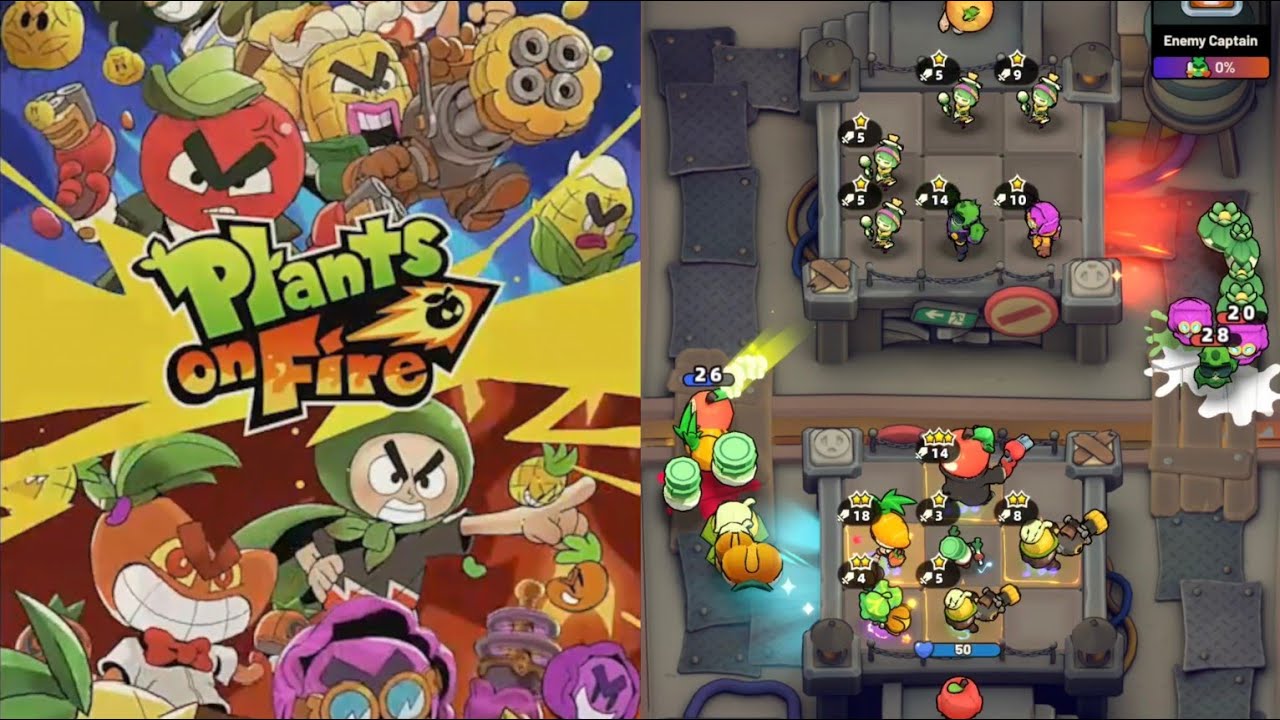
To dominate in Plants on Fire, you must master the delicate equilibrium between aggressive lane pushes and unbreakable defensive grids. Success in this strategic defense title isn't just about raw power; it is about managing a living engine of units where timing, positioning, and resource allocation dictate your survival. Whether you are struggling against mid-game difficulty spikes or aiming to climb the competitive ladder, this guide provides the professional insights needed to optimize your board and dismantle enemy forces.
Synchronizing Offensive and Defensive Cycles
The core loop in Plants on Fire requires a rhythmic shift between attacking enemy forces and reinforcing your defensive grid. Novice players often make the mistake of over-committing to offense, which leaves the board vulnerable to flankers or fast-moving wave spikes.
Think of your board as a three-layered system:
- The Frontline (Anchors): High-health units that absorb initial impact.
- The Midline (Support/Utility): Units that provide crowd control (slows/stuns) or buffs.
- The Backline (Primary DPS): High-damage units that clear the field.
To synchronize these, never dump your entire currency reserve at once. Maintain a "safety buffer" of currency that allows you to summon an emergency anchor if your front line is breached. By alternating between strengthening your defense during low-intensity waves and dumping currency into DPS units during high-intensity intervals, you create a sustainable combat flow that prevents board depletion.
Mastering Unit Merging for Board Efficiency
In Plants on Fire, board space is your most restricted currency. Every tile occupied by a low-tier unit is a potential slot for a high-tier powerhouse. Effective merging is the difference between a cluttered, ineffective board and a precision-engineered defense.
- Avoid "Merge Hunger": Don't merge just because you can. Only merge if you have a strategic need for the extra space or if you are upgrading a unit to reach a necessary damage threshold for an incoming boss.
- The "Carry" Strategy: Focus your merges on a single "carry" unit type per lane. By funneling your merges into one high-tier unit, you create a massive damage source that is more efficient than having five low-tier units spread across the board.
- Grouping for Speed: Always keep units of the same type adjacent to one another. During the chaos of high-level waves, having to scan the entire board for merge pairs can cost you precious seconds.
Optimizing Unit Placement and Lane Control
Lane control is where Plants on Fire separates casual players from tactical experts. A common error is spreading units evenly across all lanes. Instead, adopt a "Dominant Lane" philosophy.
Identify which lane the enemy is prioritizing. If a wave is heavy, do not try to hold all three lanes at equal strength. If your DPS is insufficient, pull your units back to create a "kill zone" in one or two lanes. Forcing enemies into a bottleneck allows your AOE (Area of Effect) units to hit more targets simultaneously, maximizing your total DPS output per unit deployed.
Pro Tip: Always place your long-range DPS units at the very back of the lane. This maximizes their "uptime"—the duration they can fire at enemies before those enemies reach your units.
Managing Your Currency and Summoning Economy
Your currency economy is the engine of your success. Impulsive summoning leads to "dead turns" where you are out of resources and unable to react to a sudden surge in enemy difficulty.
- The 30% Rule: Try to keep at least 30% of your maximum summon cost in reserve at all times. This acts as an insurance policy against RNG (random number generation) or unexpected boss abilities.
- Upgrade vs. Summon: If your lane is currently holding, prioritize upgrades to your existing high-tier units. If you are being pushed back toward your base, prioritize summoning new units to create a wider "wall" of defense.
- Meta Adaptations: Keep an eye on the current game meta. If the developers release an update that buffs specific unit types, prioritize those for your summoning rotation. Adaptability is key in Plants on Fire.
Navigating Boss Waves and Special Encounters
Boss waves are the ultimate test of your Plants on Fire build. Unlike standard waves, which can be managed with consistent DPS, bosses require burst damage and utility-based mitigation.
- Identify the Boss Type: Is it a "Tank" (high HP, moves slow) or a "Rusher" (low HP, moves fast)? If it’s a Tank, shift your focus to single-target high-damage units. If it’s a Rusher, prioritize slowing/stun utility units to keep them in range of your towers longer.
- Layered Defense: If a boss has an ability to bypass your front line, maintain a "reserve" unit at the back of your board. This unit should be held in your hand (or ready to summon) specifically to block the boss if it leaps over your frontline.
- Timing Your Cooldowns: Save your utility spells or "ultimate" unit abilities specifically for the boss's most dangerous phase—usually when it reaches the final third of the lane.
Common Mistakes to Avoid
- Over-Merging: Merging too early can leave you with a single high-tier unit that is easily overwhelmed by sheer numbers. Sometimes, three Tier-1 units are better than one Tier-2 unit because they cover more ground.
- Ignoring Synergy: Don't just pick the units with the highest damage stat. Look for units that provide synergies—such as a freezing plant that slows enemies, allowing your high-damage fire plants to deal bonus damage to chilled targets.
- Static Positioning: The most successful players in Plants on Fire are constantly moving units. If a lane is cleared, do not be afraid to sell or move units to a lane that is currently under heavy pressure.
Conclusion: Refining Your Playstyle
Mastering Plants on Fire is a journey of trial and error. By treating your board as a dynamic, shifting environment rather than a static wall of towers, you gain the flexibility to handle any wave the game throws at you. Focus on maintaining your currency, merging with intention, and prioritizing lane control over brute force. As you continue to refine your unit compositions, you will find that even the toughest boss encounters become manageable through proper synchronization and disciplined economy management. Keep your units aligned, your currency ready, and your strategy fluid.

Free Plants on Fire Codes
Current active codes and how to redeem them.

Michael Smith
Michael covers live-service games, events, reward systems, and efficient daily routines, turning frequent updates into clear actions for players.
COMMUNITY
Player Comments
111 players commented on this guide.
Nice guide. I am checking the other Plants on Fire articles next.
This guide answered the exact question I had.
Good guide for Plants on Fire players. The strategy part was useful.
The tips are practical and easy to follow.