
For both new and returning trainers, Pokémon GO is a game defined by constant collection. However, the most frequent barrier to progress isn't a lack of rare encounters—it’s the dreaded "Your Item Bag is full" or "Your Pokémon Storage is full" notification. Managing these two finite resources is the single most important skill for long-term progression. If your storage is cluttered with obsolete items or low-IV Pokémon, you are actively slowing your ability to grind Candy, Stardust, and XP.
This guide provides an authoritative strategy for maintaining a lean, high-utility inventory that keeps you ready for every Community Day, Raid Hour, and event rotation.
The Hierarchy of Needs: Auditing Your Item Bag
To play efficiently, you must treat your item bag as a tactical loadout rather than a trophy case. Your goal is to maximize space for "active play" items—those that facilitate catching and raiding—while discarding "reactive" items that are easily replenished.
The "Purge" Strategy
- Standard Healing Items: If you are a casual player, discard standard Potions and Revives. These are easily earned by spinning Gym discs. Keep only Max Potions and Max Revives for high-stakes Raid Battles.
- The Ball Tier List: Always prioritize Ultra Balls and Great Balls. If you hit your item cap, discard regular Poké Balls first. If you use a Pokémon GO Plus or Auto-Catcher, however, keep a balance of regular Poké Balls as they are the only ones compatible with the device.
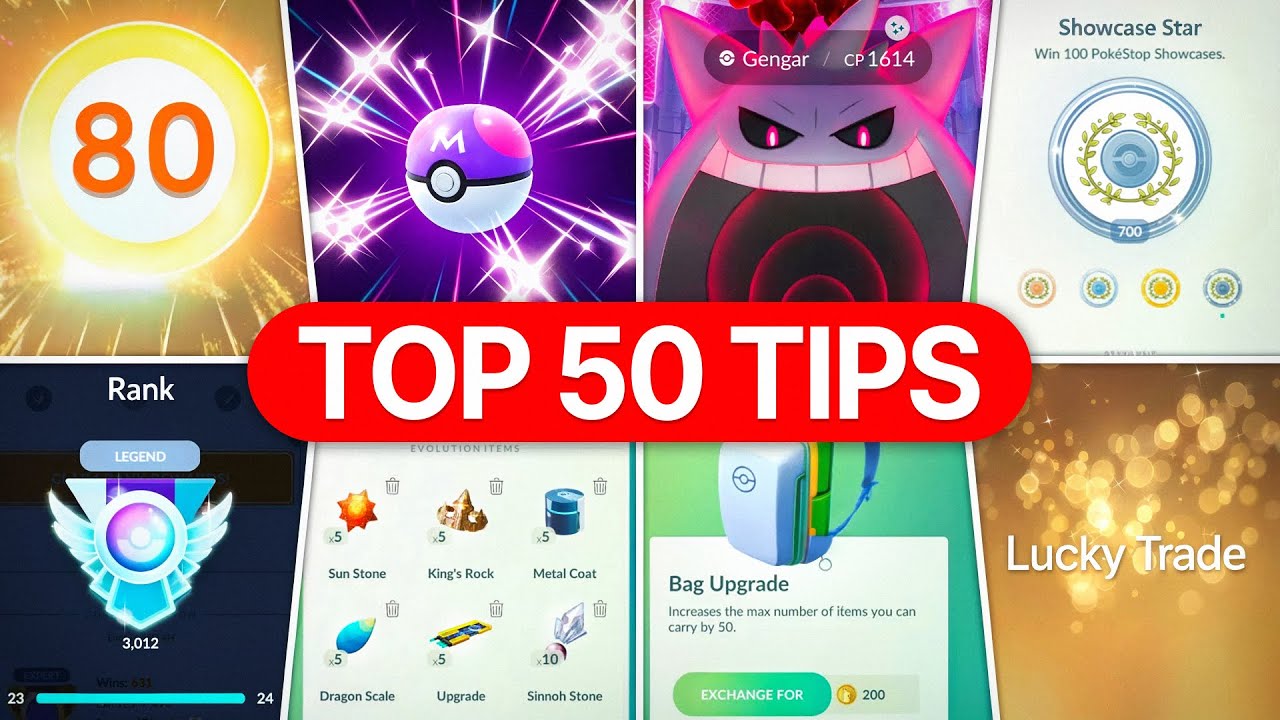
- Evolution Items: You do not need 20 Sun Stones or Up-Grades. Keep 2–3 of each rare evolution item and delete the rest. They are rarely needed in such high volume, and you can always earn more through weekly research breakthroughs.
- Berries: Keep Razz Berries and Pinap Berries for immediate use, but don't hesitate to feed excess Nanab or Razz berries to Pokémon in Gyms. This earns you Stardust and a chance at receiving Candy for that species, while simultaneously freeing up bag space.
Pokémon Storage: Quality Over Quantity
Many players fall into the trap of keeping "one of everything." In the current meta of Pokémon GO, this is a recipe for stagnation. If you aren't using a Pokémon for Gym defense, Raid DPS, or Master/Ultra/Great League PvP, it is taking up a slot that could be used for a meta-relevant catch.
The Transfer-on-Sight Policy
- IV Filtering: Use the search bar to filter by IVs. A quick search for
0*,1*,2*identifies Pokémon with poor stats. Unless you are saving specific species for trading, these should be transferred for Candy immediately. - Legacy vs. Meta: Returning players often hold onto "Legacy" Pokémon from 2016–2017. While these may have sentimental value, they are often outclassed by current Pokémon with better movesets. If a Pokémon isn't "meta-relevant" (check current Raid attacker rankings), it is likely just taking up space.
- The "Tag" System: Utilize the in-game Tagging feature to categorize your Pokémon. Create tags like "Trade," "PvP Ready," and "To Evolve." This keeps your storage organized and prevents you from accidentally transferring a Pokémon you intended to power up.
Strategic Spending: Raid Passes and Premium Resources
Inventory management is not just about deletion; it is about intentional acquisition. Premium items, such as Raid Passes, should be treated as high-value currency.
- Raid Pass Discipline: Never waste a Premium or Remote Raid Pass on a Tier 1 or Tier 3 raid unless you are specifically hunting for a Shiny or a "hundo" (100% IV) that you intend to max out. Always save your passes for Legendary Raids or Mega Raids that provide top-tier meta counters.
- Event Readiness: When an event is announced, clear your bag 24 hours in advance. If the event features a high spawn rate of a specific Pokémon, you will need hundreds of balls. If the event is Raid-focused, you need to ensure your bag has room for the Rare Candy and TMs that drop upon completion.
The Cost of Passive Play vs. Active Grinding
Your storage strategy should shift based on your current play cycle.
- The "Ready State": If you are a casual player, you don't need to spend real money to max out your storage to 5,000 slots. However, you should aim to maintain a "Ready State"—a baseline of 100+ Ultra Balls and 20+ Max Revives. This allows you to jump into a surprise raid or a high-spawn event without needing to stop and clear your bag first.
- The "Grinder" Mindset: For active players participating in Community Days, your inventory is your biggest asset. If your bag is full, you cannot catch. If you cannot catch, you lose out on the Stardust multiplier and the chance to find a Shiny. Check your storage every time you hit a PokeStop cluster; if you are at 90% capacity, it is time to delete or evolve.
Common Mistakes to Avoid
- Hoarding TMs: You do not need 50 Fast TMs. Keep a buffer of 10–15 and discard the rest. They take up space and are easily replaced by winning raids.
- Keeping "High CP" Trash: A Pokémon with high CP but low IVs is often a trap. It will cost more Stardust to power up later, and it will perform worse in competitive play. Always prioritize IVs over CP for long-term investment.
- Ignoring the "Search" Function: Pokémon GO has a robust search string system. Learn to use
age0,shiny,4*, andcp-1500to quickly sort through your collection. Not using these tools makes manual management significantly slower and more prone to error.
Final Advice: The Weekly Audit
The most successful trainers make inventory management a habit, not an emergency. Spend five minutes every Sunday evening clearing out your bag and transferring unwanted Pokémon. By keeping your storage lean, you ensure that you are always prepared for the next wave of events, helping you climb the ranks, complete your Pokédex, and maximize your Stardust gains in Pokémon GO.

Free Pokémon GO Codes
Current active codes and how to redeem them.

Emily Johnson
Emily writes practical mobile strategy guides with a focus on resource planning, base progression, and the early decisions that shape a long-term account.
COMMUNITY
Player Comments
120 players commented on this guide.
Can you add more details about resources in a future update?
This guide answered the exact question I had.
Nice guide. I am checking the other Pokémon GO articles next.
I wish I had read this before upgrading the wrong thing.