
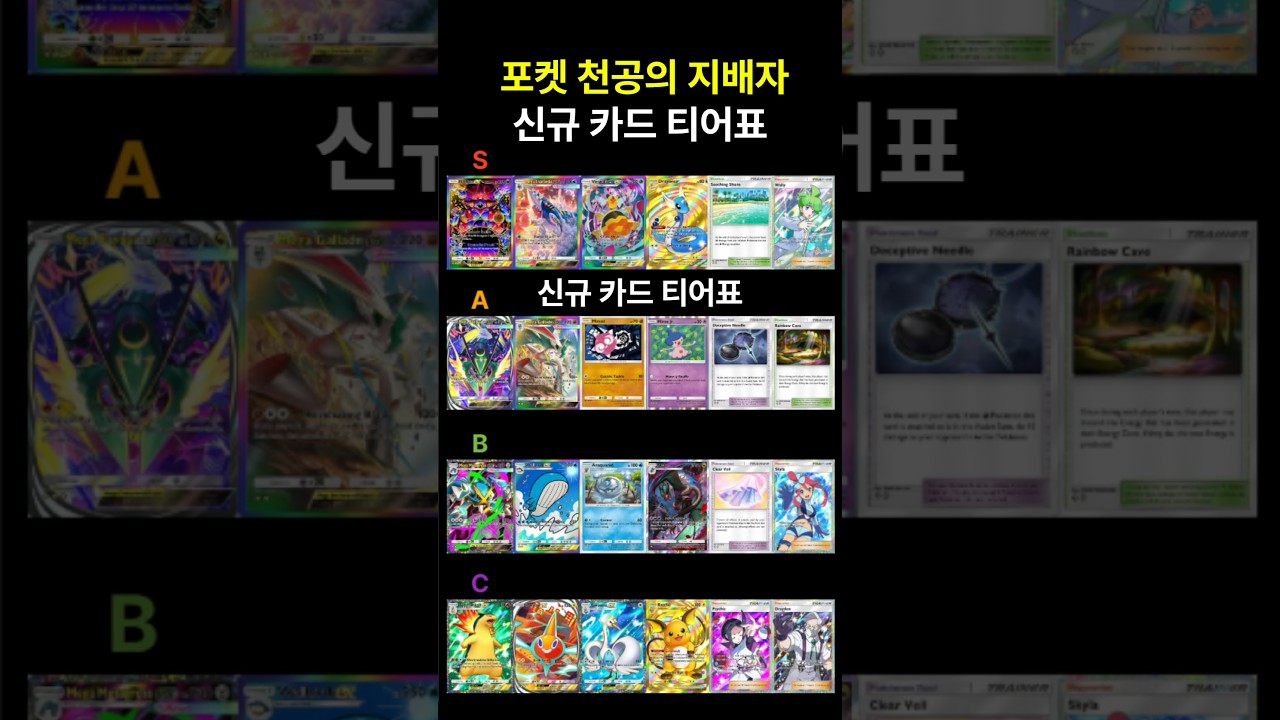
In Pokémon TCG Pocket, the Ruler of the Skies card hierarchy is defined by high-burst sweepers and energy acceleration engines. Rayquaza ex and dedicated Dragon-type accelerators hold top priority due to their damage scaling and ability to dictate match tempo. When spending resources on this expansion, your immediate goal is securing a functional S-Tier sweeper shell before investing in secondary utility cards.
Card Tier Comparison
The table below compares the standout cards and evolutionary lines from the Ruler of the Skies card pool based on their competitive roles, primary advantages, and operational drawbacks.
| Card / Engine | Tier | Primary Role | Core Strength | Main Trade-Off |
|---|---|---|---|---|
| Rayquaza ex | S | Main Sweeper | Scalable burst damage and high HP | Heavy multi-energy requirement |
| Dragon Setup Engine | S | Acceleration Support | Bypasses standard energy attachment limits | Low utility if drawn late |
| Skarmory | A | Early Wall / Harasser | High defense with low-cost early attacks | Cannot close games against high-HP ex targets |
| Altaria | A | Defensive Bench Support | Passive damage reduction and tempo buffer | Requires Stage-1 evolution investment |
| Flygon Line | B | Bench Sniper / Spread | Targets benched and damaged Pokémon | Slow setup in fast matches |
| Salamence Line | B | Secondary Heavy Hitter | High single-turn burst output | High retreat cost and evolution vulnerability |
S-Tier: Meta Anchors
S-Tier cards dictate deckbuilding and prize pacing.
- Rayquaza ex: Acts as the central attacker of the set. Its damage scales with attached energy, and its elevated HP protects it against standard one-hit knockouts from aggressive basic leads. The card demands significant energy investment, making it dependent on reliable setup.
- Dragon Setup Engine: Mitigates the set's energy costs by accelerating energy beyond the standard one attachment per turn. The optimal opening sequence requires benching these acceleration basics within the first two turns, absorbing early hits, and transitioning into Rayquaza ex before the opponent completes Stage-2 evolutions.
A-Tier: Core Support and Early Stalls
A-Tier cards provide essential defense and tempo control, though they lack the standalone power to finish games against opposing ex cards.
- Skarmory: Functions as an active-spot wall in the early game. It absorbs hits and applies pressure for minimal energy, buying time to attach energy to bench sweepers without surrendering prizes.
- Altaria: Provides passive damage reduction or bench insulation. This Stage-1 support card mitigates spread damage, but it requires dedicated deck space and evolution setup, limiting its splashability across different deck types.
B-Tier: Situational Techs and Heavy Evolutions
B-Tier cards offer specialized utility or secondary attack power, but they introduce consistency risks into a 20-card deck.
- Flygon Line: Specializes in bench sniping and picking off damaged targets. In fast-paced games, the turns required to evolve into Flygon can leave you vulnerable to direct aggression.
- Salamence Line: Delivers heavy burst damage but suffers from a steep retreat cost and the inherent inconsistency of Stage-2 lines.
Because deck space is constrained, running multiple copies of B-Tier evolution lines reduces your likelihood of drawing essential staple trainers like Professor’s Research or Poké Ball. Limit these inclusions to single copies paired with search items.
Booster Pack and Crafting Priorities
To build a competitive deck efficiently, direct your resources toward core archetypes rather than broad collection goals:
- Focus pack openings on Rayquaza ex: Open booster packs that contain Rayquaza ex until you pull your first copy, as top-tier sweepers are the primary requirement for functional decks.
- Hold pack points for high-tier gaps: Do not spend pack points on common cards or mid-tier Stage-1 Pokémon that appear frequently in regular openings.
- Craft the second ex copy: Spend 500 pack points to craft a second Rayquaza ex to stabilize your primary deck's consistency before considering any B-Tier tech cards.

Free Pokémon TCG Pocket Codes
Current active codes and how to redeem them.

Emily Johnson
Emily writes practical mobile strategy guides with a focus on resource planning, base progression, and the early decisions that shape a long-term account.
COMMUNITY
Player Comments
97 players commented on this guide.
Good guide for Pokémon TCG Pocket players. The strategy part was useful.
I wish I had read this before upgrading the wrong thing.
This helped me understand strategy much better.
The explanation is clear, especially for beginners.