
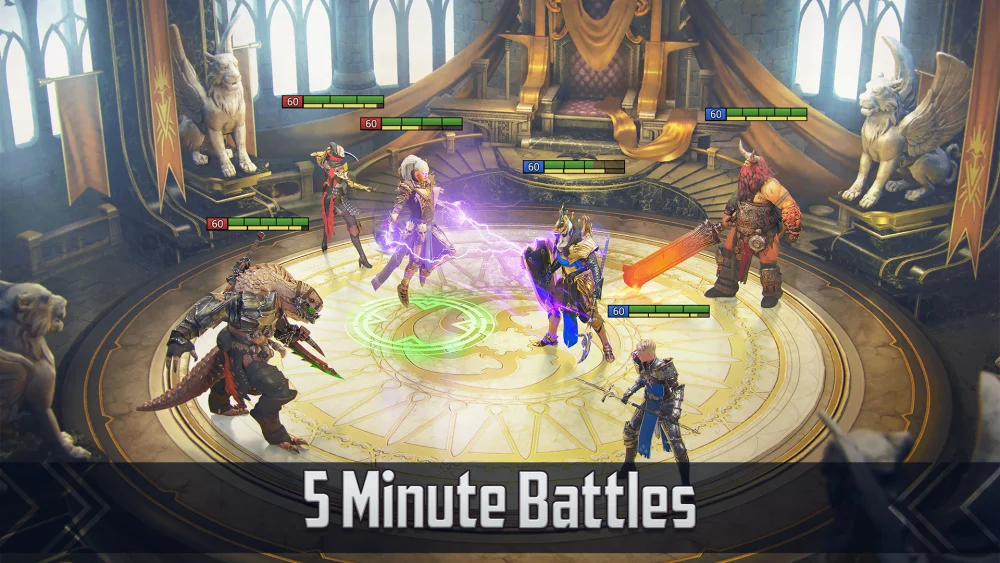
To succeed in the evolving landscape of RAID: Shadow Legends, players must transition from short-term gains to long-term resource preservation. When developers hint at "something big," it typically signifies fundamental shifts in the meta, the introduction of new tiers of power, or revamped reward structures. By shifting your focus toward hoarding shards, energy, and premium currency, you position your account to immediately capitalize on new features rather than scrambling to catch up once they go live.
The Strategic Importance of Resource Hoarding
In RAID: Shadow Legends, resources are the primary lever for progression. Many players fall into the trap of spending shards or energy the moment they become available, often chasing marginal gains in routine events. However, the most successful players treat their resources as a strategic stockpile.
- Agility: Hoarding allows you to pivot your account focus instantly when a new meta emerges.
- Event Efficiency: Major updates often coincide with high-value events. Having a massive bank of shards allows you to hit top-tier rewards without depleting your account's long-term health.
- F2P/Low-Spend Advantage: If you do not spend heavily, your only true advantage is timing. Saving shards for "Guaranteed Champion" events or fusion cycles provides a higher return on investment than random pulls during standard 10x or 2x events.
Decoding Developer Roadmaps and Signals
RAID: Shadow Legends developers frequently drop hints through "State of the Game" posts, content creator partnerships, and minor balance patches. Learning to read these signals is vital for long-term account health.
If developers mention quality-of-life improvements or adjustments to specific game modes like Hydra or Live Arena, evaluate your current roster. If the shift favors specific affinities or mechanics (e.g., increased emphasis on debuff cleansing or passive damage mitigation), start farming the appropriate gear sets and identifying champions with those kits now.
The Sunk Cost Fallacy: Avoid over-investing in "niche" champions just because they are currently effective in a temporary meta. If a champion’s only utility is a specific damage threshold that is about to be power-crept, stop pouring resources into their masteries and skill tomes. Focus on champions with "evergreen" utility—those who offer consistent buffs, debuffs, or crowd control—as they are less likely to fall out of favor when new power-creep units arrive.
Advanced Shard Management Tactics
Summoning events are the heartbeat of RAID: Shadow Legends. To maximize your value, you must treat your shard count as a bank account.
- Stop "Pulling to Scratch the Itch": Never pull shards outside of a specific event or objective. If your goal is a guaranteed legendary or a fusion, every shard spent outside that window is a wasted opportunity.
- Monitor Event Difficulty: When Plarium increases the point requirements for summoning events, it is often a precursor to a larger, more resource-intensive release. Treat increased event costs as a warning to tighten your spending.
- The Reserve Buffer: Always maintain a "floor" for your resources. For example, aim to never drop below 50 Ancient Shards or 5 Sacred Shards. This buffer ensures that if a sudden, high-impact event launches, you can participate immediately without being forced into low-value microtransactions.
Adapting to Power Creep and Meta Shifts
Power creep is an inherent part of the RAID: Shadow Legends lifecycle. As new champions are released, older units often find themselves relegated to the bench. However, you can protect your account by focusing on "Utility-First" building.
Utility vs. Pure Damage
Pure damage dealers are the most susceptible to power creep. A new champion with higher multipliers or unique passives can make your previous damage dealer obsolete overnight. Conversely, utility champions—those who provide essential functions like Revive, Shield, Increase Defense, or Turn Meter control—maintain their value for years. When preparing for an update, prioritize building these versatile units. They are the bedrock of any team, regardless of which new damage dealer is currently dominating the Arena.
The "Wait-and-See" Strategy
When a massive update drops, avoid the temptation to instantly burn your resources to max out the new champions. Let the community theory-crafters and content creators test these units first.
- Community Analysis: Does the new champion truly change the Hydra meta, or is it just a slight improvement over an existing unit?
- Bug Reports: New releases occasionally ship with unintended interactions or bugs that may be patched shortly after.
- Long-Term Viability: Wait at least one week after a launch to see if the champion holds up in real-world, high-difficulty encounters.
Making Decisive Choices for Account Longevity
Ultimately, preparing for major content shifts is about discipline. You must decide whether you want to chase the "shiny new toy" or build a stable, endgame-ready roster that can handle whatever RAID: Shadow Legends throws at it next.
Practical Checklist for Preparation:
- Energy: Stop farming gear unless it is part of a necessary progression goal. Keep your energy refills in your inbox to use during energy-intensive events.
- Silver: Always have a massive silver reserve. Gear swapping and upgrading during a major meta shift can cost tens of millions of silver.
- Champion Training: Keep a stock of food (leveled-up lower-tier champions) ready to rank up and level new, high-impact champions the moment you acquire them.
By maintaining this proactive stance, you shift from being a player who reacts to the game to one who is prepared for it. Use every tool at your disposal—including community resources and official developer communications—to stay one step ahead of the curve, ensuring your account remains relevant and powerful through every update RAID: Shadow Legends introduces.

Free RAID: Shadow Legends Codes
Current active codes and how to redeem them.

Sarah Williams
Sarah specializes in RPG and collection games, explaining team building, character growth, and beginner-friendly ways to avoid expensive early mistakes.
COMMUNITY
Player Comments
145 players commented on this guide.
The explanation is clear, especially for beginners.
This guide answered the exact question I had.
This saved me time in the early game.
I wish I had read this before upgrading the wrong thing.