
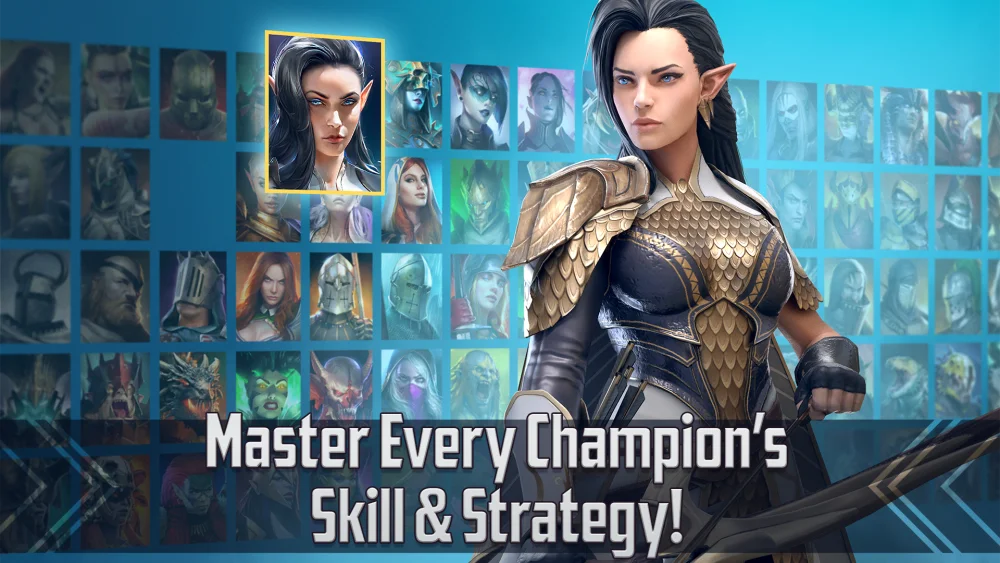
In RAID: Shadow Legends, your account’s progression speed is directly tied to how efficiently you allocate your limited resources. New players often fall into the trap of upgrading every high-rarity champion they pull, only to find themselves stuck with a roster of under-geared, non-synergistic units. To dominate the game’s various modes, you must shift your focus from "rarity" to "utility."
This guide provides the framework for auditing your roster, identifying high-value champions, and making the tactical decisions necessary to build a cohesive team capable of conquering the Campaign, Dungeons, and Clan Boss.
1. The Foundation: Prioritizing the Campaign Farmer
Your first, most crucial goal in RAID: Shadow Legends is to establish a "Campaign Farmer." This is the champion responsible for soloing Stage 12-3 (Brutal difficulty) to level up your "food" champions.
- Why AoE Matters: A champion with Area of Effect (AoE) skills on short cooldowns clears waves in seconds rather than minutes.
- The Starter Choice: Most players begin with a starter champion (Kael, Elhain, Athel, or Galek) who is specifically designed to be an effective early-game farmer.
- The Milestone: Your absolute first priority is taking your starter to Level 60 and Rank 6. Do not waste resources taking five different champions to Level 50; one Level 60 champion is significantly more powerful than a team of Level 50s.
2. Utility Over Raw Power: The "Debuff" Hierarchy
As you move beyond the campaign, the game shifts from raw damage to survival and control. A champion's value is determined by the debuffs they bring to the fight. When evaluating a new pull, look for these three pillars of success:
- Decrease Defense (60%): This is the single most important debuff in the game. It effectively doubles your team's damage output against bosses and tanky mobs. Any champion with a consistent AoE Decrease Defense is a "keep."
- Decrease Attack (50%): Essential for Clan Boss and dungeon survival. If your team cannot mitigate the boss's incoming damage, you will lose regardless of your healing output.
- Turn Meter Manipulation: Skills that decrease enemy Turn Meter (TM) or boost your own team’s Speed allow you to take more turns than the opponent. In higher-tier content, this is often the difference between a win and a wipe.
3. Understanding Stat Scaling and Survivability
Not all damage dealers are built the same. Understanding how a champion’s damage scales is vital for mid-game gear optimization.
- Defense-Based Scaling: Champions who scale off Defense (DEF) are inherently superior for progression. Because you are building them with DEF% gear to increase their damage, they simultaneously become naturally tanky, allowing them to survive longer in challenging content like Dragon’s Lair or the Spider’s Den.
- Attack-Based Fragility: Attack-based champions are usually "glass cannons." They require significant support (shields, heals, or crowd control) to stay alive. If you are struggling to clear a stage, check if your team is too reliant on squishy Attack-based units.
- Max HP Scaling: For late-game boss content, look for champions whose skills scale based on the Enemy's Max HP. These units remain relevant even as enemy health pools grow exponentially in higher dungeon levels.
4. The 6-Star Decision Framework
Taking a champion to 6 stars is a massive investment involving rank-up food, masteries, and gear. Before you commit, apply the "Role-Utility Test":
- Does this champion fill a missing role? (e.g., Do I have a reliable Reviver? Do I have a dedicated Poisoner for Clan Boss?)
- Is this champion "Account-Wide"? Can they be used in multiple areas (Dungeons, Arena, and Clan Boss), or are they strictly for a niche Faction War stage?
- Are there books available? If you cannot book a champion’s skills to lower their cooldowns, they may be less effective than a "Rare" or "Epic" champion you can fully book.
If a champion is only useful in one specific, non-essential area, leave them at Rank 4 or 5 until your core team is fully established at 6 stars.
5. Strategic Resource Allocation
RAID: Shadow Legends is a game of incremental progress. To avoid stalling your account, follow these rules:
- Don’t Chase Rarity: A fully booked, well-geared "Rare" champion is frequently better than a "Legendary" champion with no books and poor gear.
- Focus on Masteries: Once your core champion is at 6 stars, spend Gems to max out their Masteries. The "Warmaster" or "Giant Slayer" masteries are mandatory for high-level Clan Boss performance.
- Gear Quality > Champion Quality: A champion is only as good as their artifacts. Spend your energy farming the Dragon for Speed and Lifesteal sets rather than constantly pulling shards for new champions you lack the gear to support.
6. Common Mistakes to Avoid
- Feeding Rares to Commons: Never use Rare, Epic, or Legendary champions as "food" for ranking up. Even if a champion seems weak now, they may receive a "buff" in a future patch or become essential for a specific Faction War team later.
- Ignoring Speed: In RAID: Shadow Legends, Speed is the most important stat on every single champion. If your champion is too slow to take a turn, their utility is effectively zero.
- Spreading Resources Thin: It is better to have one perfectly built, fully-mastered team of five Level 60s than fifteen Level 50s.
By focusing on champions that provide consistent debuffs, scale defensively, and fit into your immediate progression goals, you will build a resilient account capable of tackling the toughest challenges RAID: Shadow Legends has to offer. Always prioritize the "Why" behind your team composition, and your efficiency will naturally skyrocket.

Free RAID: Shadow Legends Codes
Current active codes and how to redeem them.

Emily Johnson
Emily writes practical mobile strategy guides with a focus on resource planning, base progression, and the early decisions that shape a long-term account.
COMMUNITY
Player Comments
136 players commented on this guide.
Can you add more details about strategy in a future update?
The tips are practical and easy to follow.
The explanation is clear, especially for beginners.
This helped me understand strategy much better.