
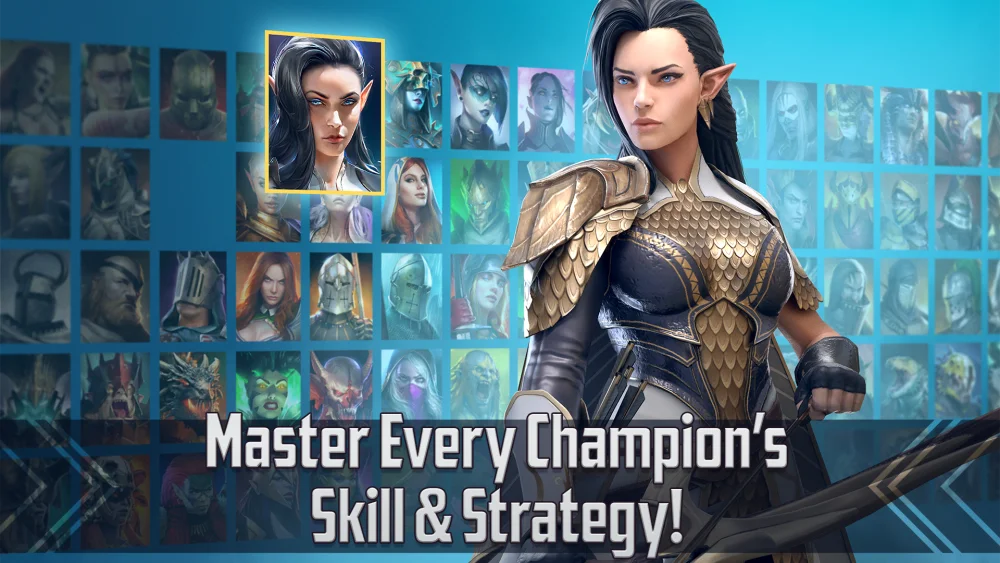
Building a reliable support core in RAID: Shadow Legends is the single most important factor for transitioning from early-game progression to consistent late-game farming. While damage dealers are necessary to finish fights, support champions provide the stability required to survive the mechanics of Dungeons, the Clan Boss, and high-stakes Arena battles.
To build an effective roster, you must stop viewing supports as mere "healers" and start viewing them as tactical tools designed to manipulate the flow of battle. This guide explains how to identify, build, and deploy the right support champions to ensure your team survives even the most punishing encounters.
The Strategic Importance of Debuff Cleansers
Cleansing is arguably the most critical mechanic in RAID: Shadow Legends. As you advance into higher stages of the Dragon’s Lair or the Ice Golem’s Peak, bosses transition from dealing raw damage to applying debilitating debuffs like Stun, Freeze, Fear, or decrease stats.
A support champion who can remove these effects is non-negotiable. When evaluating a potential cleanser, look for the following criteria:
- Team-Wide vs. Single Target: Prioritize champions who cleanse the entire team. Single-target cleansers are often too slow to handle multi-wave debuffs.
- Secondary Utility: The best cleansers provide a "bonus" on top of the cleanse. A champion that cleanses and places an Increase Defense buff or boosts your team's Turn Meter is infinitely more valuable than one who only removes debuffs.
- Cooldown Efficiency: Your cleanser must be fast enough to cycle their skill before the boss moves again. If your cleanser’s primary skill has a 4-turn cooldown, consider using gear that provides cooldown reduction or pairing them with a champion who can reset ability timers.
Expert Tip: Always build your cleanser with high Speed and reasonable Resistance. If your cleanser is stunned or frozen, they cannot save the team, leading to an immediate failure.
Evaluating Revivers: Beyond the "Pick Up"
Revivers act as your account’s "insurance policy." They allow you to clear content that is slightly above your current gear level by mitigating the impact of an unlucky hit or an AI mistake. However, a mediocre reviver is worse than a strong damage dealer; if the reviver dies early, your team loses its safety net.
When selecting a reviver, prioritize those who offer "Revive with Buffs." Bringing a champion back with 30% HP is often a death sentence, as they will likely be targeted again immediately. A reviver who places a Shield, Unkillable, or Increase Defense buff upon reviving a teammate provides them the window of time needed to heal back up or use their own defensive skills.
- Priority Stat: HP and Defense. If your reviver is the most fragile unit on the team, they will be the primary target for AI enemies.
- Strategy: In Faction Wars or Doom Tower, keep your reviver alive at all costs. Using them to "tank" early hits can be a viable strategy if they have high survivability stats.
Healing vs. Damage Mitigation: Choosing the Right Tool
Newer players often focus exclusively on healing, but in the mid-to-late game, "Damage Mitigation" is far superior. Healing only matters after you have taken damage; mitigation prevents that damage from occurring in the first place.
The Support Hierarchy
- Shielding & Ally Protection: These are your primary defensive layers. Ally Protection is particularly powerful against Clan Boss, as it spreads massive incoming damage across your tankiest units, preventing any single champion from being one-shot.
- Increase Defense: A 60% Increase Defense buff effectively doubles the survivability of your team. This is often more impactful than a raw heal.
- Active Healing: Best used for "topping off" the team. Use these to recover from minor chip damage or to sustain your team through long, drawn-out dungeon waves.
- Continuous Healing: Often overlooked, these are incredibly effective in long-term boss fights where the damage output is constant and slow, allowing your team to stay topped off without wasting high-cooldown healing abilities.
Balancing Your Team for Progression
One of the most common mistakes in RAID: Shadow Legends is "over-supporting." If you run a team with three healers and two revivers, you will stay alive, but you will never clear the stage within the time limits required for certain missions, and your farming efficiency will plummet.
The Progression Rule of Thumb
- Early Game: 2 Support, 1 Debuffer, 2 Damage Dealers.
- Mid Game: 1 Support, 1 Debuffer, 1 Crowd Control, 2 Damage Dealers.
- Late Game: Often 1 "Super Support" (someone who cleanses, buffs, and heals) and 4 specialized champions.
Always aim for the minimum amount of support necessary to survive. Once your team can survive the boss encounter, replace your weakest support with a damage dealer to speed up your farming times.
How to Prioritize Your Champion Upgrades
Don't get distracted by high-tier lists that prioritize champions you don't own. Instead, perform a "Gap Analysis" on your current roster:
- Identify the Failure Point: Record why you are losing. Are you dying to debuffs (need a Cleanser)? Are you dying to burst damage (need Shield/Ally Protection)? Are you losing one unit early (need a Reviver)?
- Skill Tome Investment: Only commit legendary skill tomes to support champions that have a massive impact on your core teams (e.g., Clan Boss or Arena). Rare and Epic supports are often easier to book and can be just as effective.
- Speed Tuning: In almost every case, your support champion should be faster than your damage dealers. If your buffer goes after your damage dealer has already attacked, you have wasted a turn of potential damage.
- Gear Set Synergy: Don't underestimate the power of support-focused gear sets like Guardian or Bolster. These sets provide passive mitigation that works even if your support is disabled by the enemy.
By focusing on these mechanics, you will build a robust, resilient team capable of tackling the hardest content RAID: Shadow Legends has to offer. Remember: a champion is only as good as the role they play in your specific team composition.
Free RAID: Shadow Legends Codes
Current active codes and how to redeem them.

Sarah Williams
Sarah specializes in RPG and collection games, explaining team building, character growth, and beginner-friendly ways to avoid expensive early mistakes.
COMMUNITY
Player Comments
117 players commented on this guide.
This saved me time in the early game.
The tips are practical and easy to follow.
Can you add more details about strategy in a future update?
This helped me understand strategy much better.