
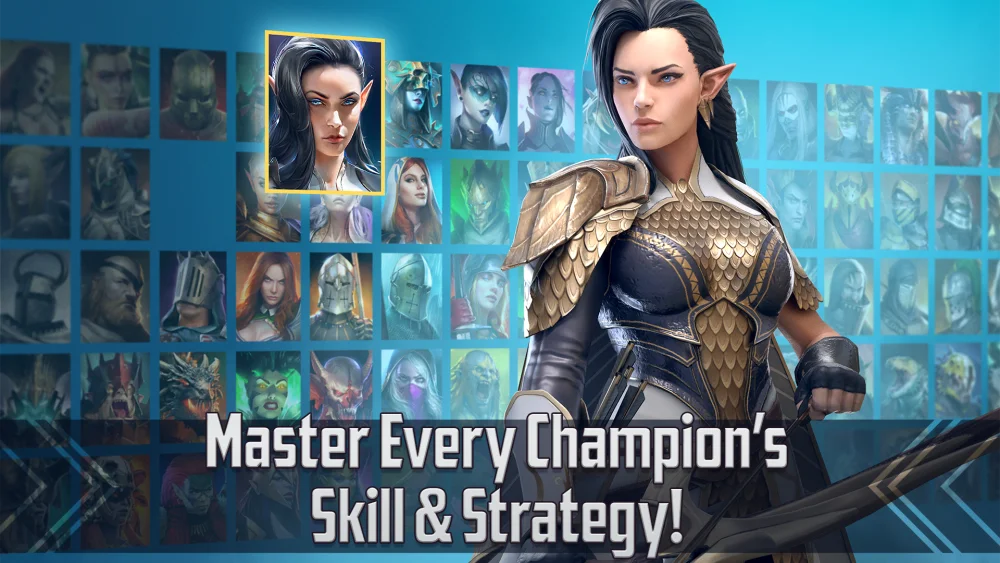
Thriving in RAID: Shadow Legends as a free-to-play (F2P) player is not only possible; it is a test of strategic planning and long-term patience. Because you cannot rely on purchasing premium packs to bypass progression gates, you must make every piece of Energy, every Gem, and every Shard count. Success in RAID is defined by your ability to build a self-sustaining engine that converts time into power.
Prioritize Your Starter Champion for Farming
Your first and most important goal is to reach a single 6-star champion as quickly as possible. This champion—ideally Kael, due to his versatility in both campaign farming and Clan Boss damage—is your "Farmer."
- The Campaign Engine: A 6-star farmer allows you to clear Brutal Difficulty Stage 12-3 solo. This stage is the most efficient location to level up "food" (low-rarity champions used for rank-up fodder).
- The Power Spike: Do not spread your resources thin by trying to build a full team of five 6-stars at once. One maxed-out champion can carry four lower-level champions through campaign stages, effectively turning your Energy into account-wide progression.
- Mastery Investment: Use your first 800 Gems to unlock full Masteries for your starter champion. This provides a massive immediate power boost that would otherwise take thousands of Energy to farm in the Minotaur’s Labyrinth.
Establish a Disciplined Daily Routine
Consistency is the single greatest equalizer between spenders and F2P players. You must treat your daily tasks as a rigid roadmap to ensure you are accumulating the resources necessary for late-game content.
- Daily Quests: Complete every daily quest without fail. These provide a steady stream of Gems, Energy, and Shards.
- Clan Boss Participation: This is the most important daily activity. The Clan Boss is the only consistent source of Shards and Skill Tomes in the game. Even if you can only manage the "Easy" difficulty chest, the potential for high-tier rewards grows exponentially as your damage increases.
- Marketplace Refresh: Check the in-game Market every hour to buy Mystery Shards and any Champion fragments that appear. These are essential for completing "Champion Chase" events later.
Master Gem and Energy Economy
Gems are the most valuable currency for a non-spender because they are finite. Never waste them on "lucky" shard pulls, as the drop rates for legendary champions are statistically unfavorable for small, sporadic pulls.
- The Gem Mine: If you intend to play for more than a few weeks, unlock the Gem Mine to level 3 immediately. It is the only passive income generator in the game and will pay for itself over time.
- Energy Management: Never let your Energy bar sit at maximum. The regeneration rate is your most precious asset. Use your Energy on events that provide double XP or double silver bonuses.
- Avoid "Convenience" Spending: Never use Gems to revive in a dungeon or to buy energy potions unless you are on the verge of completing a high-value milestone reward.
Time Your Summons for Events
The biggest trap for new players is "pulling" shards the moment they receive them. In RAID: Shadow Legends, the timing of your summons is just as important as the champions you pull.
- Wait for x2 Events: Only open your Ancient, Void, and Sacred shards during "x2" summon events, which double the chances of pulling Epic and Legendary champions.
- Champion Chase and Summon Rush: Save your shards for these recurring events to earn "fusion" materials or legendary skill books. By hoarding shards for months, you can secure powerful fusion champions that would otherwise cost thousands of dollars to obtain through random luck.
- The "Pity" System: Understand that RAID has a "pity" system. Every shard you open without getting a legendary increases your odds. By saving for specific events, you maximize the impact of your eventual "pity" pull.
Optimize Tournament Participation
As a F2P player, you cannot win every leaderboard. Trying to compete with "Whales" (high-spending players) for the top rank in a tournament is a fast way to waste resources.
- Focus on Milestones: Aim for the milestone rewards rather than the leaderboard rank. Milestone rewards are guaranteed payouts for reaching specific point totals.
- Selective Participation: Identify which tournaments provide resources you actually need (e.g., Energy or Skill Tomes). If a tournament offers a reward that doesn't benefit your immediate progression, ignore it entirely and save your energy for the next one.
- Energy Hoarding: Save your "Energy Refills" from your inbox for major Fusion events. During these events, you often need to burn thousands of energy to complete specific dungeon runs; having a stockpile ready prevents you from stalling.
Strategic Decision-Making: The "Food" System
The "Food" system is the backbone of your account. You will find yourself constantly leveling up 1-star and 2-star champions just to sacrifice them to rank up your core team.
- Don't Feed Rares: Before feeding any Rare champion, check a community guide to see if they are needed for a "Fusion" event or if they are "top-tier" for Clan Boss or Faction Wars. Use the "Lock" feature on champions you want to keep.
- Efficiency: When leveling food, always run the hardest campaign level you can clear with your farmer and at least one or two fodder champions. Never run a dungeon with a team that isn't capable of clearing it efficiently, as wasted time is wasted progress.
By focusing on these core pillars—Starter champion efficiency, daily consistency, disciplined gem spending, and event-based summoning—you will eventually build an account capable of tackling the hardest content in RAID: Shadow Legends. Remember, this is a marathon, not a sprint; your progress is measured in months, and the most successful F2P players are those who can resist the urge to spend and instead master the game’s mechanics.

Free RAID: Shadow Legends Codes
Current active codes and how to redeem them.

Emily Johnson
Emily writes practical mobile strategy guides with a focus on resource planning, base progression, and the early decisions that shape a long-term account.
COMMUNITY
Player Comments
131 players commented on this guide.
This saved me time in the early game.
Good guide for RAID: Shadow Legends players. The resources part was useful.
I tried this today and it worked better than my old setup.
Nice guide. I am checking the other RAID: Shadow Legends articles next.