
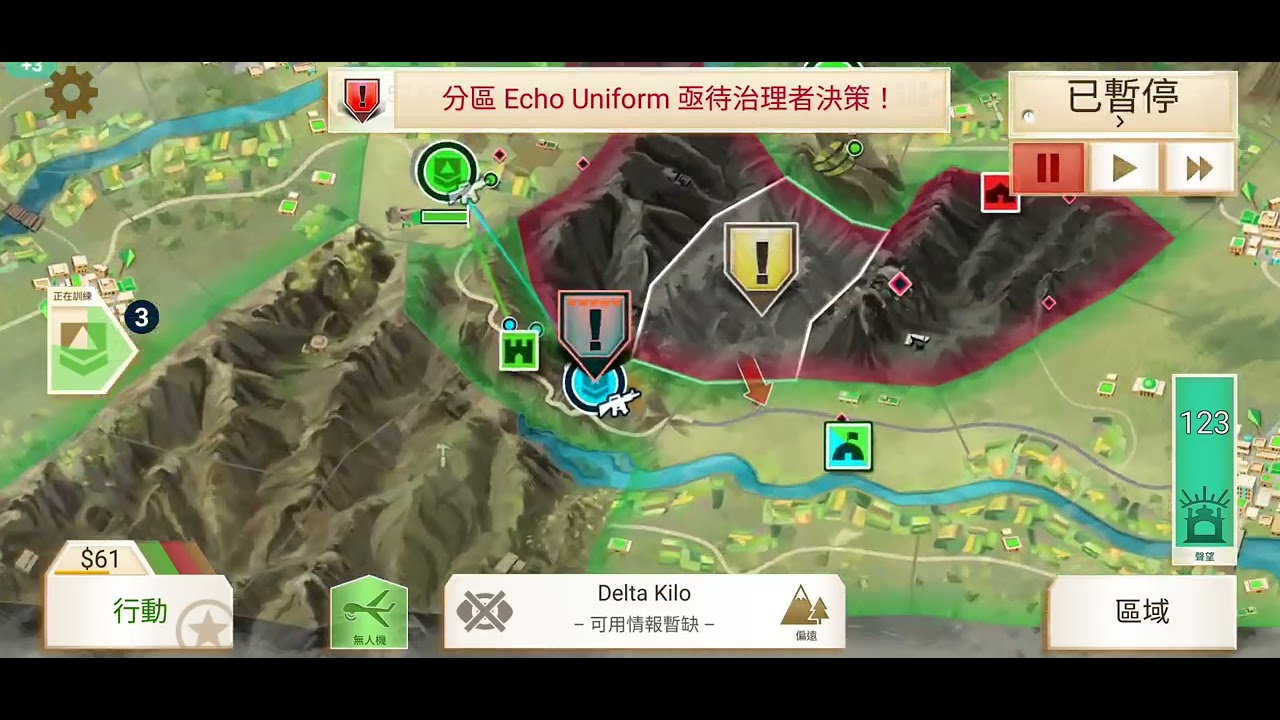
To beat the Eastern Soldier Standard Challenge in Rebel Inc., place your Operation Headquarters in a central urban sector, fund low-cost civilian services alongside regional intelligence, and contain insurgents within remote mountain zones rather than attacking them directly. Stabilizing high-density zones early offsets reputation decay, buying the time needed to train domestic security forces and negotiate a favorable peace settlement.
Choose HQ Placement and Early Civilian Initiatives
Place your Operation Headquarters inside or directly adjacent to a major urban sector. High-population zones stabilize faster when receiving administrative rollouts, which quickly provides an economic cushion and prevents early reputation loss caused by lack of stability. Placing your base in rural or mountainous terrain slows initial stabilization and leads to rapid reputation penalties before your military can intervene.
Immediately establish zone intelligence and public trust through the following rollout:
- Fund Intel Gathering: Purchase District Representatives and Regional Census first to clear the fog of war in neighboring sectors. Military units require active zone intelligence to combat hostile forces effectively.
- Roll Out Basic Services: Invest in low-cost civilian initiatives such as Water Supplies, basic health sanitation, or School Expansion. These satisfy baseline local concerns and build support without triggering rapid price inflation.
- Pace Your Purchases: Buy one or two initiatives at a time, allowing inflation meters to cool down across several in-game months before committing additional funds.
Control Inflation and Manage Corruption
Every civilian and military program purchased increases corruption risk, which converts into actual corruption over time. Left unaddressed, corruption erodes public support and neutralizes the stability gained from civilian initiatives.
To protect your budget and authority:
- Invest in Anti-Corruption I Early: Purchase this upgrade early in the operation to place a ceiling on graft before purchasing military units.
- Acquire Public Relations & Media: This initiative acts as a force multiplier, amplifying the support generated by existing civilian rollouts without requiring expensive additional construction projects.
- Reserve Crisis Capital: Maintain a cash buffer so unexpected security demands do not force you into high-inflation purchases.
Contain Insurgents with Early Military Forces
Deploy two Coalition Soldier units as soon as the first insurgent cells appear. Do not chase rebels into steep hills or mountain peaks; attacking entrenched fighters across rough terrain inflicts severe combat penalties, prolongs battles, and risks split insurgent groups escaping into undefended sectors.
Use a strict containment strategy:
- Block Key Corridors: Station Coalition Soldiers in plains, farmlands, or urban borders adjacent to the insurgents to seal off population centers and highways.
- Push Rebels Into Border Mountains: Force hostile forces backward into dead-end mountain borders where they cannot threaten civilian infrastructure.
- Establish Defensive Crossfire: Hold defensive borders and wait for adjacent friendly units to provide supporting fire before pressing an attack.
- Clear Nearby Camps: Target insurgent camps in adjacent sectors only when the attack does not break your containment perimeter.
- Delay Direct Mountain Assaults: Postpone clearing rugged mountain pockets until you possess full zone intelligence and supporting combat units.
Transition to National Soldiers and Garrisons
Coalition Soldiers provide immediate tactical strength, but repeatedly extending their tours drains operational reputation. Begin recruiting your first National Soldier unit early to compensate for lengthy domestic training times.
Support your forces with Garrisons and equipment upgrades to create a self-sustaining defensive network.
| Asset Type | Primary Role | Strategic Advantage | Operational Trade-Off |
|---|---|---|---|
| Coalition Soldiers | Rapid response and containment | Immediate deployment; high initial combat strength | Drains reputation when extending deployment tours |
| National Soldiers | Permanent territorial defense | Long-term presence; no tour extension penalties | Slow training times; weaker initial combat performance |
| Garrisons | Defensive anchors and border control | Provides combat support to adjacent friendly zones | Requires regional approval and budget allocation |
Enhance domestic units with upgrades such as Interpreters & Guides or Arms Upgrades to bridge the combat gap between National and Coalition troops.
Maintain Negotiation Leverage and Stabilize the Map
Once insurgents are sealed in remote zones with no path to populated centers, peace negotiations will begin. Use your territorial control to dictate the terms of the settlement.
- Reject Early Compromises: Refuse rebel demands that grant territory, release prisoners, or weaken your armed forces, as each concession inflicts severe reputation losses.
- Finish Rural Stabilization: Keep your military focused on containment while remaining civilian programs roll out across peripheral zones to eliminate local grievances.
- Conclude the Accord: With high stability across urban and rural zones, your reputation surplus will easily absorb any minor negotiation compromises, allowing you to force a surrender or finalize a stable treaty to complete the challenge.

Free Rebel Inc. Codes
Current active codes and how to redeem them.

Emily Johnson
Emily writes practical mobile strategy guides with a focus on resource planning, base progression, and the early decisions that shape a long-term account.
COMMUNITY
Player Comments
39 players commented on this guide.
I tried this today and it worked better than my old setup.
The explanation is clear, especially for beginners.
The tips are practical and easy to follow.
This guide answered the exact question I had.