
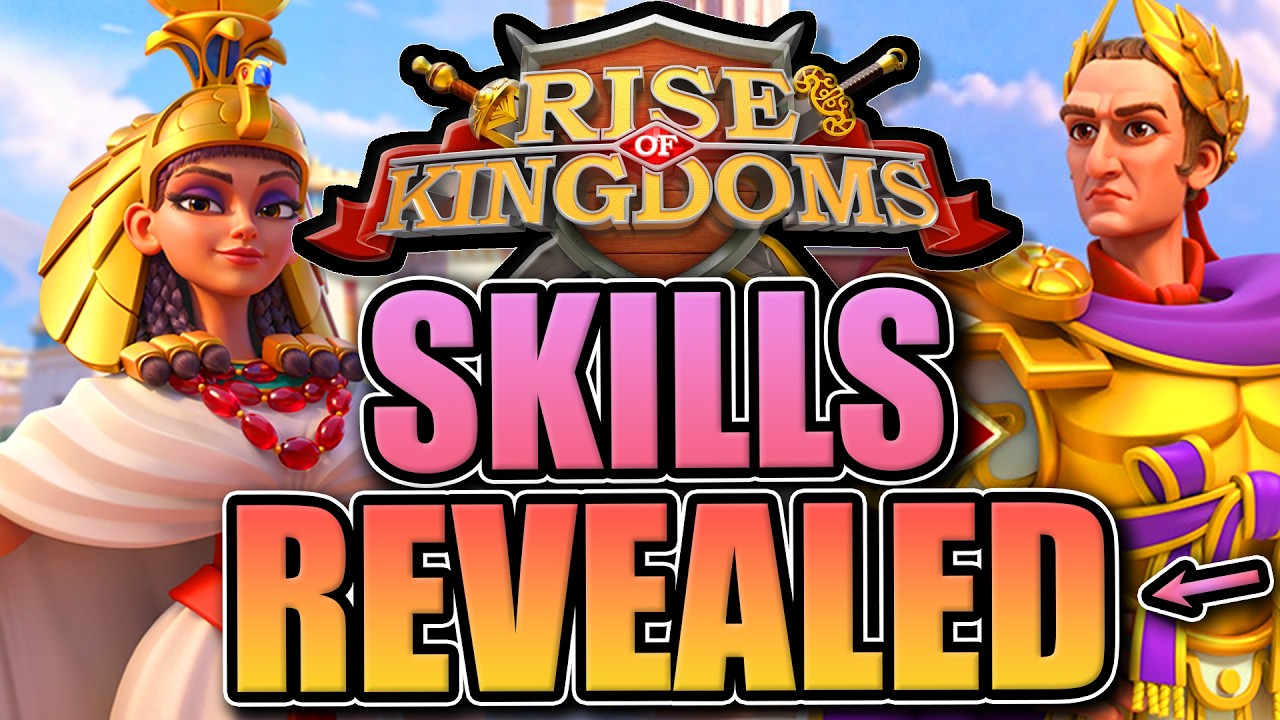
Prioritize Cleopatra Prime if your roster focuses on archers and requires burst damage coupled with defense-shredding debuffs. Choose Julius Caesar Prime if your account handles multi-troop rally support or needs a durable Leadership march to anchor open-field deathballs in Season of Conquest.
---
Julius Caesar Prime: Skills and Battlefield Strengths
Julius Caesar Prime shifts the traditional Leadership archetype away from passive damage soaking toward active stat scaling, expanded march capacity, and teamwide survivability.
- Active Skill: Deals direct damage while granting a percentage boost to troop attack and defense. It also applies an all-damage reduction effect that protects his march when swarmed during dense open-field engagements.
- Passive Mechanics: Expands maximum troop capacity to improve trading efficiency against mono-troop marches. Additional passives reduce the baseline stat penalties associated with running mixed-troop compositions, allowing players to combine infantry, archer, and cavalry units effectively.
- Expertise: Triggers an automated secondary strike and an allied combat buff upon completing each rage cycle.
Battlefield Limitations
Caesar Prime lacks native high-velocity rage generation, which can leave him behind faster cycling meta marches unless supplemented by rage-boosting equipment such as the Horn of the Fury. Maximizing his mixed-troop kit also requires dedicated Leadership equipment sets and refined armaments rather than standard mono-troop gear.
---
Cleopatra Prime: Skills and Combat Utility
Cleopatra Prime shifts from an economic gathering role to an offensive Archer commander designed to break frontline defenses.
- Active Skill: Deals direct skill damage while reducing the target’s defense and march speed. This defense reduction exposes targets to amplified damage from nearby allied marches.
- Passive Mechanics: Improves archer march speed, increases archer health, and reduces counterattack damage taken. When attacked, her secondary passives trigger bonus skill damage and rage recovery.
- Expertise: Extends the duration of her defense reduction debuff and deals secondary area-of-effect (AoE) damage to nearby clusters.
Battlefield Limitations
As an archer march, Cleopatra Prime attracts heavy focus from aggressive cavalry swarms. Despite her defensive passives and health bonuses, she must remain positioned behind allied infantry frontlines and near chokepoints to apply debuffs safely.
---
Recommended Pairings
Match each commander with partners that complement their buff cycling or capitalize on their defense-shredding windows.
| Commander Pairing | Tactical Role | Core Synergy | Recommended Primary |
|---|---|---|---|
| Cleopatra Prime / Zhuge Liang | AoE Nuke & Shred | Defense debuffs apply right before circular AoE strikes | Zhuge Liang |
| Cleopatra Prime / Boudica Prime | Single-Target Focus | High rage generation with stacked defense reduction | Boudica Prime |
| Caesar Prime / Scipio Prime | Frontline Bruiser | Mixed-troop survivability and counter-pressure | Scipio Africanus Prime |
| Caesar Prime / Trajan | Support Engine | Continuous buff uptime and march capacity scaling | Julius Caesar Prime |
---
Sculpture Allocation and Skill Milestones
Taking either commander from initial unlock to full expertise requires 690 Legendary Commander Sculptures. Plan your upgrades around key functional stopping points:
- Cleopatra Prime (Target: 5551 or Expertise): Reaches combat viability at 5551, securing her core active damage factor, defense reduction, and defensive passives. Full expertise is recommended if you want extended debuff durations and secondary AoE damage in large-scale field fights.
- Julius Caesar Prime (Target: 5511, 5551, or Expertise): A 5511 configuration provides baseline utility for Sunset Canyon or auxiliary open-field support. Achieving full value from his march capacity expansion and mixed-troop scaling requires 5551 or full expertise.

Free Rise of Kingdoms Codes
Current active codes and how to redeem them.

Emily Johnson
Emily writes practical mobile strategy guides with a focus on resource planning, base progression, and the early decisions that shape a long-term account.
COMMUNITY
Player Comments
152 players commented on this guide.
Nice guide. I am checking the other Rise of Kingdoms articles next.
This guide answered the exact question I had.
I wish I had read this before upgrading the wrong thing.
The explanation is clear, especially for beginners.