
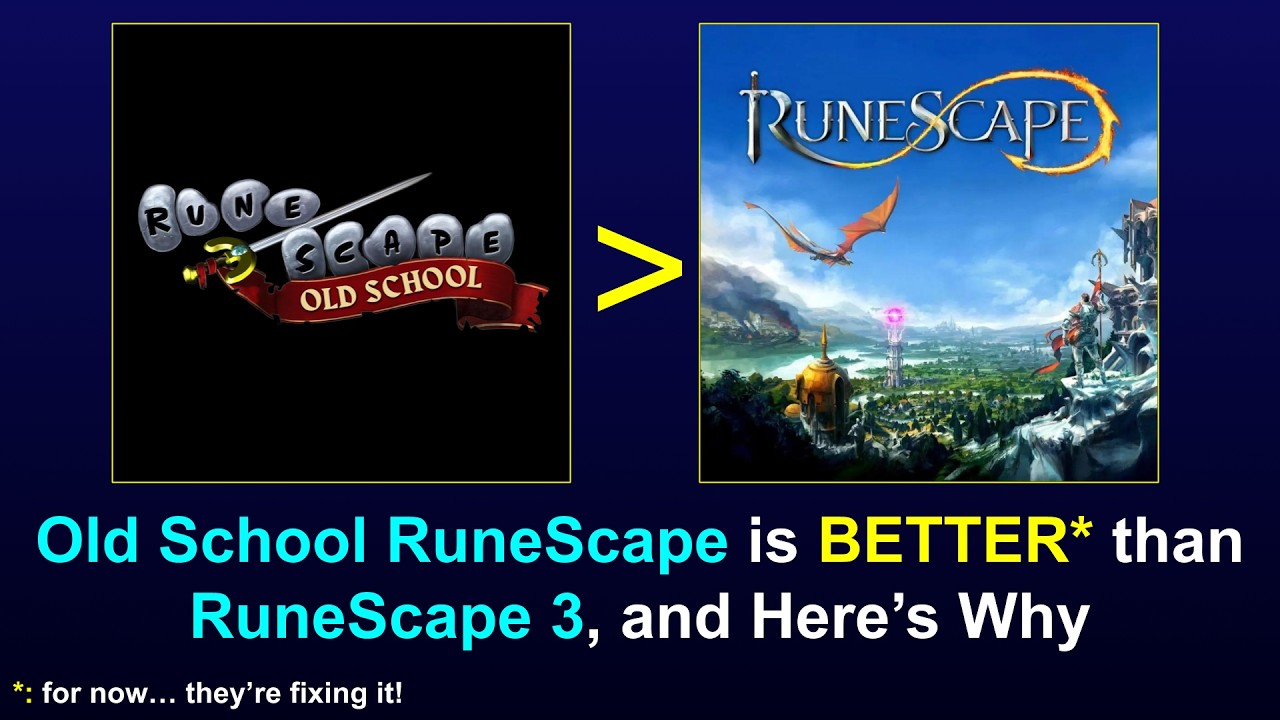
To choose between Old School RuneScape (OSRS) and RuneScape 3 (RS3), decide whether you prioritize earned progression and mechanical clarity or rapid leveling and hotbar combat.
- Choose Old School RuneScape if you want an economy without direct pay-to-win microtransactions, a deliberate 0.6-second tick-and-tile movement system, readable low-poly gear aesthetics, and high social prestige attached to long-term skilling milestones.
- Choose RuneScape 3 if you prefer fast progression to reach endgame boss encounters quickly, modern quality-of-life features like toolbelts, complex ability-bar combat rotations, and grand high-fantasy storytelling.
---
Progression Pacing and Monetization
Progression speed and monetization separate the two versions more than any other factor.
OSRS limits monetization strictly to membership subscriptions and tradeable Bonds. It offers no direct experience purchases, daily spin wheels, or bonus experience weekends. Reaching level 99 in a skill requires direct playtime, ensuring that milestone capes, rare drops, and high-tier gear retain their social prestige and economic value across the player base.
RS3 incorporates heavy monetization through the Treasure Hunter system, which provides direct experience lamps, skilling utility items, and tradeable cosmetic tokens. Progression through early- and mid-game content is heavily accelerated by daily keys, portable skilling stations, and frequent Double XP events. RS3 shifts milestone goals away from level 99 toward skills with 120 caps, making it suitable if you want to skip repetitive early grinds and enter high-level bossing as fast as possible.
| Feature | Old School RuneScape (OSRS) | RuneScape 3 (RS3) |
|---|---|---|
| Monetization | Membership subscriptions and Bonds only | Treasure Hunter, direct XP lamps, cosmetic store |
| Leveling Speed | Traditional, slow grind with strict XP curves | Accelerated via daily keys, portables, and bonus XP |
| Economy | Player-driven with strict item value retention | High inflation; devalued early- and mid-tier items |
| Skill Goals | Level 99 capes retain high prestige | Milestone focus shifted toward level 120 skill caps |
---
Combat Systems: Tile Movement vs. Ability Rotations
The two games approach combat through fundamentally different control models:
- OSRS (Tile-Based Tactical Combat): Combat runs on an absolute 0.6-second game tick. High-level PvM encounters—such as the Inferno, Chambers of Xeric, and Tombs of Amascut—rely on precise tile movement, overhead prayer switching, and gear swapping executed within single-tick windows. The system does not use hotbar cooldowns, but it demands high spatial awareness and rhythm.
- RS3 (Evolution of Combat): Combat uses a traditional hotbar ability structure (EoC). Players manage adrenaline, global cooldowns, and thresholds to execute burst rotations and optimize damage-per-minute. However, the hotbar system still runs on the underlying 0.6-second grid engine, which can introduce noticeable delay between pressing an ability and the visual animation resolving.
---
Visual Readability and User Interface
OSRS uses a cohesive, low-poly art direction. When you encounter another player, their equipped armor and weapons are clearly visible, immediately communicating their defensive stats, combat style, and danger level. The user interface remains minimal, offering classic fixed or resizable viewports that keep the game screen clean.
RS3 features updated character models, dynamic lighting, and particle effects, but visual clarity is frequently obscured by cosmetic overrides, floating pets, and oversized wings in major hubs like Prifddinas or Varrock. In addition, RS3 utilizes a fully modular interface that requires substantial initial manual configuration—resizing windows, docking chat panels, and arranging buff bars—to prevent the interface from cluttering the screen.
---
Quest Tone and Narrative Scale
Both games offer narrative-driven, puzzle-heavy quests rather than generic fetch tasks, but they frame your character's role differently:
- OSRS Lore: Keeps your character as an ordinary adventurer navigating a dangerous medieval world. Stories focus on Fifth Age regional conflicts, political intrigue, and dry British humor, maintaining low-to-mid fantasy stakes.
- RS3 Lore: Elevates the player into the "World Guardian," placing you directly into cosmic confrontations between gods during the Sixth Age. The narrative emphasizes cinematic battles, high-stakes divine conflicts, and voice-acted quest sequences.
---
Next Steps
To begin playing, choose the launcher path that matches your preference:
- If you chose OSRS: Install the official Jagex Launcher and select Old School RuneScape. If you want a grind-focused sandbox with high achievement permanence, create your character and begin with foundational quests like Cook's Assistant and Waterfall Quest.
- If you chose RS3: Launch RuneScape 3 via the Jagex Launcher or Steam. If you want rapid progression and ability combat, start by customizing your combat action bars, configuring your modular interface layout, and activating your daily challenge paths.
Free RuneScape Codes
Current active codes and how to redeem them.

Michael Smith
Michael covers live-service games, events, reward systems, and efficient daily routines, turning frequent updates into clear actions for players.
COMMUNITY
Player Comments
127 players commented on this guide.
The tips are practical and easy to follow.
I wish I had read this before upgrading the wrong thing.
This saved me time in the early game.
I tried this today and it worked better than my old setup.