
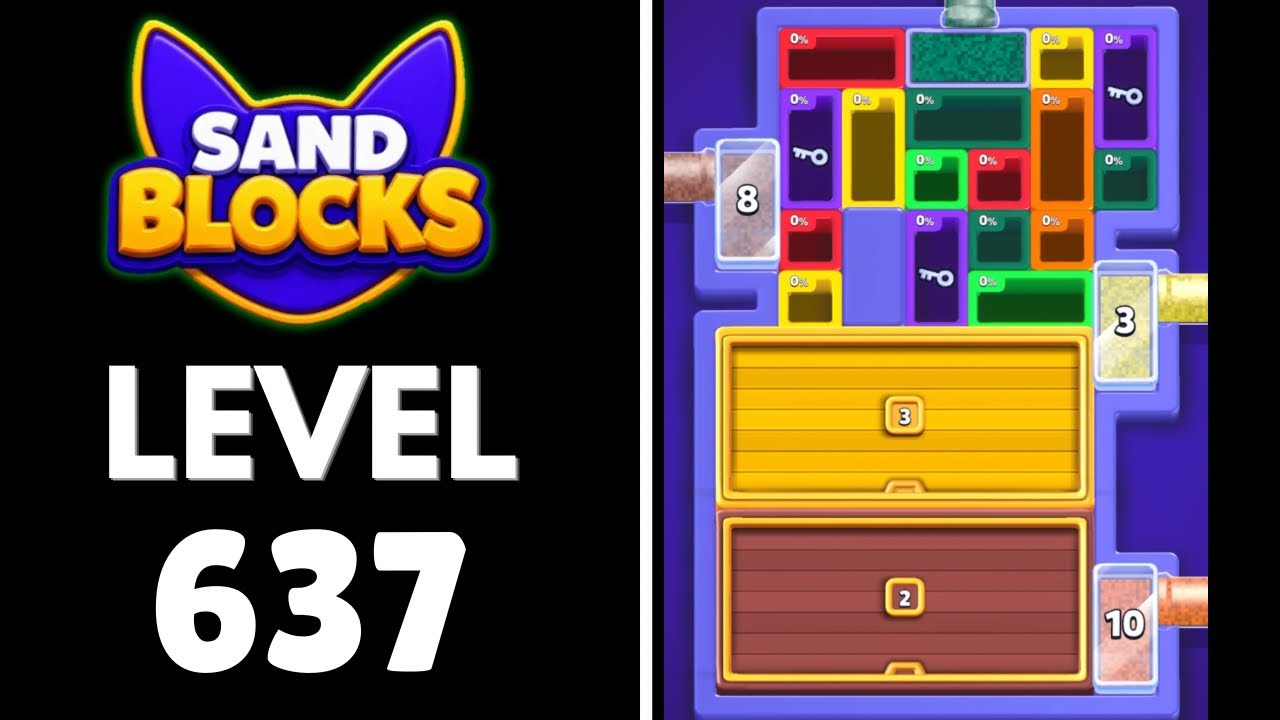
To beat Level 637 in Sand Blocks: Drop Puzzle, group identical colors into dedicated zones across the board, flatten uneven dunes to prevent sand runoffs, and clear full horizontal bands of single colors before sand reaches the top danger line. Because falling pieces dissolve into loose sand upon impact, success depends on building unbroken, wall-to-wall connections without letting stray colors contaminate the layer.
Board Physics and Clear Conditions
Falling blocks dissolve into granular sand particles the moment they touch the floor or an existing pile. Sand grains slide downward at approximately 45-degree angles until reaching a resting point. To clear sand and relieve board pressure, you must form an unbroken, contiguous band of a single color stretching entirely from the left wall to the right wall.
Dropping pieces onto narrow peaks causes grains to split outward in opposite directions. In Level 637, this uncontrolled splitting scatters sand across multiple lanes, breaking potential connections and burying active colors. Anticipate where loose sand will slide before confirming any placement.
Color Zoning to Prevent Blocked Paths
Color contamination is the primary cause of failure in Level 637. A line clear requires a pure, uninterrupted band of one color across the entire width of the board. If even a few grains of another color settle within that row, the clear will not trigger.
| Placement Approach | Board Impact | Clear Efficiency | Failure Risk |
|---|---|---|---|
| Clustered Monocolor Drops | Forms unified layers that bridge left and right walls cleanly | High; triggers immediate or rapid two-step line clears | Low |
| Targeted Trench Filling | Uses vertical drops to fill deep gaps and level out the terrain | Moderate; establishes a flat base for future connections | Low to moderate |
| Scattered Multi-Color Drops | Fragments the playfield with mixed sand pockets across lanes | Very low; requires corrective drops to uncover trapped colors | High; rapidly causes ceiling overflow |
Designate specific sections of the board for incoming colors instead of spreading them across the base. If mismatched colors arrive consecutively, drop the secondary color along an outer wall so it does not divide an active path forming in the center.
Managing Dune Topography with Piece Rotation
Rotating pieces before dropping them controls how sand distributes across the board:
- Horizontal Orientation: Releases sand across a broad plane. Use horizontal drops to bridge the final gap between matching deposits on the left and right walls. This distributes sand thinly without adding dangerous vertical height.
- Vertical Orientation: Concentrates sand into a narrow, focused column. Use vertical drops to funnel sand directly into deep valleys or chasms between mounds, preventing grains from spilling sideways into adjacent color zones.
Maintaining a relatively flat, plateau-style surface ensures subsequent drops settle predictably rather than rolling down steep slopes.
Recovering from High Board Pressure
When sand reaches the upper third of the screen, stop preparing multi-layer setups and shift entirely to immediate single-line clears. Level 637 fails instantly if resting sand makes sustained contact with the ceiling line. Direct incoming blocks into existing piles of matching colors to trigger immediate clears and drop board elevation.
Clearing a lower color band creates an empty void beneath higher layers, causing overhead sand to collapse downward. These gravity cascades compress fragmented pockets of matching sand together, frequently triggering automatic secondary clears that reset board pressure without requiring extra moves.
Step-by-Step Drop Routine
Follow this sequence for every falling piece to maintain control during high-pressure moments:
- Check Active and Preview Pieces: Review both the current piece and the next queued piece to plan a two-step placement that reinforces a single color zone.
- Locate Wall Anchors: Identify existing sand deposits of the matching color along the left or right wall, then drop the piece to extend that specific layer across the board.
- Select Rotation Based on Terrain: Rotate horizontally to bridge shallow gaps across open ground, or rotate vertically to fill narrow depressions cleanly.
- Wait for Settlement: Allow the sand-slide animation to finish completely before making your next move, as settling grains alter landing angles and open new paths in real time.
Free Sand Blocks: Drop Puzzle Codes
Current active codes and how to redeem them.

Emily Johnson
Emily writes practical mobile strategy guides with a focus on resource planning, base progression, and the early decisions that shape a long-term account.
COMMUNITY
Player Comments
91 players commented on this guide.
The explanation is clear, especially for beginners.
Can you add more details about strategy in a future update?
I wish I had read this before upgrading the wrong thing.
The tips are practical and easy to follow.