
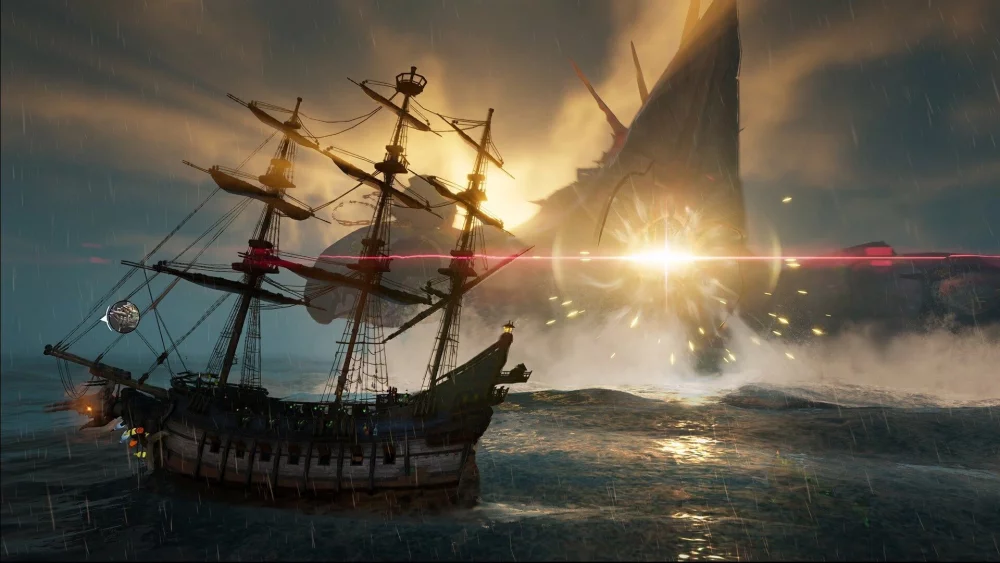
In Sea of Remnants, you begin your journey as a nameless pirate devoid of equipment, memories, and direction. To progress effectively through this atmospheric, puppet-inspired open world, you must treat the retrieval of lost memories not just as a narrative pursuit, but as your primary developmental milestone. By systematically interacting with environmental remnants, you unlock the critical context required to navigate the treacherous, stylized seas. This guide provides the strategic framework needed to transform from a stranded wanderer into a seasoned captain.
Prioritizing Memory Fragment Discovery
The most vital step for a fresh player in Sea of Remnants is locating Memory Fragments. These are the lifeblood of your progression. Unlike standard RPGs where leveling up is purely numerical, your growth in this game is tied to your character’s cognitive recovery.
Memory Fragments act as both quest triggers and narrative keys. When you start with nothing, your objective should be to scan the environment for artifacts—often glowing or uniquely textured remnants—that trigger internal monologues or cutscenes.
- Early-Game Focus: Prioritize shoreline debris and abandoned structures near your spawn point.
- Narrative Stakes: Neglecting these interactions forces you to traverse the map without understanding the world's stakes, which can make the game’s unique art style feel disconnected from your gameplay.
- The "Why": Each fragment provides a piece of your backstory, which often unlocks specific dialogue options or NPC interactions later in the game.
Navigating the Puppet-Inspired Aesthetic
Sea of Remnants features a distinctive "puppet-style" art direction that is more than just a visual flourish; it is a core gameplay mechanic. The art style is designed to be dense and occasionally obstructive, forcing players to slow down and observe their surroundings rather than rushing toward map markers.
Because the game lacks traditional "sparkles" or floating UI indicators for every item, you must learn to read the visual language of the world.
- Visual Inconsistencies: Look for textures that clash with the environment. If a jagged rock formation looks slightly more "staged" than the surrounding geometry, it is likely a point of interest.
- Lighting Cues: Pay close attention to how light hits specific objects. Memory Fragments often catch the light in ways that standard environmental props do not.
- Pacing: Treat the game like an investigation. Stop your ship frequently. If you move too fast, the puppet-style assets can blur together, causing you to overlook critical loot or narrative triggers.
Managing the Early-Game Void
At the start of your journey, your inventory is empty and your combat capabilities are effectively zero. The early-game "void" is designed to emphasize the theme of isolation. Your primary goal during the first hour should be to move from "scavenger" to "survivor."
Recommended Early-Game Workflow:
- Survey the Immediate Coast: Stay within a small radius of your initial landing site.
- Gather Utility Tools: Prioritize finding basic navigation or repair tools over weapons. You cannot fight if your ship is grounded or you are lost at sea.
- Inventory Discipline: Your space is limited. Discard junk items like common wood or stone if you find higher-tier crafting materials that allow you to upgrade your ship’s speed or durability.
- Practice Movement: Use the calm, shallow waters to familiarize yourself with the unique physics of the game’s naval traversal.
Environmental Clues and World Building
The world of Sea of Remnants is a silent storyteller. If you find yourself sailing in circles, it is rarely a sign of a bug; it is usually a sign that you have missed an environmental cue.
- Audio Triggers: Keep your sound levels balanced. Many hidden fragments emit a faint, distinct chime or hum when you are within close proximity.
- Environmental Shifts: If the lighting or the color palette of the sea changes abruptly, you have entered a "narrative-heavy" zone. These zones are almost always hiding a piece of your past.
- Revisiting Landmarks: If you reach a dead end, backtrack to the last major landmark. The game is structured in "narrative loops," meaning a second pass through an area often reveals items that only become interactable once you have unlocked a specific memory or piece of gear.
Balancing Narrative and Progression
A common mistake in Sea of Remnants is attempting to push toward the horizon too quickly. While the vast ocean is inviting, exploring uncharted waters without sufficient memory recovery will leave you underprepared for the scaling difficulty of hostile encounters and navigation hazards.
- The Progression Loop: Only push to a new region once you have successfully recovered at least two memory fragments in your current area.
- Strategic Expansion: Use your ship as a mobile base. Once you have a basic grasp of your identity and your gear is sufficient to survive minor weather events, expand your map slowly.
- Why It Matters: By aligning your naval expansion with your narrative growth, you avoid the "mid-game wall." Players who skip narrative beats often find themselves with advanced gear but no knowledge of where to go or why they are fighting, leading to a disconnected experience.
Final Expert Insights
To master Sea of Remnants, remember that you are not just a player character; you are an archaeologist of your own life. The game rewards patience and rewards those who view the puppet-inspired world as a puzzle to be solved.
- Avoid "Speed-Running": The game’s design philosophy actively punishes players who try to rush the narrative.
- Note-Taking: If you encounter an locked door, a mysterious NPC, or an unreadable sign, note the location. You will almost certainly return later with the "key" (a recovered memory).
- Trust the Atmosphere: If the game feels lonely or confusing, you are exactly where the developers intended you to be. Embrace the mystery, prioritize your memory fragments, and the rest of the mechanics will fall into place naturally.
By following these strategies, you ensure that your journey from a nameless wanderer to a legendary figure is cohesive, challenging, and deeply rewarding. Keep your eyes on the horizon, but never forget to look down at the remnants beneath your feet.

Free Sea of Remnants Codes
Current active codes and how to redeem them.

Emily Johnson
Emily writes practical mobile strategy guides with a focus on resource planning, base progression, and the early decisions that shape a long-term account.
COMMUNITY
Player Comments
95 players commented on this guide.
This saved me time in the early game.
I tried this today and it worked better than my old setup.
This guide answered the exact question I had.
This helped me understand strategy much better.