
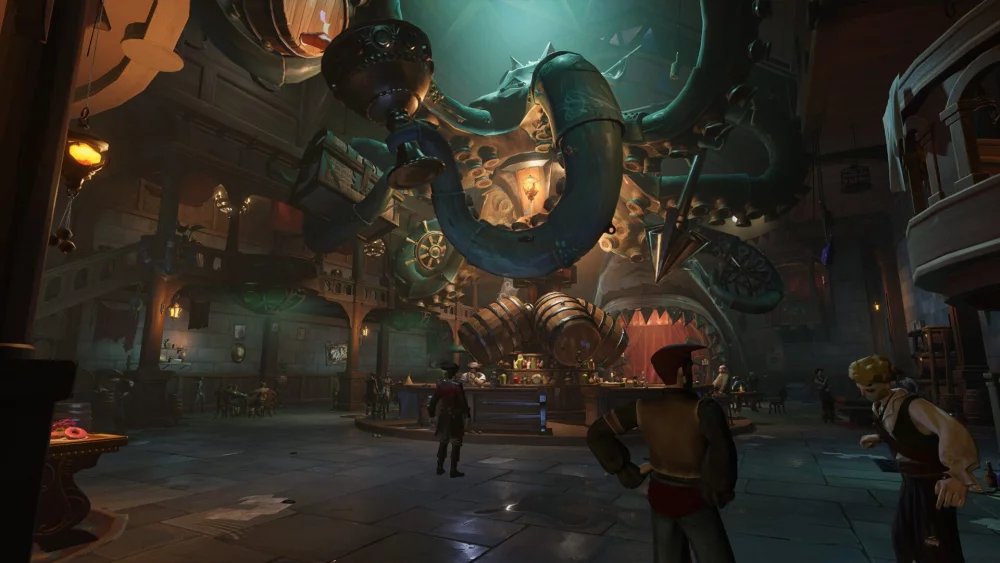
In Sea of Remnants, the environment is more than just a backdrop—it is a living, breathing history of a lost civilization. For new and veteran players alike, the "First Voyage" theme, released alongside the game's 2026 launch, provides the essential narrative blueprint for understanding the world. By treating the game’s score and atmospheric design as a mechanical tool, players can improve their navigation, quest efficiency, and overall immersion in this vast, oceanic odyssey.
Decoding the First Voyage Thematic Foundation
The "First Voyage" theme serves as the narrative compass for Sea of Remnants. Released on July 6, 2026, the track encapsulates the core tension of the game: the spirit of discovery contrasted against the melancholic reality of a world reclaimed by the tides.
To truly understand the game, you must view the "Remnants"—the civilization that predates the current oceanic era—not just as static ruins, but as the primary cause-and-effect engine for your gameplay. When you hear the motifs of this theme during high-stakes story missions, take it as an indicator that the game is revealing a foundational truth about the world's collapse. Players who internalize the lyrical themes of "forgetting" and "shifting tides" will find that they can predict narrative beats in later questlines, as the game consistently mirrors these motifs in the architecture and item descriptions of mid-to-late game zones.
Utilizing Atmospheric Cues for Tactical Navigation
One of the most distinctive features of Sea of Remnants is its reliance on environmental storytelling. The game’s audio design is specifically tuned to assist players in navigating the vast, often disorienting, open-sea map.
Audio-Based Hazard Detection
- The Harmonic Shift: When traveling between outposts, pay close attention to the musical score. A shift from major to minor keys or the introduction of discordant, metallic clangs often signals that you are entering a high-danger zone where "Remnant" wreckage or aggressive hostile entities linger.
- Environmental Cues: If the music swells or drops into a low-frequency hum, it is often a cue that you are near a significant environmental hazard, such as a subsurface debris field or an area with unstable water currents.
- The Silence Protocol: When the soundtrack fades, it is not a technical error; it is a gameplay cue that you have entered a "stealth-weighted" zone. In these moments, stop your vessel’s engines and listen for the rhythmic splashing or distant mechanical groans that indicate hidden loot caches or lore-rich shipwrecks.
By training your ears to recognize these shifts, you can effectively navigate without constantly checking the mini-map, allowing you to scan the horizon for visual threats like encroaching fog or floating hazards.
Connecting Lyrical Motifs to Quest Progression
The lyrics of the "First Voyage" contain subtle, actionable hints regarding the fate of the original explorers. These are not merely for flavor; they are breadcrumbs for the Memory Fragment system.
- Identify Forgotten Locations: The song alludes to specific geographic markers (the "Sunken Spire," "The Weeping Shelf"). These are actual, discoverable locations on the world map.
- Cross-Reference Item Descriptions: When you recover logs or artifacts from these locations, compare the wording to the song’s lyrics. Often, the flavor text in these items completes a sentence or thought initiated in the song, unlocking special "Lore Entry" rewards in your Codex.
- NPC Dialogue: When speaking to chroniclers in hub areas, always prioritize dialogue options that mention the "First Voyage." These NPCs will often provide exclusive, high-tier upgrades or map pins for rare resources as a reward for your demonstrated interest in the game's history.
Managing Emotional Pacing and Exploration Fatigue
Sea of Remnants is a game of scale, and it is easy for players to fall into the "completionist trap"—rushing from point A to point B to clear icons off the map. This approach often leads to burnout and a misunderstanding of the world’s narrative weight.
Strategies for Sustainable Exploration:
- The Hub Reset: If you find yourself overwhelmed by the difficulty of the open sea, return to a safe-haven hub. The "First Voyage" theme plays here in its entirety. Use this time to reorganize your cargo and review your journal; this psychological reset helps maintain the emotional stakes of your journey.
- Audio Balancing: Go into your settings and prioritize the "Ambience" and "Music" channels over "UI/System" sounds. This allows you to better hear the subtle environmental cues that distinguish a standard ruin from a narrative-heavy location containing unique gear.
- Pacing: Treat the game as a journey rather than a race. By syncing your travel speed to the tempo of the music, you are more likely to notice the small environmental anomalies—like a flicker of light in a cave or a specific seagull pattern—that lead to secret locations.
Aligning Your Journey with the 2026 Vision
The developers of Sea of Remnants designed the "First Voyage" as the anchor for the game's long-term roadmap. As the game expands with new regions and seasonal content, the core themes of the song act as the standard for what players can expect from new lore updates.
To stay ahead, keep a manual log of how new regions support or challenge the themes presented in the launch content. Does a new, technologically advanced zone contradict the "lost to the tides" narrative? By documenting these discrepancies, you not only enhance your personal immersion but also prepare yourself for the deeper mysteries of the endgame. Understanding the "source" material ensures that your interpretation of the game’s evolving story remains accurate, shielding you from community misinformation as the world-state shifts with future updates.
Mastering Sea of Remnants requires more than just high-level gear; it requires a connection to the world’s history. By engaging with the atmospheric and lyrical cues provided by the First Voyage, you move from being a mere player to an explorer who truly understands the remnants of the past.

Free Sea of Remnants Codes
Current active codes and how to redeem them.

James Brown
James focuses on Android gaming on PC, emulator setup, controls, performance tuning, and practical troubleshooting for longer play sessions.
COMMUNITY
Player Comments
39 players commented on this guide.
I wish I had read this before upgrading the wrong thing.
This helped me understand strategy much better.
I tried this today and it worked better than my old setup.
Nice guide. I am checking the other Sea of Remnants articles next.