
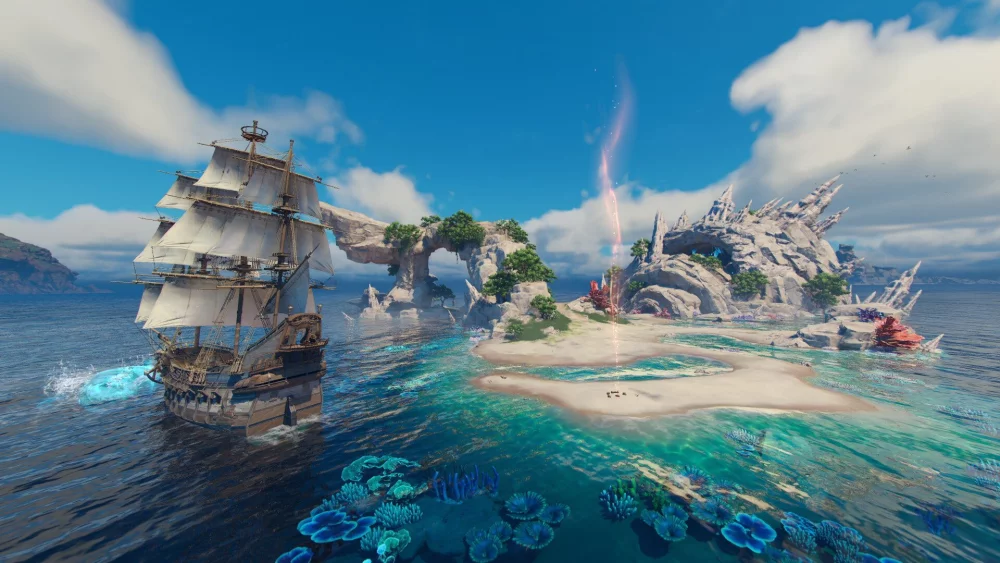
In Sea of Remnants, high-energy stage performances serve as far more than mere aesthetic flair; they function as a critical tactical layer for managing crew morale and triggering potent combat-state buffs. By integrating synchronized group dance sequences—specifically those modeled after the "Remnant Dreamers" archetype—players can manipulate team rhythm during long-duration naval voyages to maintain peak efficiency. This guide details how to leverage these performance-based mechanics to sustain crew focus and maximize your party’s performance during challenging open-sea expeditions.
Understanding the Performance Mechanic
The performance system in Sea of Remnants is built upon synchronized movement and precise rhythmic inputs, effectively acting as a morale-stabilization tool. When your crew is stationed on the deck, initiating a performance sequence creates a localized "Stage Effect." This effect is not merely cosmetic; it is a mechanical state that temporarily overrides standard crew fatigue patterns.
Players should view these performances as a strategic cooldown management tool rather than a passive idle animation. To effectively utilize this, you must monitor your crew's "Harmony Gauge," which fills as rhythmic inputs are successfully executed. Once this gauge hits specific thresholds, the group gains a temporary boost to action speed and morale, mitigating the negative debuffs typically associated with prolonged time spent at sea.
Optimizing Team Synergy via Group Choreography
The "Remnant Dreamers" troupe provides a baseline for how synchronized movement influences combat readiness. In Sea of Remnants, units that participate in group performance routines develop a "Cohesion Link," which increases the accuracy of joint attacks during turn-based encounters. This link is most effective when your party includes characters with high "Rhythm" or "Performance" statistics, as these stats directly correlate to the duration and potency of the stage buffs.
- Formation Strategy: Position your performance-focused characters (such as high-Rhythm supports) at the center of the deck to maximize the area of effect for the morale buff.
- Engagement Timing: Trigger the performance sequence immediately before entering a high-difficulty naval engagement to ensure the team starts with the "Rhythm-Boosted" status active.
- Input Precision: Consistency in rhythmic inputs determines the strength of the buff. Higher accuracy during the animation increases the overall duration of the combat synergy, allowing for longer windows of increased damage output.
Managing Morale During Long Voyages
Long-distance travel is a primary cause of crew attrition in Sea of Remnants. When the ship is in transit between hubs, the performance mechanic becomes the most efficient method for maintaining crew health without consuming rare food or medical supplies. By cycling through performance routines, you can effectively "reset" the crew's mental state, preventing the common "Ship-Weary" debuff that reduces combat efficiency during surprise encounters.
The trade-off for this strategy is the temporary suspension of active navigation tasks. Since the ship is effectively in "Performance Mode," steering and manual turret control are disabled. It is highly recommended to perform these routines only during automated travel segments or when the ship is anchored in safe zones to ensure you are not caught off guard by aggressive roaming factions while your crew is occupied with their performance.
Scaling Buffs for Late-Game Encounters
As you progress into more dangerous, high-level waters, standard performance routines may become insufficient. Players must invest in "Performance Gear" and specialized attire that alters the impact of the stage effects. Certain costumes and musical instruments found throughout the Sea of Remnants world act as multipliers for the Harmony Gauge, allowing for faster generation of morale buffs in combat-heavy scenarios.
Performance Tiering Breakdown
- Standard Routine: Basic morale restoration, ideal for early-game exploration and minor transit.
- Ensemble Coordination: Unlocks minor combat speed buffs; requires at least three crew members to perform simultaneously.
- Grand Orchestration: Achieved through high-tier items; provides significant damage resistance and morale protection for the entire party during boss-level encounters.
Expert Strategy: The "Gale" Support Synergy
Support characters like Gale are essential for maximizing these performance mechanics. Gale’s unique passive, "Rhythmic Resonance," allows for a 15% increase in Harmony Gauge generation when she is the lead performer in a group. When building your team for long-range voyages, prioritize Gale as your focal point to shorten the time required to hit the "Grand Orchestration" tier.
Players should also consider the impact of "Performance Fatigue." While performances restore morale, overusing them in a single day reduces the effectiveness of the Harmony Gauge by 5% per repetition. Use performances sparingly—only when the crew morale indicator drops below 40%—to ensure you maintain the maximum efficiency threshold throughout the entire expedition.
Common Mistakes to Avoid
- Performing in Unsafe Waters: Never initiate a group performance while in "High Alert" zones. The animation lock can leave your ship vulnerable to boarding parties.
- Ignoring Stat Synergy: Do not include characters with low Rhythm stats in your core performance loop. They will act as "rhythm anchors," causing your Harmony Gauge to fill slower than if you had a smaller, more specialized team.
- Over-relying on Supplies: Avoid using expensive consumables to fix morale if you have the capacity to perform. Save your food and medical supplies for mid-combat emergencies rather than transit recovery.
By focusing on the integration of these performance-based tactical sequences, players can maintain a more resilient and cohesive crew. This approach reduces the reliance on traditional resource management and allows for more aggressive exploration strategies, provided the player knows when to transition from performance to combat readiness. Balancing these two states is the hallmark of a master captain in Sea of Remnants.

Free Sea of Remnants Codes
Current active codes and how to redeem them.

Emily Johnson
Emily writes practical mobile strategy guides with a focus on resource planning, base progression, and the early decisions that shape a long-term account.
COMMUNITY
Player Comments
58 players commented on this guide.
Good guide for Sea of Remnants players. The strategy part was useful.
The tips are practical and easy to follow.
The explanation is clear, especially for beginners.
I tried this today and it worked better than my old setup.