
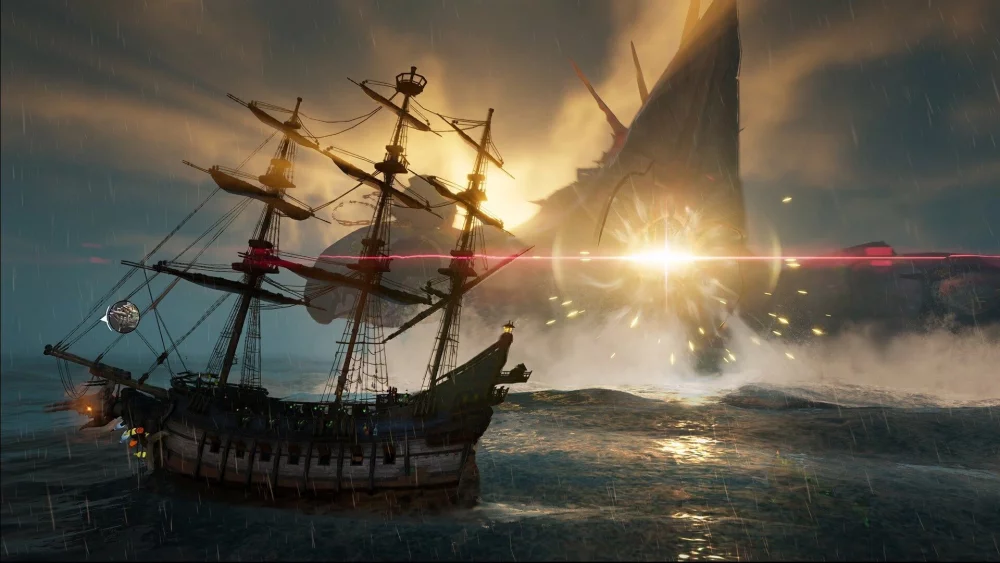
In Sea of Remnants, the fusion of open-world exploration and tactical turn-based combat demands more than just raw power. Success hinges on your ability to leverage specialized character archetypes—specifically the "Ghost" class—to manipulate turn order, exploit environmental weaknesses, and control the battlefield. This guide provides the expert-level insights required to maximize your combat efficiency, optimize gacha pulls, and ensure your crew remains the most feared force on the high seas.
Understanding Ghost Archetype Mechanics
Ghost-themed characters in Sea of Remnants are not front-line tanks; they are high-utility disruptors designed to tilt the action economy in your favor. Their kits revolve around "Spectral Resonance" and status-based debuffs that persist across multiple rounds.
To use them effectively, you must understand their reliance on the Spirit Gauge. Many high-tier ghost abilities require this gauge to be filled via standard attacks before they can be unleashed. If you find yourself struggling in combat, you are likely mismanaging this gauge. Prioritize "Energy Regen" gear on your ghost units to ensure their game-changing debuffs are available by turn two of every encounter.
Key tactical advantages of Ghost units include:
- Ignore Obstacles: Many spectral abilities feature AOE properties that bypass standard line-of-sight blocks, allowing you to strike clustered enemies behind cover.
- Turn Manipulation: Certain ghost characters can delay enemy turn bars, effectively granting your team extra "free" actions.
- Fear Cascades: Applying a "Fear" status to a primary target often causes secondary enemies to receive reduced accuracy, mitigating incoming damage without needing a dedicated healer.
Coordinating Spectral Skill Chains
The core of high-level play in Sea of Remnants is the "Chain Reaction" system. Ghost units are the engine of this system, functioning as the "Appliers" that set up massive damage windows for your heavy hitters.
To execute a perfect Spectral Chain:
- Analyze Resistance: Before committing, check the target's status resistance. If they are highly resistant to "Spectral" damage, use a support character to apply a "Defense Break" first.
- Prime the Mark: Have your Ghost unit use their primary debuff skill. Look for the purple spectral icon on the enemy’s health bar.
- Detonate: Follow up with a character whose skill specifically mentions "Bonus damage on marked targets." This interaction often results in a 1.5x to 2.0x damage multiplier, which is essential for clearing elite mobs in the mid-game.
Resource Management and Ship Logistics
In Sea of Remnants, your power isn't limited to your characters; it extends to your ship. Ghost-themed characters possess powerful passive traits that can inadvertently drain your ship’s auxiliary power during long voyages.
If you notice your ship's energy depleting during open-world navigation, check your active team's active "Aura" effects. Many spectral units emit a passive field that buffs your team but consumes fuel. Pro Tip: Toggle these passives off when you are sailing between islands. Only activate them when you are nearing an encounter zone or a boss lair. This simple habit preserves your fuel for emergency maneuvers and ensures you aren't stranded in hostile waters.
Strategic Adaptation to Environmental Hazards
The world of Sea of Remnants is highly reactive. Environmental factors play a massive role in how your Ghost characters perform.
- Fog and Night Cycles: In low-light environments, ghost characters gain a massive evasion bonus. Use this to your advantage by positioning them in the front rank during night battles; they will draw fire and dodge frequently, conserving your squad's HP.
- Purified Zones: Avoid using ghost-heavy compositions in areas with high "Holy" or "Light" ambient energy. These zones frequently apply a "Spectral Suppression" debuff that lowers your crit rate. In these areas, swap in your melee-focused or physical-damage characters to maintain consistency.
Optimizing Party Composition for Boss Encounters
Boss battles in Sea of Remnants are endurance tests. A balanced team follows the "Control, Damage, Support" rule:
- The Controller (Ghost): Your primary ghost unit should be specced for "Silence" or "Blind." Use these exactly one turn before the boss triggers a telegraphed "Ultimate" move to interrupt the animation.
- The Damage Dealer: This unit should have high physical output to exploit the debuffs created by the Controller.
- The Support: Focus on characters like Gale, who provide sustain and cleanse. Gale is particularly useful because their support abilities often boost the "Spectral Resonance" of your team, allowing your ghost units to fire off their abilities more frequently.
Advanced Gacha and Progression Strategy
Players often waste currency by pulling on every banner. In Sea of Remnants, banners rotate based on character roles.
- Save for "Synergy" Banners: Never pull for a standalone ghost character if you lack the "Detonator" unit required to finish the Spectral Chain. The game is designed around synergy; a mid-tier character that fits your team's elemental or spectral combo is infinitely more valuable than a top-tier character that doesn't synergize with your current roster.
- Second Playthrough Currency: If you are planning a second playthrough, prioritize spending your "Remnant Shards" on permanent account upgrades, such as increased ship storage or initial energy capacity, rather than character-specific pulls. These meta-upgrades carry over and make every subsequent run significantly faster and easier to optimize.
Common Mistakes to Avoid
- Over-relying on Ghost Units: Do not build an all-Ghost team. They lack the raw physical defense required for prolonged boss fights. Keep at least one physical tank in your roster.
- Ignoring Skill Descriptions: Many players miss that certain Ghost skills only trigger if the enemy is below 50% HP. Always read the conditional logic of your skills to ensure you aren't wasting a turn.
- Neglecting Equipment Upgrades: A low-level character with maxed-out gear often outperforms a high-level character with base-level gear. Invest your gold in upgrading your gear sets before chasing new characters in the gacha.
By treating your Ghost units as the tactical backbone of your crew and paying close attention to environmental cues, you will master the flow of Sea of Remnants. Focus on your team’s synergy, manage your ship’s resources with care, and never underestimate the power of a well-timed spectral debuff.

Free Sea of Remnants Codes
Current active codes and how to redeem them.

Michael Smith
Michael covers live-service games, events, reward systems, and efficient daily routines, turning frequent updates into clear actions for players.
COMMUNITY
Player Comments
65 players commented on this guide.
Nice guide. I am checking the other Sea of Remnants articles next.
Good guide for Sea of Remnants players. The resources part was useful.
I wish I had read this before upgrading the wrong thing.
This helped me understand resources much better.