
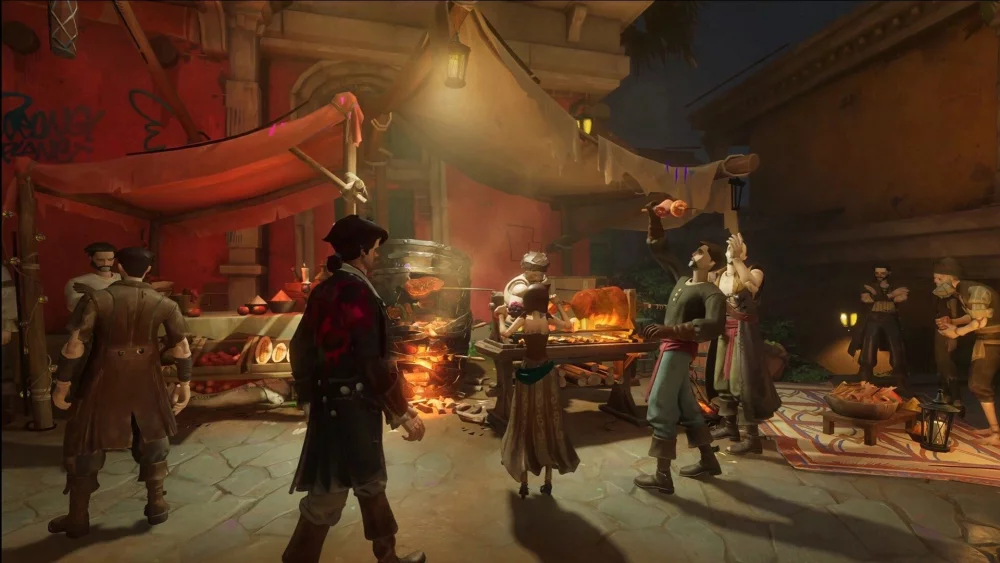
To master the high-stakes world of Sea of Remnants, you must shift your perspective from simple quest-taking to long-term sociopolitical management. Unlike traditional RPGs where dialogue is flavor text, Sea of Remnants utilizes a reactive engine where your narrative choices serve as the primary catalyst for world-state changes. Whether you aim to be a benevolent merchant-captain or a ruthless pirate lord, your decisions regarding NPC interactions dictate not just your reputation, but your access to essential resources, trade routes, and exclusive combat equipment.
The Mechanics of Narrative Agency
In Sea of Remnants, narrative agency is a tangible resource. The game tracks your "Influence Rating" with various factions, which is modified by every significant choice. These ratings are not merely social standing; they are mechanical gates that determine:
- Port Accessibility: High hostility with a governing faction will result in closed ports, forcing you to find more dangerous, illicit landing points to repair your ship.
- Merchant Pricing: Faction alignment directly impacts the "Trust Modifier" in shops. Loyalists receive bulk discounts, while pariahs are hit with heavy inflation on essential supplies like cannonballs and rations.
- Quest Branching: Many high-tier storylines are mutually exclusive. Choosing to assist the "Merchant’s Guild" often permanently locks out the "Smuggler’s Syndicate" questline for that playthrough.
The weight of these choices means that early-game interactions carry a "ripple effect." An insult thrown at a minor harbor master in the first five hours can result in a blockade of your favorite supply port twenty hours later.
Managing NPC Interactions for World Control
You are not just a pirate in Sea of Remnants; you are a force of nature that can destabilize or stabilize entire regions. To effectively control your environment, you must approach NPC interactions with a strategic mindset:
- Assess Faction Dominance: Before entering a new port, check your map’s "Regional Influence" overlay. If a region is controlled by a faction you are currently antagonizing, prioritize stealth or avoid the region entirely until you have secured a bribe or a diplomatic workaround.
- The "Neutrality Trap": While it is tempting to play both sides to maximize rewards, this often leads to a "Jack-of-all-trades, Master-of-none" scenario where neither faction trusts you enough to grant high-tier rewards. Pick a primary faction for your first 15 levels to unlock their unique, high-tier gear sets.
- Leverage Reputation: Once you reach "Favored" status with a faction, they will begin offering "Favors." These are unique narrative instances where you can request the relocation of patrols or the removal of trade blockades, effectively reshaping the map to suit your current goal.
Strategic Trade-offs in Faction Alignment
Every alliance in Sea of Remnants requires a sacrifice. The game is designed to ensure there is no "perfect" path that pleases everyone. When weighing a choice, use the "Resource Opportunity Cost" formula:
- Benefit Analysis: What does this choice provide? (e.g., access to rare Gale-synergy upgrades, gold, or safe harbor).
- Risk Analysis: What does this choice cost? (e.g., losing access to a specific port, becoming a target for bounty hunters, or losing a recruitable crew member).
If a quest requires you to sabotage a port, consider the long-term impact on your supply chain. If that port is your primary source for ship repairs, the immediate reward—even if it is a powerful piece of equipment—might be a net negative for your overall progression. Always prioritize infrastructure over short-term gear gains.
Integrating Narrative Choices with Combat Progression
Your narrative choices are directly linked to your combat efficiency, particularly regarding your crew composition. Certain characters, such as the support specialist Gale, have specific narrative triggers that unlock their full potential.
For example, Gale’s "Tactical Insight" passive ability—which increases your ship's accuracy—is often locked behind quests related to the maritime research factions. If you antagonize these groups, you effectively handicap your own combat output.
Strategy Tip: Before committing to a dialogue choice that leads to combat or diplomatic fallout, review your current crew’s biography. If a crew member has a personal connection to a faction, they will provide a "Narrative Bonus" or "Penalty" to your stats during the encounter. Aligning your narrative path with your crew’s loyalties creates a cohesive, high-performance combat unit.
Avoiding Common Narrative Mistakes
Players often fall into the trap of treating Sea of Remnants like a linear adventure. To avoid common pitfalls, keep these expert-level insights in mind:
- The Completionist Fallacy: Do not attempt to complete every quest in a single region. The game is designed for multiple playthroughs. Trying to juggle every faction’s demands will result in a mediocre reputation with all of them, preventing you from unlocking the "Renowned" tier rewards of any single faction.
- Ignoring World Evolution: The world of Sea of Remnants is a living simulation. If you ignore a faction’s request for help, they will lose influence, and the world layout will change. Keep an eye on your journal’s "Regional Status" log. If a port you rely on starts showing signs of instability, intervene immediately to prevent the loss of your home base.
- Underestimating Reputation Resets: Some choices are permanent, but others can be mitigated through "Reparation Quests." If you accidentally alienate a faction, look for "Diplomatic Emissary" NPCs in neutral ports. These characters offer expensive, high-difficulty missions that can reset your faction standing, though they are never cheap.
Maximizing Your Second Playthrough
Once you understand the mechanics, your second playthrough should focus on "Faction Optimization." Use your knowledge of the game's branching narratives to pick a completely different set of allies.
Because Sea of Remnants features a sophisticated "Legacy System," certain high-tier items and ship blueprints you earned in your first run can be carried over or unlocked more easily in subsequent games. By focusing your narrative choices in your second run, you can bypass the early-game struggle and move directly into the high-level faction wars, experiencing the game's most challenging content without the grind.
The world of Sea of Remnants is a sandbox of your own making. By treating your narrative choices as the primary engine for progression, you transform from a mere traveler into a master of the seas. Track your influence, prioritize your supply lines, and remember: in this ocean, your reputation is the most powerful weapon you own.

Free Sea of Remnants Codes
Current active codes and how to redeem them.

Michael Smith
Michael covers live-service games, events, reward systems, and efficient daily routines, turning frequent updates into clear actions for players.
COMMUNITY
Player Comments
151 players commented on this guide.
I tried this today and it worked better than my old setup.
Nice guide. I am checking the other Sea of Remnants articles next.
This saved me time in the early game.
This guide answered the exact question I had.