
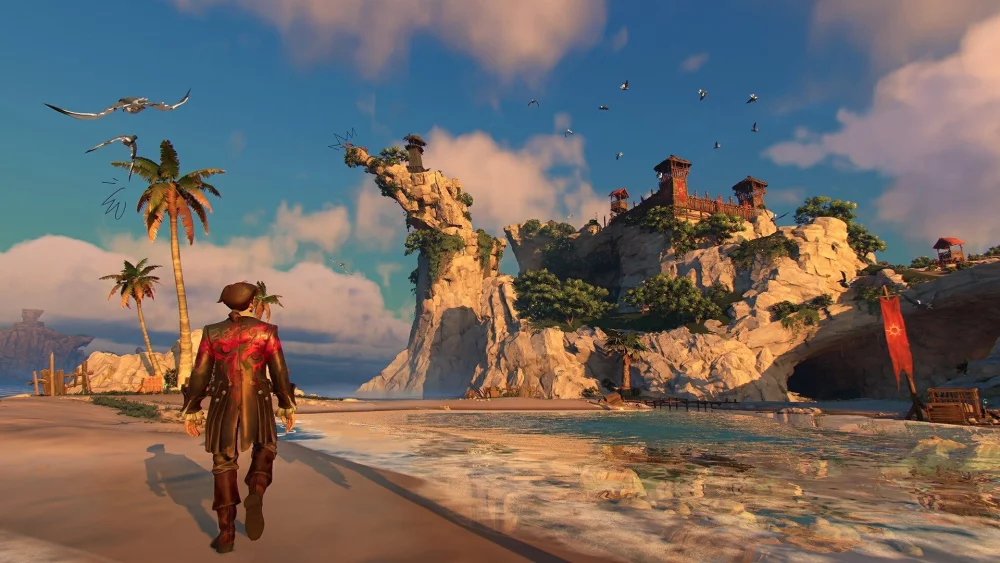
In Sea of Remnants, the open-world pirate experience offers an unprecedented level of agency, allowing players to move beyond the traditional boundaries of questing and trade. One of the most distinct features of the game is its simulation of population density; players are not forced to play by the rules of local authorities. By systematically eliminating or banishing key NPCs, you can effectively transform bustling trading hubs into your own private ghost towns. This guide explores the mechanics of NPC displacement, the strategic use of "cheat-like" mini-game advantages, and the long-term consequences of altering your world’s demographic state.
The Mechanics of NPC Removal and Banishment
The transition of a port from a lively economic hub to a desolate ghost town is governed by the game’s internal population tracking system. Sea of Remnants monitors NPC density in every location, and this status directly dictates the game’s environmental and functional state.
Methods of Depopulation
- Direct Combat: Engaging guards and local inhabitants in combat is the most straightforward method. However, be aware that clearing a high-traffic area often triggers a "wanted" status, drawing in more hostile forces.
- Strategic Banishment: Through specific narrative choices and quest interactions, you can influence the local leadership to exile certain groups. This is a quieter, more calculated approach that avoids the immediate chaos of a firefight.
- Environmental Triggers: Certain interactions can lead to mass departures. By identifying the NPCs who hold the community together—such as harbor masters or tavern keepers—you can trigger a chain reaction that results in an exodus.
Once the NPC count drops below a specific threshold, the game engine updates the port’s status. You will notice the cessation of patrol routes, the closing of storefronts, and a distinct lack of ambient dialogue, signaling that the location has successfully transitioned into a ghost town.
Leveraging Mini-Games for Tactical Advantages
One of the most intriguing aspects of Sea of Remnants is the inclusion of "cheat-like" mechanics within its mini-games. These are not merely distractions; they are potent tools for social engineering and territorial control.
When traditional combat proves too costly or inefficient, manipulating the outcomes of regional mini-games can provide the leverage needed to force NPCs out of their stations. Whether it’s rigging a game of chance against a local governor or winning a high-stakes competition to humiliate a guard captain, these victories often grant you unique options in the dialogue menu.
Expert Tip: Focus on identifying which mini-games provide leverage over specific NPCs. In many cases, winning a specific mini-game in a town’s tavern can be the trigger for an NPC’s departure, effectively "clearing" them from the board without you ever drawing a blade.
Strategic Trade-offs of a Depopulated World
While the ability to clear a town offers a unique "sandbox" experience, it is vital to understand the economic and mechanical cost of your actions. Sea of Remnants is designed as an interconnected world; removing its inhabitants creates a void that cannot be easily refilled.
The Consequences of Isolation:
- Loss of Services: When you empty a port, you lose access to vital services including repair shops, shipwrights, and trade markets. If you depopulate a hub that you frequently use for upgrades, you will find yourself traveling much further to maintain your vessel.
- Narrative Stagnation: Many quest lines are tied to specific NPCs. By removing them, you may permanently lock yourself out of certain storylines or rewards.
- Static Exploration: Without NPCs, the world becomes significantly quieter. While this is ideal for players who want a "lone wolf" pirate experience, it removes the dynamic, reactive world events that keep the game’s progression feeling alive.
Before deciding to "ghost" a town, ensure that it is not a critical hub for your ship’s progression. Save your game frequently—especially before initiating a systematic purge—to ensure you do not inadvertently break your ability to advance.
Evaluating the "Freedom" Playstyle
Sea of Remnants is built for players who prioritize emergent gameplay over following a linear narrative. The capacity to fundamentally alter the state of the world is a testament to the game's high degree of freedom, but it is a mechanic that requires intent and foresight.
When to Embrace the Ghost Town Strategy:
- Establishing a Private Base: If you want a location to call your own without interference, a depopulated port provides the perfect, undisturbed backdrop.
- Roleplaying as an Outcast: For players focused on a "pirate king" or "lone wolf" persona, forcing your own rules upon a town is a natural narrative choice.
- Testing Mechanical Limits: If you are curious about the game’s engine and its reaction to extreme player behavior, creating a ghost town is an excellent way to stress-test the game’s world-state systems.
Checklist for Successful Depopulation:
- Assess Long-Term Value: Check if the town contains essential vendors or upgrade stations you will need later.
- Diversify Your Tactics: Use a mix of combat and mini-game manipulation to achieve the desired demographic shift.
- Prepare for Consequences: Ensure you have a backup save, as once a town is depopulated, the process is often irreversible for that specific playthrough.
Ultimately, the power to turn a vibrant port into a desolate ruin is yours. By approaching population management with a clear strategy, you can turn Sea of Remnants into a world that reflects your unique playstyle, ensuring every corner of the map is shaped exactly how you want it to be. Whether you choose to be the savior of these ports or the architect of their downfall, the tools at your disposal offer a truly unparalleled level of control.

Free Sea of Remnants Codes
Current active codes and how to redeem them.

Sarah Williams
Sarah specializes in RPG and collection games, explaining team building, character growth, and beginner-friendly ways to avoid expensive early mistakes.
COMMUNITY
Player Comments
38 players commented on this guide.
Good guide for Sea of Remnants players. The strategy part was useful.
The tips are practical and easy to follow.
Can you add more details about strategy in a future update?
This guide answered the exact question I had.