
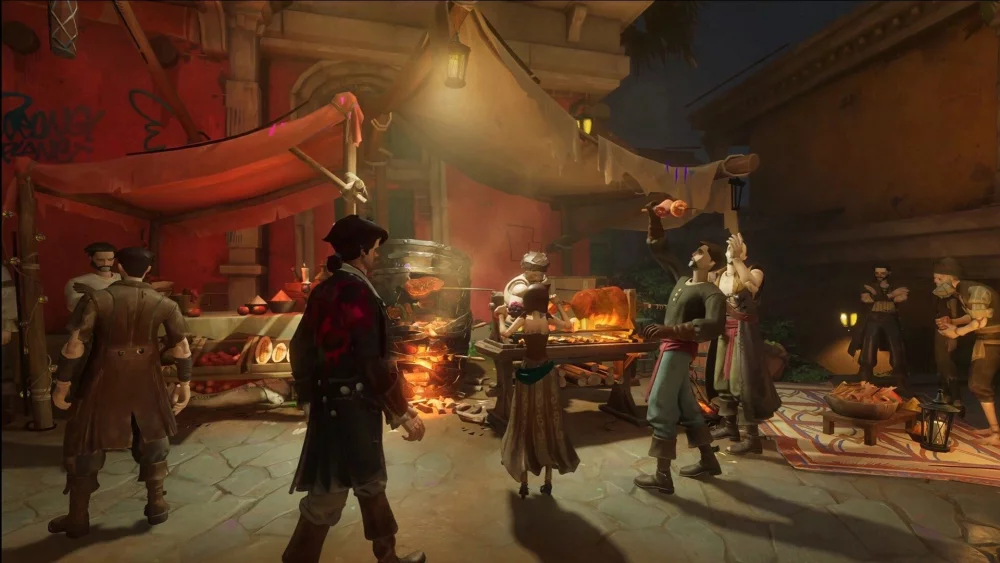
Navigating the Sea of Remnants during the "Wanderer" Alpha test phase requires more than just standard survival instincts; it demands a strategic shift toward social collaboration and environmental mastery. As a traveler washed ashore in this vibrant, pirate-infested world, your primary objective is to test the limits of the game’s core loops: hub economy, naval navigation, and cooperative party play. This guide provides an expert breakdown of how to leverage the Alpha’s unique mechanics to ensure your time spent at sea is as productive as possible.
Engaging with the Pirate Hub Economy
The pirate hub is the beating heart of the Sea of Remnants Alpha. It is not merely a staging area; it is a complex social ecosystem where your progression is tied directly to networking and market fluency.
To gain a head start, approach the hub as your primary headquarters rather than a simple transit point:
- NPC Dialogue Mapping: The Alpha build often features unique, time-limited dialogue paths. Speak to every named NPC upon arrival. These interactions frequently unlock "Alpha-Exclusive" blueprints or equipment that provide early-game stat advantages, such as increased hull durability or improved sail efficiency.
- Observational Learning: Spend your first hour in the high-traffic zones of the port. By watching how veteran players interact with vendors, you can identify hidden UI shortcuts or "quick-trade" exploits that are not explicitly documented in the tutorial.
- Strategic Resource Exchange: Do not sell raw materials blindly. Observe the market ticker in the hub. If you notice a high demand for specific timber or sea-silk, focus your initial ocean excursions on harvesting these specific commodities to maximize your gold-per-minute return, allowing you to purchase high-tier navigation gear faster.
Mastering Environmental Navigation and Current Flow
The ocean in Sea of Remnants is a living, shifting entity. The Wanderer Alpha introduces specific sea currents that act as dynamic obstacles and travel accelerators. Understanding these is the difference between reaching a distant island and being stranded in high-level hostile waters.
- Reading the Flow: Currents are visually distinct—look for subtle shifts in water texture or "whitecaps" that move against the general tide. Navigating with these currents will significantly preserve your ship’s stamina reserves.
- The Energy Economy: Moving against a current consumes energy at an accelerated rate. If your ship's energy hits zero while in deep water, you become a "sitting duck" for both PvE threats and environmental hazards. Always plan your route to utilize current "highways" to reach far-flung nodes.
- Safe Harbor Tactics: Avoid the urge to land directly on rocky, uncharted coastlines. The Alpha build rewards players who identify natural harbors. Landing in a harbor prevents "Hull Breach" status effects, which are costly and time-consuming to repair during the early game.
Leveraging New Social and Party Mechanics
Sea of Remnants is designed to be played with others. The Wanderer Alpha specifically highlights group-based challenges that are nearly impossible to complete solo.
- Proximity Coordination: Utilize proximity voice and chat channels in the port. Don't just look for "anyone" to join—look for players with different ship loadouts. A perfect party in the Alpha consists of one "Tank" ship (high hull, lower speed) and one "Scout" ship (high speed, lower health).
- Synergy Buffs: When in a party, your character’s unique traits can chain with others. If you are playing a Navigator class, pairing with a Combat-focused player creates a "Vanguard" buff, which increases the quality of loot drops from ship-to-ship combat encounters. This is the most efficient way to farm rare crafting components.
Managing the Wanderer’s Inventory Limitations
Inventory management in the Sea of Remnants Alpha is a test of your long-term planning. Because space is restricted, you cannot be a "jack of all trades." You must define your role early.
Follow this inventory hierarchy to keep your hold efficient:
| Item Priority | Category | Reason |
|---|---|---|
| Tier 1 | Repair Kits | Essential for surviving environmental hazards. Never depart with fewer than three. |
| Tier 2 | Navigation Tools | Maps and sextants increase your mini-map range, allowing for faster travel. |
| Tier 3 | High-Value Trade Goods | Only keep items that are currently trending in the Pirate Hub market. |
| Tier 4 | Combat Consumables | Keep these to a minimum unless you are intentionally hunting for PvP or boss encounters. |
Deciding Your Role for the Full Release
The Wanderer Alpha serves as a "stress test" for your future playstyle. The limitations placed on the map and items are intentional; they force you to specialize. Ask yourself the following questions before the test window closes:
- Do I prefer the logistics of the Hub or the danger of the Open Sea? If you enjoy the Hub, focus your feedback on trade and social systems. If you prefer the sea, document the combat balance and navigation hazards.
- Which Combat Archetype suits me? Test every weapon and ship type available. The Alpha is the time to fail—don't stick to one weapon. Rotate through them to see which feels most responsive during high-speed naval maneuvers.
- Island Biome Performance: Note which biomes yield the best rare crafting materials. These will be the most contested zones upon full release. Knowing these locations now gives you a massive advantage when the game goes live.
Final Expert Advice
The most common mistake in the Sea of Remnants Alpha is treating it like a standard adventure game. It is a social-maritime simulation. Do not spend your time farming low-level nodes solo. Instead, invest your time in the Hub, learn the economy, and find a consistent party. The insights you gather regarding which islands provide the best returns for the least amount of risk will be the most valuable assets you carry forward into the official launch of Sea of Remnants. Use this test phase to refine your decision-making, not just to grind levels.

Free Sea of Remnants Codes
Current active codes and how to redeem them.

Emily Johnson
Emily writes practical mobile strategy guides with a focus on resource planning, base progression, and the early decisions that shape a long-term account.
COMMUNITY
Player Comments
35 players commented on this guide.
The explanation is clear, especially for beginners.
This saved me time in the early game.
Nice guide. I am checking the other Sea of Remnants articles next.
I wish I had read this before upgrading the wrong thing.