
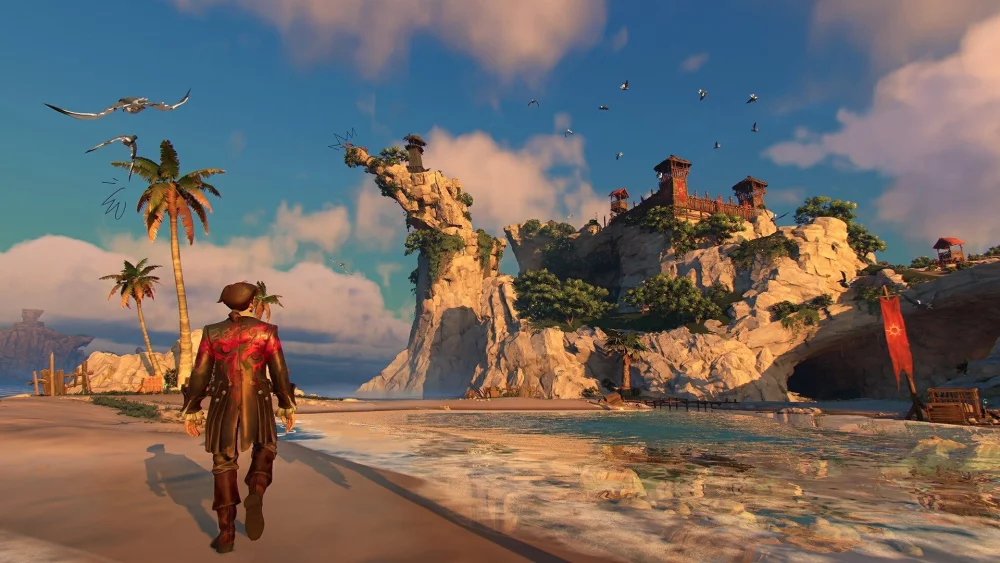
Mastering the foundational combat flow of Sea of Remnants relies on understanding how unit placement dictates your tactical advantage during turn-based encounters. As you progress through the first chapter, the game transitions from basic tutorial skirmishes to complex tactical puzzles that demand more than just raw power. By focusing on the interplay between environmental spatial awareness and the specific skill-casting sequences of your party, you can clear mid-chapter objectives with significantly higher efficiency. This guide details how to leverage terrain and ability timing to gain the upper hand against early-game threats before the difficulty spikes in later zones.
Leveraging Spatial Positioning in Turn-Based Combat
In Sea of Remnants, victory is often decided before a single ability is cast. The game utilizes a sophisticated grid-based combat system where character placement determines the range and effectiveness of your party’s skills. During the first chapter, players should prioritize placing heavy-hitting units in positions that allow them to strike multiple targets simultaneously or flank enemies shielded by environmental cover.
Avoid the common trap of clustering your units in a single tile or tight formation. The enemy AI in Sea of Remnants is specifically tuned to exploit tight groupings with area-of-effect (AoE) attacks. By spreading your roster across the grid, you force the enemy to commit to one target at a time, allowing your support characters to stabilize health pools between rounds. Always scan the grid for height advantages or obstacles that provide defensive bonuses; these factors directly reduce incoming damage percentages and can be the difference between a successful clear and a wasted turn.
Managing Skill Sequences and Ultimate Ability Timing
The combat loop in Sea of Remnants rewards patience over aggressive, reactive button-mashing. Each character possesses a unique set of skills that consume action points or trigger specific cooldown cycles. During the early chapters, the most common mistake is burning high-damage ultimate abilities on low-health, inconsequential minions.
Instead, adopt a "resource management" mindset:
- Basic Attacks: Use these to chip away at fodder enemies or to finish off foes with low health bars.
- Skill Queuing: Look for natural synergy between your characters' elemental types. Activating a debuff skill with one character immediately before a high-damage ability with another can trigger "combo" windows.
- Ultimate Preservation: Save your team’s ultimate cooldowns for scripted elite encounters or boss phases where the enemy possesses a "shield break" threshold.
Mastering this sequence ensures that you are never caught with your primary damage-dealing abilities on cooldown when a high-priority threat enters the field.
Navigating Environmental Hazards in Combat
Combat zones in Sea of Remnants are rarely flat, empty arenas. You will frequently encounter environmental hazards such as collapsing structures, volatile caches, or explosive barrels that can be used to your tactical advantage. Identifying these interactable objects should be your secondary objective after assessing enemy positions at the start of every match.
- Explosive Barrels: These act as force multipliers. Targeting them early saves your party from spending multiple turns on single-target chip damage, effectively clearing trash mobs in a single turn.
- Chokepoints: Utilize the map layout to force enemies into narrow corridors. This allows your melee units to hold the line while your ranged attackers safely pick them off from behind, minimizing your team's exposure to melee strikes.
- Cover Objects: Always check if your squishier characters are adjacent to cover during the start of a turn. Utilizing these tiles reduces the chance of receiving critical hits from enemy ranged units, which is vital for maintaining your team's HP for the duration of the chapter.
Optimizing Party Composition for Chapter Progression
Your roster selection in the first chapter should balance raw damage with survivability. While it is tempting to load your team with offensive specialists, the mid-chapter encounters introduce enemies with high physical resistance. Including at least one utility-focused character who can provide shields, healing, or movement buffs is crucial for maintaining momentum.
Before committing to a high-level engagement, review the recommended level and element requirements for that stage. Sea of Remnants uses a soft-gating system where certain encounters become exponentially harder if your party lacks the specific elemental advantage required to break enemy shields. If you find your progress stalling, pause your advance to revisit earlier, completed stages to farm the necessary materials for weapon upgrades. Upgrading your gear is often more efficient than attempting to brute-force a stage with a sub-optimal element composition.
Addressing Mid-Chapter Difficulty Spikes
As you reach the mid-portion of the first chapter, the game introduces more complex enemy behaviors, such as self-buffing, health regeneration, and summoning. To counter these mechanics, shift your strategy toward "focus-firing" the most dangerous threat first rather than attempting to eliminate the weakest enemies. Identifying which enemy acts as a healer or buffer is a priority; once these units are removed from the board, the remaining combatants become significantly easier to manage.
If a specific encounter results in a team wipe, do not immediately restart. Use the defeat screen to analyze which character fell first and why. Often, the solution is not a gear upgrade, but a simple adjustment in your deployment order or a slight variation in the timing of your support ability usage. Success in Sea of Remnants is determined by your ability to adapt your tactics to the specific enemy roster presented in the encounter. By understanding the "why" behind every turn—whether it’s a defensive move behind cover or a strategic delay of an ultimate—you will master the tactical depth required to conquer the game's later, more punishing chapters.

Free Sea of Remnants Codes
Current active codes and how to redeem them.

James Brown
James focuses on Android gaming on PC, emulator setup, controls, performance tuning, and practical troubleshooting for longer play sessions.
COMMUNITY
Player Comments
50 players commented on this guide.
Good guide for Sea of Remnants players. The early game part was useful.
This guide answered the exact question I had.
This saved me time in the early game.
The tips are practical and easy to follow.