
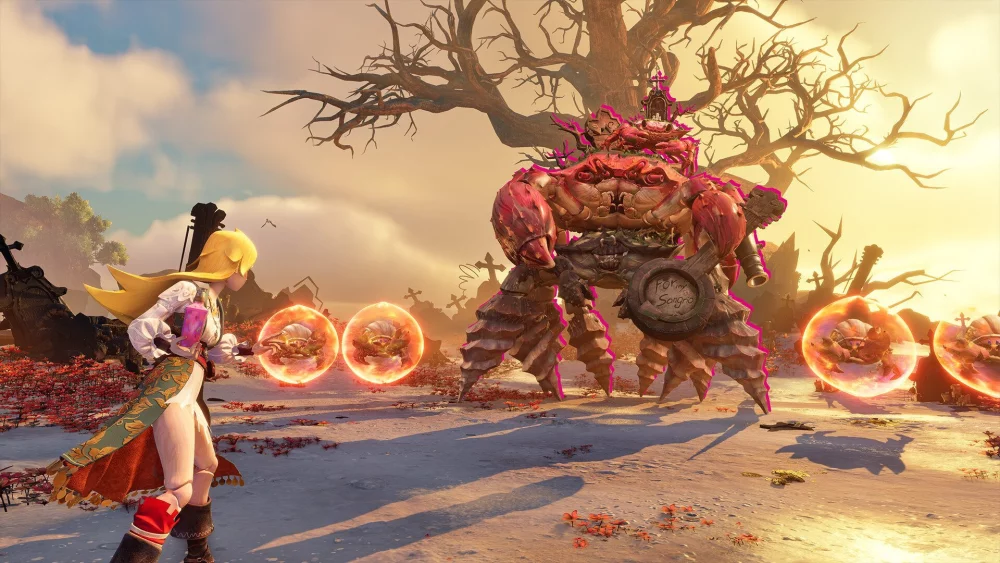
Sea of Remnants distinguishes itself from the crowded field of tactical RPGs by forcing players to master two distinct modes of play: fluid 3D environmental exploration and rigorous, grid-based turn-based combat. The game’s core challenge—and its greatest reward—lies in the transition between these modes. Players who treat exploration as a mere "travel" phase often find themselves decimated in battle, while those who use the environment as a tactical staging ground can dominate even the most difficult encounters.
This guide provides the expert-level framework needed to master the mechanics of Sea of Remnants, ensuring your crew stays afloat in the game's perilous waters.
The Exploration-Combat Loop: Pre-Engagement Positioning
In Sea of Remnants, the battlefield is not just a stage; it is the entire world. When you move through the 3D environment, you are essentially setting the "starting conditions" for your inevitable combat encounters.
Why Positioning During Exploration Matters
When you initiate combat, the game snapshots your party’s current location and formation. If your support units are trailing behind your tanks, they will start the battle out of range, wasting valuable Action Points (AP) just to reach the front lines.
- The "Scout and Anchor" Strategy: Use your most mobile character to scout ahead, then bring the rest of the party to a "staging area" behind cover.
- Verticality is King: If you see an enemy patrol, look for high ground. Engaging from a higher elevation often grants "High Ground" modifiers, providing a flat bonus to your hit chance and damage output once the turn-based grid initializes.
- Environmental Luring: Don't just trigger combat the moment you see an enemy. If you spot an explosive barrel or a precarious ledge, kite the enemy toward it before initiating the fight. This turns the environment into an extra party member.
Mastering Tactical Grid-Based Combat
Once the camera shifts to the tactical grid, you must shift your mindset from "navigation" to "resource management." Combat in Sea of Remnants is rarely about brute force; it is about maximizing the value of every single AP spent.
The Synergy Zone Philosophy
Every character in Sea of Remnants possesses skills that interact with others. For example, a character like Gale can provide significant mobility or defensive buffs to adjacent allies.
- Identify Roles: Categorize your team into Tanks (Frontline), DPS (Mid-range/Flankers), and Support (Rear/Utility).
- Maintain "Synergy Zones": Keep your team within a 2-3 tile radius. This allows your support units to apply buffs or heal without burning movement points.
- Cross-Action Chaining: Look for "Combo Tags" on your skill cards. If one character applies a status effect (like "Wet"), ensure your next character uses an element that reacts with it (like "Lightning") for massive bonus damage.
Optimizing Character Progression and Team Composition
Your success in Sea of Remnants is heavily dictated by your team composition. Investing resources into characters that provide utility rather than just raw damage is the secret to clearing high-difficulty content.
The Role of Support Characters like Gale
Support units are the backbone of any top-tier Sea of Remnants team. Gale, specifically, acts as an engine for your party’s efficiency.
- Why Gale matters: Gale’s ability to manipulate positioning or grant extra turns is mathematically superior to flat damage increases. In tactical games, an extra turn is worth more than a 20% damage buff because it allows for additional utility usage or repositioning.
- Resource Allocation: When choosing which characters to upgrade, prioritize those who increase your party’s "Action Economy." Characters who can grant extra movement or reduce the AP cost of skills will always be relevant, regardless of the meta.
Managing Currency and Gacha Banner Pulls
Sea of Remnants features a gacha system that requires disciplined currency management, especially for players looking to complete a second playthrough or tackle end-game challenges.
- The "Wait and See" Rule: Do not spend your primary currency on the first banner you see. Research the synergy of new characters against your existing roster. If a new character does not provide a mechanical upgrade to your current "Synergy Zones," skip the banner.
- Currency for Playthroughs: If you are planning a second playthrough, save specific upgrade materials. Some of the most powerful gear in Sea of Remnants is locked behind specific milestones or faction reputations; hoarding currency allows you to "power-buy" these items early in a new save to accelerate your build.
Common Mistakes to Avoid
Even veteran tactical RPG players fall into these traps during their early hours of Sea of Remnants.
- Overextending for the Kill: It is tempting to move a DPS unit deep into enemy lines to finish off a weak foe. Unless that kill removes a major threat, you are likely leaving your unit isolated. In Sea of Remnants, an isolated unit is a dead unit.
- Ignoring Environmental Hazards: Players often focus on enemy HP bars while standing in fire or near unstable structures. Always check the ground beneath your feet. If an enemy has a "shove" ability, they will prioritize knocking you into hazards.
- Neglecting Defensive Spacing: Do not group your units so tightly that a single enemy Area-of-Effect (AoE) attack can hit your entire team. Keep your team in a "loose cluster" that maintains connectivity but minimizes the impact of enemy blasts.
Advanced Strategies: The "Pincer" Maneuver
To truly master the combat, you must move beyond simple reactionary play. The "Pincer" is the most effective tactic in Sea of Remnants:
- Distraction: Use your tankiest unit to draw the aggro of the largest enemy group, utilizing defensive stances to negate damage.
- The Flank: While the enemy is occupied, move your high-damage units along the perimeter of the grid.
- The Strike: Once you have a side-angle on the enemy, trigger your heavy-hitting abilities. Because many skills in Sea of Remnants receive bonuses for attacking from the side or rear, this maneuver effectively doubles your damage output in a single turn.
Conclusion
Sea of Remnants rewards the thoughtful player. By treating the 3D world as your tactical sandbox and the combat grid as a puzzle to be solved through synergy and positioning, you will find yourself winning encounters that seem impossible at first glance. Remember to prioritize action economy, leverage the environment, and build your team around support-heavy units like Gale. With these strategies, you are prepared to conquer the remnants of the sea.

Free Sea of Remnants Codes
Current active codes and how to redeem them.

Emily Johnson
Emily writes practical mobile strategy guides with a focus on resource planning, base progression, and the early decisions that shape a long-term account.
COMMUNITY
Player Comments
153 players commented on this guide.
This guide answered the exact question I had.
The tips are practical and easy to follow.
I wish I had read this before upgrading the wrong thing.
Nice guide. I am checking the other Sea of Remnants articles next.