
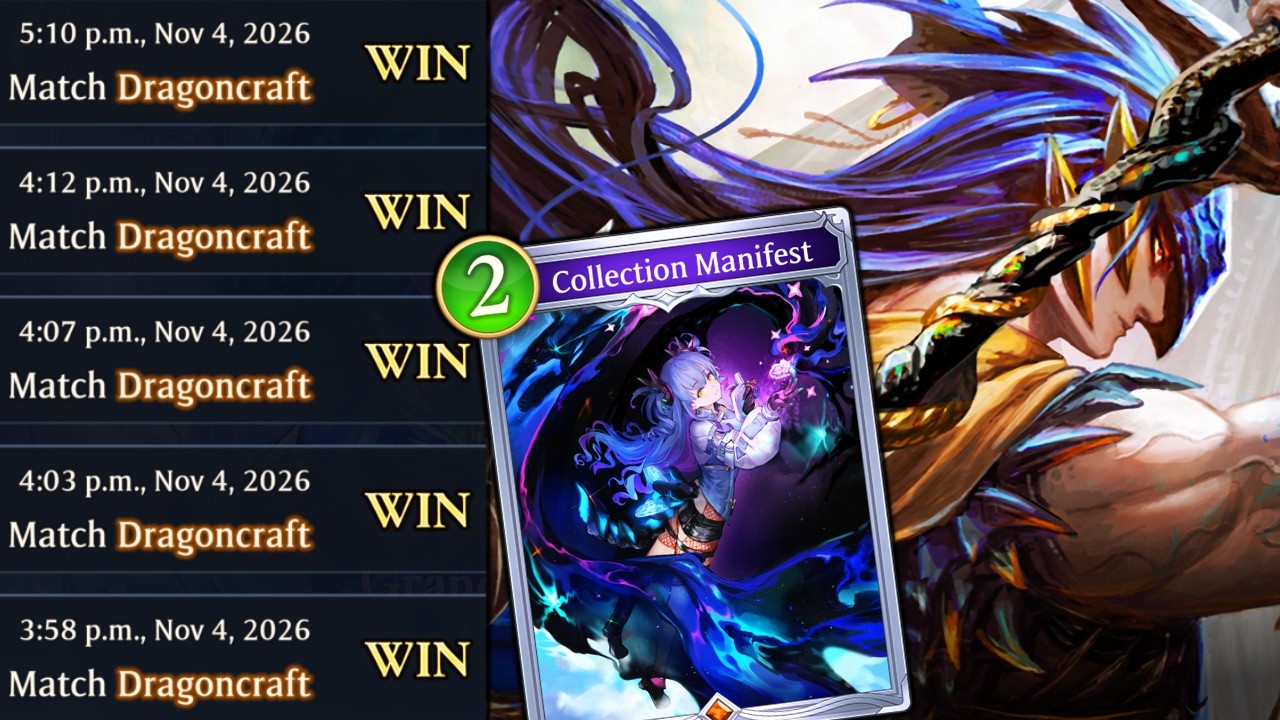
To pilot a Face Dragoncraft deck in the Shadowverse: Worlds Beyond Rotation format, abandon passive ramp strategies in favor of aggressive early curve plays, dedicated board tempo, and direct leader damage. Unlike traditional Dragoncraft decks that spend early turns inflating their play point (PP) maximums to summon late-game threats, Face Dragoncraft applies constant pressure from turn one, finishing matches from turn four onward with Storm followers and burn effects.
Mulligan Rules and Early Curve
A successful match depends entirely on securing an active curve during the first three turns. In the mulligan phase:
- Keep: Any combination of playable 1PP, 2PP, and 3PP followers that allow you to play on curve consecutively.
- Discard: Heavy mid-game threats, late-game finishers, and reactive removal cards that do not contribute to early board presence.
Any starting hand that lacks plays on turns one or two forfeits the deck's primary tempo advantage and should be aggressively redrawn.
Turn-by-Turn Board Progression
Early followers should lean toward high attack values to force the opponent into defensive trades or suffer rapid health loss. Use this turn-by-turn progression to structure early plays:
| Turn | Objective | Recommended Action |
|---|---|---|
| Turn 1 | Establish presence | Deploy a 1PP follower to contest the board immediately. |
| Turn 2 | Expand board state | Play an aggressive 2PP follower or execute favorable trades. |
| Turn 3 | Cement initiative | Curve into a 3PP attacker or deploy multiple low-cost units. |
| Turn 4 | Pivot to direct damage | Spend evolution points offensively to breach Wards and hit the leader. |
The Core Trading Rule
Do not trade your followers into enemy units simply to clear the board. Trade only when leaving an enemy unit alive allows the opponent to wipe your board at a worse resource cost on their next turn. If an opposing unit cannot punish your board state, direct all attacks at the enemy leader.
Mid-Game Burst and Storm Finishers
From turn four onward, the deck transitions from board development to direct burst damage. Evolution points should rarely be spent on defensive value trades; treat them primarily as additional face damage.
The mid-game damage package relies on three elements:
- Storm Followers: Units that attack the opposing leader on the turn they are played, bypassing summoning sickness and nullifying reactive board clears.
- Targeted Burn Removal: Spells and fanfare abilities that destroy defending Ward followers while dealing incidental chip damage to the enemy leader.
- Evolution Scalers: Followers that gain extra attack stats or trigger secondary burn damage when evolved.
When facing enemy Ward followers, check whether you can bypass them using burn spells or sacrifice a low-value, non-Storm follower to trade into the Ward, preserving your Storm units to attack the leader.
Hand Management and Resource Cycling
Aggressive curves deplete cards quickly. To prevent running out of resources during turns five through seven, prioritize low-cost units that include card draw through fanfare cantrips or Last Words effects. These units cycle through your deck without halting board momentum, helping you locate finishers consistently.
Avoid overextending your entire hand into foreseeable area-of-effect board wipes unless you have guaranteed lethal damage in hand. Calculate your damage over a two-turn sequence: holding a Storm follower to pair with an evolution point or burn spell next turn is generally safer than dropping an unsupported unit into a contested enemy board.
Matchup Strategy
Versus Combo and OTK Archetypes
Decks targeting turn-seven or turn-eight one-turn kills require maximum aggression. Ignore their board development unless a specific engine follower threatens to shut down your attackers. Pushing direct leader damage forces combo players to spend their key combo pieces defensively to stay alive, breaking their win condition.
Versus Control and Heavy Healing
Control decks with abundant healing require staged burst damage rather than gradual chip attacks. Dealing chip damage is ineffective if the opponent can restore their health on turn six. Instead, preserve your evolution points and assemble multiple Storm followers and burn cards in hand. Drop the opponent into the 12–15 health range, then unleash a coordinated two-turn burst to close the game before their large healing effects stabilize the match.

Free Shadowverse: Worlds Beyond Codes
Current active codes and how to redeem them.

Emily Johnson
Emily writes practical mobile strategy guides with a focus on resource planning, base progression, and the early decisions that shape a long-term account.
COMMUNITY
Player Comments
100 players commented on this guide.
This guide answered the exact question I had.
I wish I had read this before upgrading the wrong thing.
The explanation is clear, especially for beginners.
Good guide for Shadowverse: Worlds Beyond players. The strategy part was useful.