
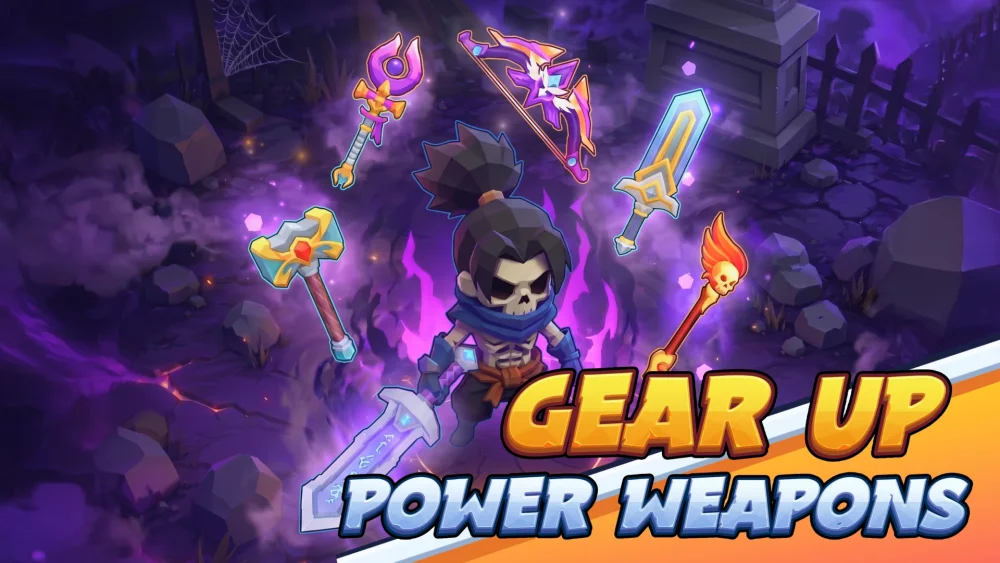
Survival in Skull Hero is defined by your ability to manage momentum. Unlike traditional action games where you might prioritize static positioning or tanking hits, Skull Hero demands a high-octane, rhythmic approach to combat. Your success depends on your mastery of two core mechanics: the invincibility frames (i-frames) inherent in head-swapping and the tactical use of dash-canceling to reset your positioning. By treating your hero not as a single unit, but as a fluid, rotating combination of two distinct skulls, you can effectively negate damage while keeping your DPS at its peak.
Mastering the Invincibility Frames of Head-Swapping
The most powerful tool in your arsenal is not a specific weapon, but the head-swap mechanic itself. Every time you switch between your primary and secondary skulls, you gain a brief window of invincibility. This is not just a utility for changing playstyles; it is your primary defensive "parry" against attacks that are otherwise unavoidable.
To maximize these i-frames, you must shift your mindset from "dodging" to "timing." Instead of moving away from a boss's telegraphed attack, you should aim to trigger your head-swap exactly as the hitbox overlaps with your character.
- Frame Precision: The window is tight. If you swap too early, you may finish your animation just as the attack lands. Practice in lower-tier stages to feel the duration of the swap animation.
- Offensive Repositioning: Use the swap to dash through enemies. If you are surrounded, don't just swap to evade; swap to move through a mob, landing your switch-in attack on the other side. This turns a defensive necessity into an aggressive repositioning tool.
Prioritizing Dash-Canceling for Combat Flow
In Skull Hero, movement is the foundation of every successful run. Your dash is more than a way to cross the screen—it is an animation-cancel tool. Many high-damage skills in the game come with significant wind-up or recovery animations that leave you vulnerable. By dashing at the tail end of an attack animation, you can cancel the recovery frames and immediately resume movement or initiate a follow-up attack.
This "dash-canceling" technique is vital for maintaining uptime on bosses. When a boss prepares an area-of-effect attack, you don't have to stop your damage rotation entirely; you can finish your skill, dash out of the danger zone, and reset your position instantly.
Strategic Dash Usage:
- Formation Breaking: When faced with a dense wave of monsters, dash through the center of the pack rather than around it. This forces the AI to turn and re-target you, creating a small window of opportunity to strike from the rear.
- Corner Management: If you are backed into a corner, use a dash followed by a jump to gain elevation or distance. Never dash into a wall; always ensure you have a clear path to maintain your circular movement pattern around the boss arena.
Synchronizing Skull Abilities with Swap Cooldowns
A common mistake in Skull Hero is treating your two skulls as separate, independent entities. To play at an expert level, you must treat them as a single, synergistic unit. Your goal is to ensure that you are never "dead" in the water—meaning you should never have both skulls on cooldown simultaneously.
The Cooldown Rotation Cycle
- Burst Phase: Start with your high-damage, long-cooldown skull. Deploy its primary abilities to clear the initial wave or chunk the boss’s health bar.
- Transition Phase: Once the main skill is used, swap to your secondary skull. Use its utility or sustained damage skills while the first skull’s cooldown ticks down.
- The "Safety" Swap: Keep the swap ability available for emergencies. If you see a massive boss attack, you can use your swap-swap (switching back to the first skull if needed) to trigger the i-frames exactly when you need them.
Always monitor the UI cooldown icons. If you find yourself waiting for a skill to come off cooldown, you are playing too passively. Switch skulls, engage in melee, or reposition to keep the pressure high.
Managing Boss Phase Transitions with Defensive Swaps
Boss fights in Skull Hero are rhythmic tests of endurance. Every boss features distinct phases where they become more aggressive or alter their attack patterns. The transition between these phases is often the most dangerous moment, as the boss may unleash a screen-clearing ability.
Save your head-swap for these specific moments. If a boss begins a "bullet hell" phase or a massive ground-slam, hold your swap. By waiting for the exact frame of impact to trigger the swap, you effectively nullify the damage, allowing you to stay in the boss's face and continue your damage rotation while they are still locked in their own animation.
- Pro Tip: If a boss has a high-damage, multi-hit attack, use a dash to evade the first few hits, and save your head-swap for the final, most dangerous hit of the sequence. This ensures you survive the entire duration of the combo.
Balancing Aggression and Defensive Sustain
The hardest part of Skull Hero is knowing when to commit. If you are running a "glass cannon" skull build, your margin for error is razor-thin. In these cases, your reliance on head-swap i-frames must be absolute.
Evaluating Risk vs. Reward:
- Low HP/High Risk: If your health is low, prioritize the swap-dash-swap loop to remain mobile. Do not commit to long animation skills until you have created enough distance.
- High HP/Aggressive: If you have a defensive buff or high health, you can afford to hold your dash for movement and use your swaps solely for damage procs or repositioning.
Ultimately, your survival relies on a "combat loop": Skill -> Attack -> Dash-Cancel -> Swap -> Repeat. By integrating these mechanics, you remove the reliance on RNG or healing drops and turn every run into a calculated display of skill. Practice this flow in the early stages, and you will find that even the most punishing bosses in Skull Hero become manageable through sheer mechanical efficiency.

Free Skull Hero Codes
Current active codes and how to redeem them.

James Brown
James focuses on Android gaming on PC, emulator setup, controls, performance tuning, and practical troubleshooting for longer play sessions.
COMMUNITY
Player Comments
133 players commented on this guide.
The tips are practical and easy to follow.
Nice guide. I am checking the other Skull Hero articles next.
This guide answered the exact question I had.
I tried this today and it worked better than my old setup.