
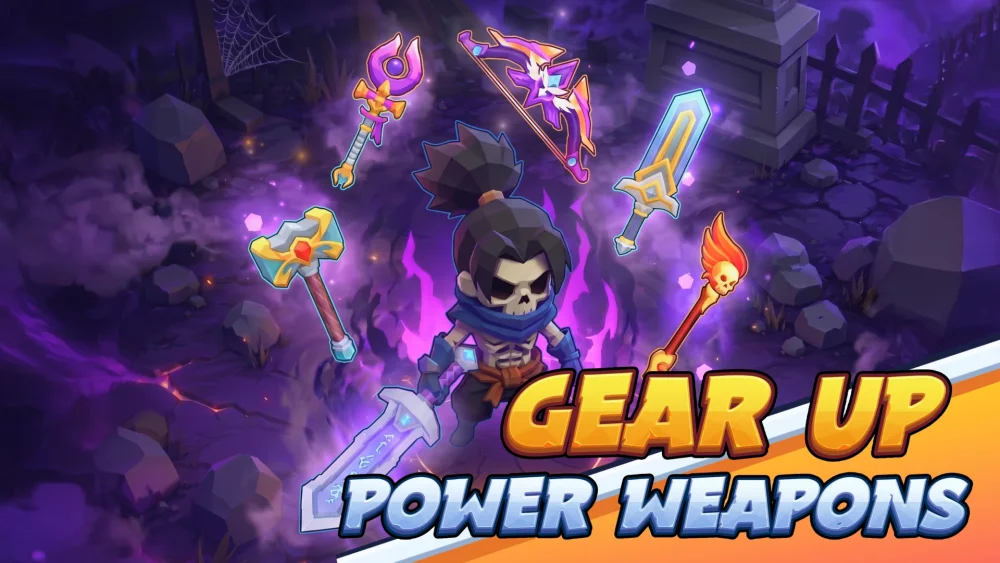
In Skull Hero, survival is not merely about avoiding damage; it is about out-scaling the threats that stand in your way. Players who treat every encounter as a strategic opportunity to farm experience and upgrade their hero will find themselves far better equipped to handle the game’s late-stage difficulty spikes. The core gameplay loop revolves around balancing aggressive mob clearing with precise positioning, ensuring your hero’s power grows faster than the enemies you face.
Prioritizing Combat Scaling for Early Success
The most common mistake new players make in Skull Hero is playing too defensively. While survival is the ultimate goal, it is achieved through offensive scaling. Your hero’s stats—damage, attack speed, and health—are heavily influenced by the experience gained from clearing waves of monsters.
If you avoid combat to save health, you deprive yourself of the experience points (XP) necessary to level up your abilities. Aim to clear high-density clusters early in each run. By triggering early-game growth bonuses, you ensure your raw damage remains high enough to clear elite mobs in one or two hits. If you reach the mid-game and find that enemies are taking too long to die, it is a clear signal that you have fallen behind the "power curve." Prioritize clearing speed early to stay ahead of the game's inherent difficulty scaling.
Deep Dive: Managing Gear and Item Synergies
Gear in Skull Hero is not just about raw stat increases; it is about how those items interact with your specific playstyle. When selecting equipment, look for synergies that complement your hero’s innate strengths:
- Attack Speed vs. Raw Damage: If your character relies on high-frequency attacks, prioritize items that increase attack speed or apply on-hit effects.
- Life Steal and Sustain: For longer runs, gear that grants life steal is essential. It allows you to trade small amounts of damage for massive enemy clearing potential without needing to retreat.
- Percentage-Based vs. Flat Buffs: In the early game, flat damage buffs are superior. However, as your level increases, prioritize percentage-based modifiers, as they scale exponentially with your base stats.
Avoid the "rarity trap." A high-rarity item that doesn't fit your current build is often worse than a lower-rarity item that provides a necessary utility boost, such as movement speed or cooldown reduction.
Mastering Movement and Positioning
Skull Hero utilizes one-finger controls, making positioning your most important mechanical skill. You must master "kiting," which involves moving constantly to bait enemy attacks into empty space while keeping your own attacks centered on the target.
The "Pulse" Movement Strategy
Do not stand still to attack. Instead, adopt a "pulse" rhythm:
- Move: Use your single control input to weave through gaps in the enemy line.
- Stop/Attack: Briefly pause to let your hero’s auto-attack trigger.
- Reposition: Immediately move again to avoid telegraphed area-of-effect (AoE) slams.
By staying mobile, you force enemies to path toward you, often grouping them into a single, manageable kill zone. This is especially vital when dealing with ranged monsters or bosses that utilize telegraphed line attacks.
Strategic Resource Allocation
Currency management is the difference between a stalled progression and a powerful late-game build. In Skull Hero, you must distinguish between temporary run-based upgrades and permanent account-wide improvements.
- Permanent Upgrades: Always prioritize spending gold on permanent base-stat increases (Health, Damage, Defense) before heading into a new run. These provide a safety floor that applies regardless of which items you pick up during the match.
- Run-Time Spending: During a stage, do not waste resources on minor gear upgrades. Wait for high-impact items that fundamentally change your combat capability. If you are struggling with a boss, save your rerolls and currency for the shop encounters that offer the specific utility you lack.
Adapting to Difficulty Spikes
The difficulty in Skull Hero is not linear; it arrives in waves. You will often notice a sharp spike in enemy health and damage when entering a new environment or reaching a boss encounter.
Recognizing the "Wall"
If you find your health bar dropping rapidly or enemies surviving your primary damage rotation, stop pushing forward.
- Fallback Farming: Retreat to an area with lower-tier mobs to farm the remaining XP needed for your next level-up.
- Refine the Build: Use the shop to pivot. If you are dying too fast, sacrifice a damage-focused item for one that provides survivability or crowd control.
- Telegraph Awareness: Every major boss has a "tell"—a specific animation or sound effect that occurs before a high-damage ability. Spend your first attempt on a new boss just observing these patterns rather than trying to win. Once you memorize the timing of the "slam" or "dash," you can dodge with precision, turning a dangerous fight into a routine encounter.
Summary Checklist for Every Run
To ensure consistent progress in Skull Hero, follow this checklist before and during every session:
- Check Permanent Upgrades: Ensure your base stats are maxed for your current level.
- Aggressive Early Game: Prioritize XP density in the first three minutes.
- Select for Synergy: Choose gear that boosts your primary attack style, not just the highest rarity.
- Maintain Mobility: Never stand still for more than two seconds.
- Identify Boss Tells: Learn the patterns of every boss to minimize damage taken.
By applying these strategies, you shift your playstyle from reactionary to proactive. Skull Hero rewards players who understand the math behind the combat and the importance of movement efficiency. Keep pushing your limits, prioritize your scaling, and you will find that even the most daunting bosses eventually crumble under your hero's growth.

Free Skull Hero Codes
Current active codes and how to redeem them.

Michael Smith
Michael covers live-service games, events, reward systems, and efficient daily routines, turning frequent updates into clear actions for players.
COMMUNITY
Player Comments
89 players commented on this guide.
Good guide for Skull Hero players. The heroes part was useful.
The explanation is clear, especially for beginners.
This saved me time in the early game.
This guide answered the exact question I had.