
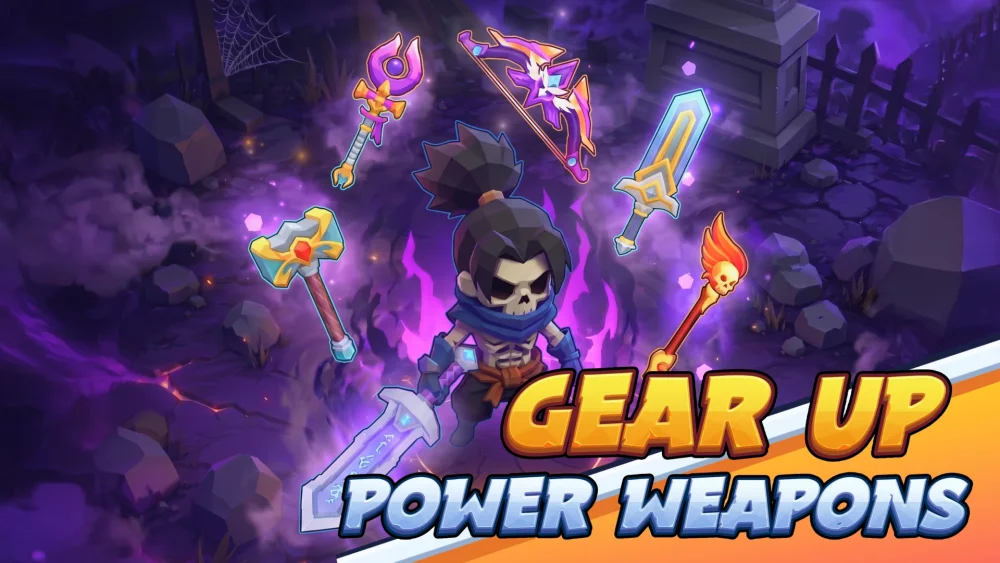
In Skull Hero, survival is not determined by how well you can soak up damage, but by how effectively you can dictate the flow of battle. To succeed in this action-focused fantasy adventure, players must move away from reactive, defensive playstyles and embrace tactical aggression. By controlling enemy positioning and managing your combat rhythm, you can turn overwhelming monster waves into manageable clusters. This guide breaks down the core mechanics required to master the battlefield, optimize your DPS, and survive the most brutal boss encounters.
Prioritizing Aggressive Movement Over Defensive Stances
The most common mistake new players make in Skull Hero is backing away from incoming mobs. When you retreat, you allow enemies to fan out, eventually surrounding you and cutting off your escape routes. Aggressive positioning is the key to preventing this "death spiral."
By constantly pushing forward into the fray, you force enemy spawn patterns to trigger in front of you. This allows you to intercept mobs before they can spread across the map. Aggressive movement also serves as your primary tool for AoE (Area of Effect) optimization. When you move with purpose, you can "herd" enemies into tight clusters. Once they are grouped, a single well-placed ability can eliminate an entire wave, saving you time and resources. Remember: the safest place in Skull Hero is often the spot you just cleared, not the area you are running toward.
Implementing Efficient Crowd Control Techniques
Crowd control (CC) in Skull Hero is about controlling space as much as it is about applying status effects. To effectively manage a swarm, you must focus on three pillars of engagement:
- Interrupting Wind-ups: Most elite units have telegraphed attack animations. Use your dash ability to close the distance and strike just as they begin their wind-up. This cancels their attack, saving your health pool from high-damage projectiles.
- Cornering and Pinning: If a map has walls or environmental obstacles, use them to your advantage. By pinning smaller mobs against a boundary, you prevent them from scattering and force them to stay within your weapon’s reach.
- Cooldown Cycling: Never fire all your CC abilities at once. Rotate your skills so that you always have at least one knockback or stun available. If you find yourself accidentally surrounded, that single CC ability is your "get out of jail free" card.
Mastering the Combat Rhythm
Skull Hero is a game of bursts, not a continuous grind. If you treat every encounter as a marathon, you will quickly find your skills on cooldown and your hero vulnerable. Instead, view combat as a series of short, high-intensity sequences.
- The Engagement Phase: Dash into the center of a pack and exhaust your burst damage skills to thin the herd.
- The Repositioning Phase: Once your primary skills are on cooldown, focus entirely on movement. Kite the remaining enemies in a circle, preventing them from surrounding you until your abilities reset.
- The Evaluation Phase: Use the brief seconds between monster waves to check your health status and plan your next movement.
By pacing your aggression, you prevent "combat fatigue," where you are left standing still while enemies close in. Always save your dash for when you need to create space, not just for closing in on new targets.
Tactical Advantages of Head-Swapping
The "head-swapping" mechanic is the most distinct strategic element in Skull Hero. It is more than just a cosmetic change; it is a tactical reset button that can change your combat profile mid-fight.
If your primary head is melee-focused but you are low on health, swapping to a ranged head allows you to continue dealing damage while maintaining a safe distance. Conversely, if you are being overwhelmed by a cluster of fast-moving enemies, swapping to a head with high-damage, short-range AoE can clear the immediate threat instantly.
Strategic Tip: Always equip your secondary head with a skill that covers your primary head's weaknesses. If your main head is a "single-target executioner," your secondary head should be a "crowd-clearing specialist." This ensures that no matter what enemy composition you face, you have the right tool for the job.
Efficiency Against Elite Units and Bosses
Elite units and bosses in Skull Hero are designed to punish players who stand still. These enemies often possess high resistance to standard CC, meaning you cannot rely on simply stunning them into submission.
- Isolate and Conquer: Never fight an elite unit in the middle of a dense mob. Use your mobility to kite the elite away from their support units. Once the elite is isolated, you can focus your burst damage without worrying about smaller enemies chipping away at your health.
- Baiting Mechanics: Elite attacks are almost always telegraphed. Learn the specific "tell" of each boss or elite—a flash of light, a specific sound, or a slight pause. Once you see the tell, dodge, wait for the attack to miss, and then commit to your full combo.
- The "Trade" Trap: Never attempt to trade hits with an elite. In Skull Hero, your health is a finite resource that is difficult to replenish. Even if you kill the elite, taking unnecessary damage during the fight will leave you too weak to survive the subsequent waves.
Final Thoughts for Progression
To climb higher in the mysterious lands of Skull Hero, you must constantly refine your mechanical skills. Focus on your movement speed, learn the timing of your dash, and master the art of the head-swap. If you find yourself consistently dying at a certain stage, evaluate which aspect of your rhythm is failing: are you being surrounded? (Improve your movement). Are you taking too much damage from elites? (Improve your kiting and interrupt timing). By applying these tactical principles, you will transform from a novice wanderer into a legendary Skull Hero capable of conquering any challenge the game throws your way.

Free Skull Hero Codes
Current active codes and how to redeem them.

Sarah Williams
Sarah specializes in RPG and collection games, explaining team building, character growth, and beginner-friendly ways to avoid expensive early mistakes.
COMMUNITY
Player Comments
35 players commented on this guide.
Nice guide. I am checking the other Skull Hero articles next.
Can you add more details about early game in a future update?
The explanation is clear, especially for beginners.
This helped me understand early game much better.