
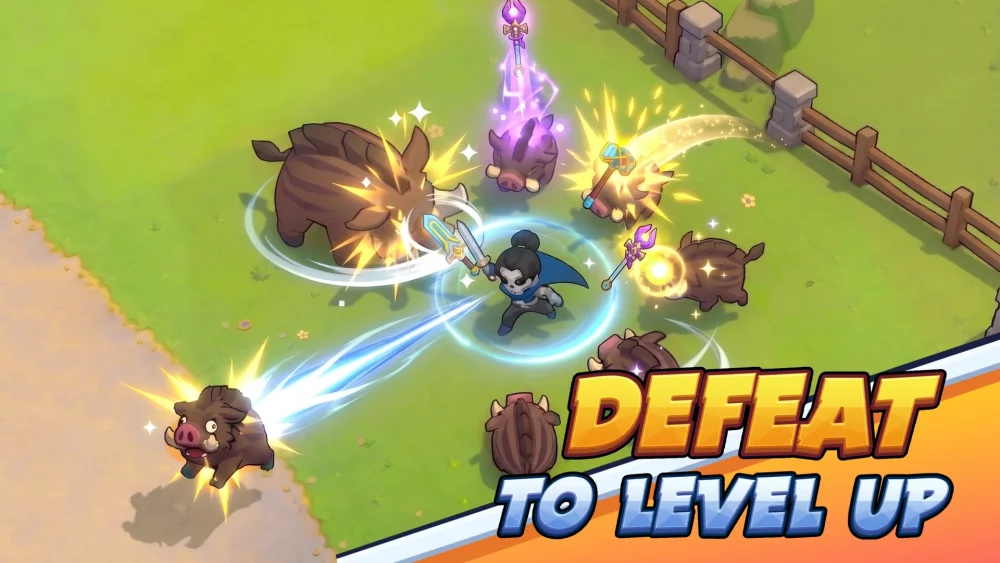
To maximize your progression speed in Skull Hero, you must shift your focus from passive questing to active, high-density enemy farming. The most reliable way to accelerate your leveling momentum is by mastering the "XP battery" zones—specifically the Goblin camps scattered throughout the mysterious lands. By optimizing your movement, prioritizing area-of-effect (AoE) damage, and understanding spawn mechanics, you can transform simple combat encounters into a consistent stream of experience points that keeps you well ahead of the game's difficulty curve.
Identifying Optimal Goblin Farming Zones
In Skull Hero, not all enemies are created equal. Goblin camps are the gold standard for early-to-mid-game farming because they offer high spawn rates, predictable pathing, and relatively low individual health pools. These camps act as "XP batteries," allowing you to rack up kills per minute without burning through your high-cooldown skills.
To identify the best zones, look for areas with clustered spawn points. A prime zone is one where Goblins emerge in tight groups rather than spreading out across the map. When you enter these zones, your goal is "full-clearing." Because spawn triggers are often tied to the death of existing units, leaving even one or two stragglers can delay the next wave.
Pro-Tip for Map Awareness: Keep your camera centered on the densest part of the cluster. Skull Hero’s one-finger controls are designed for fluid movement; use your thumb to kite the Goblins into a single "kill zone" before unleashing your primary damage output.
Combat Tactics for Efficient XP Harvesting
Efficiency in Skull Hero is defined by your "Kill-Per-Second" (KPS) ratio. To sustain high XP gains, you must move away from single-target precision and toward wide-arc or piercing weapon builds. If you find yourself chasing down individual enemies, you are wasting time that could be spent clearing a fresh wave.
Strategic Execution Checklist:
- Prioritize AoE Skills: Always favor gear and skills that grant splash damage, piercing, or wide-swing arcs. Items that allow for "cleave" damage allow you to hit 3–5 Goblins with a single tap.
- Chain Your Kills: Do not stop to pick up gold or common loot items while in the middle of a spawn wave. Clear the screen first; the loot will remain on the ground, and you can collect it in one efficient sweep once the area is empty.
- Stamina Management: Your movement ability is your most valuable tool for repositioning. Never use it to chase a single enemy; save it exclusively to jump to the next spawn node once the current pack is defeated.
- The "Lure" Technique: If Goblins are scattered, run to the edge of their aggro radius and lead them back toward the center of the camp. This tightens their formation, making them perfect targets for your AoE skills.
Managing the Gear-to-XP Trade-off
A common mistake among Skull Hero players is focusing exclusively on leveling while ignoring gear progression. If you reach level 20 but are still using level 5 equipment, your clearing speed will plummet, making your high-level status irrelevant.
XP farming should be treated as a means to an end. Once you notice that your "time-to-kill" (TTK) is increasing—meaning it takes more hits to down a standard Goblin—it is time to stop farming and visit the merchant or tackle a main quest boss.
- The Power Spike Cycle: Farm Goblins to reach a level milestone, then immediately pivot to boss content. Bosses provide the materials and currency needed to upgrade your gear, which in turn increases your damage, allowing you to farm even faster in the next zone.
- Merchant Priority: Always prioritize weapon upgrades over armor during your farming sessions. In Skull Hero, the best defense is a swift offense; killing the pack before they can surround you is far more effective than trying to tank their damage.
Timing Your Farming Sessions
Progression in Skull Hero is not a marathon; it is a series of focused sprints. Attempting to farm for hours at a time leads to fatigue, which results in sloppy movement and unnecessary deaths.
The 20-Minute "Burst" Method:
- Preparation (2 mins): Ensure your inventory has space and your best AoE gear is equipped.
- The Sprint (15 mins): Engage in high-intensity clearing. Focus purely on the rhythm: Lure, Clear, Move, Repeat. Ignore all non-essential loot.
- The Audit (3 mins): Take a break to assess your XP bar and gear. If you have leveled up, check the shop for upgrades or consider moving to a zone with slightly tougher enemies to maintain the XP-per-minute efficiency.
Avoiding Common Farming Pitfalls
Even experienced players can fall into traps that kill their XP gains. Avoid these common errors to stay ahead:
- Over-farming a Zone: If you are "one-shotting" every enemy in a zone, you have outgrown it. While it feels powerful, you are gaining less XP than you would in a zone scaled to your current level. Move on immediately.
- Ignoring Traps: Many Goblin-heavy zones contain environmental hazards. Do not ignore these; learn to kite Goblins into traps. This allows you to deal massive damage without using your own skill cooldowns.
- Failure to Upgrade: If you are hoarding gold, you are hindering your farming speed. Gold is meant to be spent on upgrades that make your next farming session faster. If you aren't spending, you aren't growing.
Conclusion: Mastering the Loop
The secret to success in Skull Hero is the balance between aggressive farming and smart upgrading. By focusing on high-density Goblin camps, utilizing AoE-heavy combat tactics, and knowing exactly when to pivot from farming to boss encounters, you will maximize your efficiency. Use the "20-minute burst" approach to keep your focus sharp, and always remember: in Skull Hero, speed is the ultimate stat. Keep your movement fluid, your AoE radius wide, and your focus on the next spawn, and you will dominate the mysterious lands in no time.

Free Skull Hero Codes
Current active codes and how to redeem them.

Emily Johnson
Emily writes practical mobile strategy guides with a focus on resource planning, base progression, and the early decisions that shape a long-term account.
COMMUNITY
Player Comments
138 players commented on this guide.
This helped me understand heroes much better.
Can you add more details about heroes in a future update?
Good guide for Skull Hero players. The heroes part was useful.
This saved me time in the early game.