
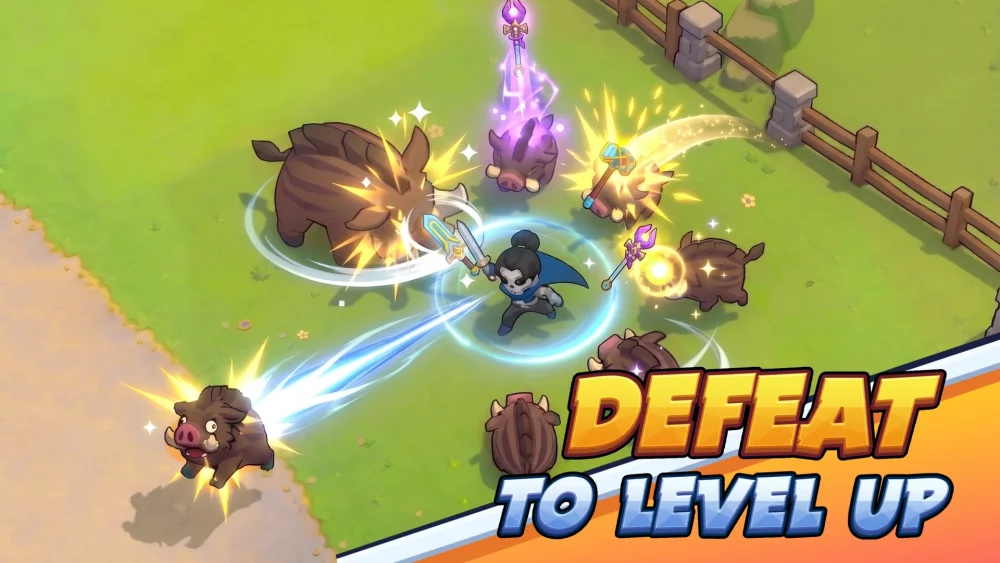
In Skull Hero, the thrill of victory is often punctuated by the crushing frustration of a failed run. Because the game is intentionally designed to be punishing, many players feel as though the experience is "destroying them from the inside." However, this difficulty is not a wall; it is a mechanical filter. To master Skull Hero, you must transform your mindset from one of reactive panic to analytical precision.
Whether you are struggling with a specific boss encounter or getting overwhelmed by late-game monster waves, success requires a combination of psychological regulation, build optimization, and tactical patience.
Managing Psychological Pressure During Intense Boss Fights
The most common reason for failure in Skull Hero is "tilt"—a state of emotional frustration that leads to rushed inputs and poor decision-making. When a boss enters a high-intensity phase, the natural instinct is to spam attacks to finish the fight quickly. This is almost always the wrong approach.
High-difficulty bosses in Skull Hero are built to punish greed. When you feel the pressure mounting, pivot your strategy to a "Defensive-First" approach:
- Observe, Don’t React: Spend the first 30 seconds of a boss fight observing the telegraphs rather than attacking. Every boss has a rhythmic sequence of movements that precedes their damage windows.
- Prioritize Positioning: Stop focusing on where the boss is and start focusing on where you are. Identify "dead zones" in the arena where the boss's AOE (Area of Effect) attacks cannot reach.
- The Dash Window: Your dash is your most precious resource. Never use it to close the gap for damage unless you are 100% certain the boss is in a recovery animation. Use it exclusively to escape overlapping damage zones.
Analyzing Death Patterns to Improve Run Consistency
If you are dying repeatedly, you are not failing—you are gathering data. Skull Hero rewards players who treat each death as a diagnostic opportunity. Instead of restarting immediately, take a moment to audit your run.
The Post-Death Audit
- Damage Source Analysis: Did you die to a single massive hit or a series of small, avoidable chip-damage hits? If it’s the latter, your defensive positioning needs work. If the former, your build lacks sufficient damage mitigation.
- Build Synergy Check: Are you forcing a "Glass Cannon" build on a boss that requires high sustain? Some skulls and items are designed for fast-paced mob clearing, while others are built for high-HP boss encounters. Ensure your gear matches the stage's requirements.
- Resource Management: Were you out of health potions or skill charges? If you consistently reach bosses empty-handed, look for items that grant passive health regeneration or cooldown reduction during the preceding stages.
The Importance of Strategic Patience in Combat
The "destruction" players feel when losing a long run is usually caused by viewing the entire game as a single, fragile objective. To mitigate this, break your run into "segments."
Treat every room as an isolated challenge. If you approach a room thinking, "I need to save health for the boss," you will naturally play more cautiously. This mental framing prevents the "all-or-nothing" anxiety that leads to reckless mistakes. When you view Skull Hero as a series of rhythmic puzzles rather than a sprint to the finish, you will find that your combat tempo stabilizes significantly.
Balancing Aggression and Defensive Positioning
Skull Hero provides a unique combat loop where aggression is technically rewarded, but usually only after you have established a "defensive base." You cannot be aggressive if you are constantly taking damage.
The Aggression-Defense Ratio
- Early/Mid Game: Focus on clearing mobs quickly. Aggression is safe here because the enemy telegraphs are predictable and slow.
- Boss Encounters: Transition to a 70/30 split. Spend 70% of your time monitoring the boss and 30% of your time dealing damage.
If your reflexes are not perfectly in sync with the game's pace, do not force a high-speed playstyle. It is perfectly viable to play slowly, kite enemies across the map, and pick your spots. The game does not reward you for finishing a fight in record time; it rewards you for surviving.
Common Mistakes That Lead to Early Exit
To refine your gameplay, identify if you are falling into these common player traps:
- Over-committing to Attack Animations: Many skulls have long attack animations that lock you in place. If you start an attack while a boss is beginning their own, you will be unable to dash away. Learn the "commitment cost" of your favorite skills.
- Ignoring Trap Hazards: Often, the monster isn't what kills you—the environment is. In stages with traps, focus your eyes on the floor, not the enemies. If you can master the trap layout, you can kite enemies into the traps themselves, turning the environment into your primary weapon.
- Ignoring Item Rarity/Type: Do not just equip the highest-damage item. Look for passive effects that increase your survivability, such as dash cooldown reduction or invulnerability frames. Often, a lower-damage item with a defensive utility is superior for clearing higher difficulties.
Final Decision-Making Strategy
When you find yourself stuck, change one variable at a time. If you keep using the same skull, swap it for one with more crowd control. If you keep dying to bosses, trade your offensive items for defensive ones. Skull Hero is a game of incremental progress; each failed run provides the knowledge necessary to build a more resilient strategy for the next attempt. Focus on learning the patterns, stay patient, and stop treating your health bar as an infinite resource.

Free Skull Hero Codes
Current active codes and how to redeem them.

Emily Johnson
Emily writes practical mobile strategy guides with a focus on resource planning, base progression, and the early decisions that shape a long-term account.
COMMUNITY
Player Comments
63 players commented on this guide.
This helped me understand heroes much better.
The explanation is clear, especially for beginners.
I wish I had read this before upgrading the wrong thing.
Nice guide. I am checking the other Skull Hero articles next.