
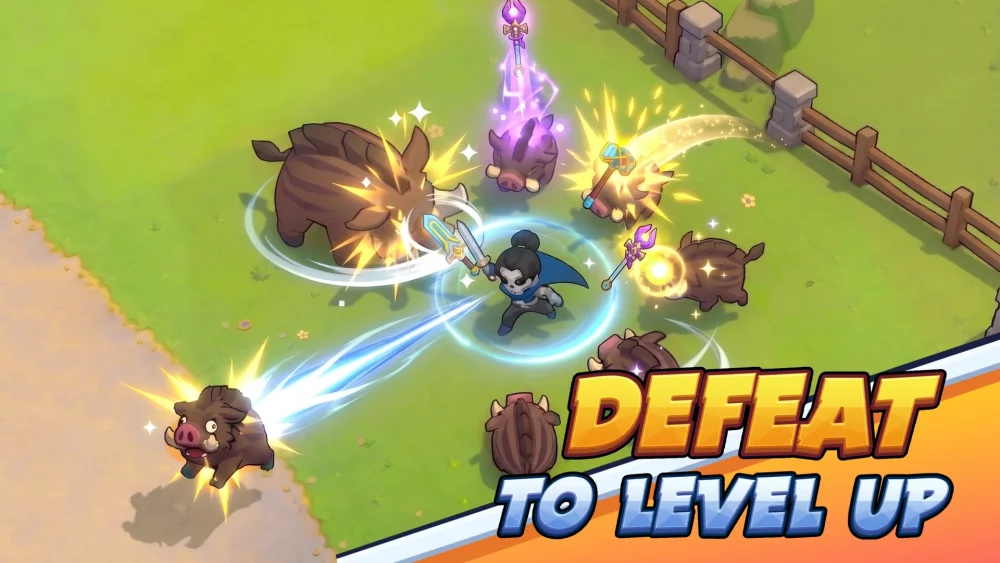
To maximize your experience points (XP) and power up your hero effectively in Skull Hero, you must shift your focus from simply "beating levels" to mastering the game’s combat economy. The most efficient players don't just survive; they maintain a constant cycle of slaughter. By prioritizing dense enemy clusters, utilizing movement tech to minimize downtime, and managing your skill rotations, you can significantly accelerate your leveling curve and stay ahead of the game's increasingly difficult boss encounters.
The Science of High-Density Combat
In Skull Hero, XP is a function of time. The faster you clear enemies, the faster you level up. Your goal in every stage should be to identify "Hot Zones"—areas where enemy spawn rates are highest and mob density is peaked.
- Avoid Single-Target Distractions: If you are chasing one lone archer across the map, you are losing XP. Focus your damage on clusters. If a group is too small, kite them toward a larger mob to create a "mega-pack" that you can eliminate with a single area-of-effect (AoE) skill.
- The Choke Point Strategy: When dealing with swarms, draw enemies into narrow corridors or chokepoints. This forces them into a straight line, allowing your piercing or frontal-cone attacks to hit every target simultaneously. This maximizes the damage-per-second (DPS) output of your skills and reduces the risk of being surrounded.
- Respawn Optimization: Some stages feature fixed spawn nodes. Once you identify where enemies emerge, position your hero near those points. By clearing them the moment they spawn, you prevent them from scattering, which forces the game to trigger the next wave faster.
Mastering Movement and Map Navigation
In Skull Hero, movement is your most underrated offensive tool. Static players die; mobile players farm. Your dash mechanic is not just for survival—it is your primary tool for closing the gap between enemy clusters.
- The "Sweep" Method: Don’t wander randomly. Adopt a consistent, methodical path through the map, typically from entry to exit. Divide the arena into quadrants and clear them one by one. If you find yourself backtracking, you’ve failed the efficiency check.
- Dash-Canceling Downtime: Use your dash immediately after a skill animation ends to reset your positioning. This allows you to animation-cancel the tail end of your attack, letting you move instantly to the next cluster while your hero is still technically finishing the attack sequence.
- Maintain Momentum: The "kill chain" is your best friend. In many stages, the game rewards sustained aggression. Keep your movement fluid to ensure you are always within striking distance of the next group. If you are walking for more than two seconds without combat, you are farming too slowly.
Strategic Skill Management and Cooldowns
A common mistake in Skull Hero is burning your ultimate or highest-damage abilities on a single elite enemy or a small handful of trash mobs. Effective XP farming requires a disciplined approach to resource management.
- The Rule of Three: Save your heavy hitters for when at least three or more enemies are grouped together. If you encounter a lone mini-boss, rely on your basic attacks and kiting. Your skills should be reserved for clearing the "waves" that follow or accompany these tougher enemies.
- Cooldown Cycling: Learn the exact duration of your skill cooldowns. By rotating through your abilities, you create a "rhythm of destruction." Use your dash to reposition while your primary skill is on cooldown, ensuring that by the time you reach the next cluster, your arsenal is ready to fire again.
- Mana/Energy Conservation: If your hero uses a resource system for skills, do not empty your bar on a dying mob. Stop attacking, let the resource replenish while you dash to the next area, and arrive fully primed for the next major engagement.
Evaluating Risk vs. Reward in Farming Runs
While speed is the goal, dying is the ultimate efficiency killer. A failed run results in zero XP gains for that session, which is a massive waste of time. You must learn to read the "danger threshold" of each stage.
- Chip Damage Management: If you are constantly taking "chip damage" from weak mobs while farming, you are playing too recklessly. Use your dash to weave in and out of the center of a mob. Hit them, dash out, wait for their attack animation to miss, then dash back in.
- When to Pivot to Survival: If your health drops below 30%, ignore the urge to clear the map. Prioritize clearing a path toward health pickups or safer zones. It is better to take an extra 30 seconds to play defensively than to lose five minutes of progress by dying.
- Gear Upgrades: If you find that you are consistently dying while trying to farm, your XP farming isn't the problem—it’s your gear. Stop farming for levels and start farming for gold or specific item drops that increase your defense or life-steal capabilities. A hero with high survivability can farm at a much higher intensity than a glass-cannon build.
Final Tactics for Long-Term Progression
To truly master Skull Hero, you must treat every stage as a learning opportunity. Pay attention to enemy attack patterns; they are usually telegraphed by a specific sound or visual cue. Once you memorize these, you can farm mobs without even looking directly at them, allowing you to focus on the map layout and spawn points.
Summary Checklist for Every Run:
- Clear Efficiently: Prioritize groups over individuals.
- Move Constantly: Use your dash to eliminate walking downtime.
- Rotate Skills: Don't waste AoE on single targets.
- Stay Alive: A finished run with slightly less XP is better than a failed run with zero.
By implementing these strategies, you’ll transform Skull Hero from a difficult slog into a streamlined experience-gathering machine. Focus on the rhythm of the combat, respect the danger of the elite mobs, and always be moving toward the next cluster of experience.

Free Skull Hero Codes
Current active codes and how to redeem them.

Emily Johnson
Emily writes practical mobile strategy guides with a focus on resource planning, base progression, and the early decisions that shape a long-term account.
COMMUNITY
Player Comments
39 players commented on this guide.
The explanation is clear, especially for beginners.
I tried this today and it worked better than my old setup.
The tips are practical and easy to follow.
Nice guide. I am checking the other Skull Hero articles next.