
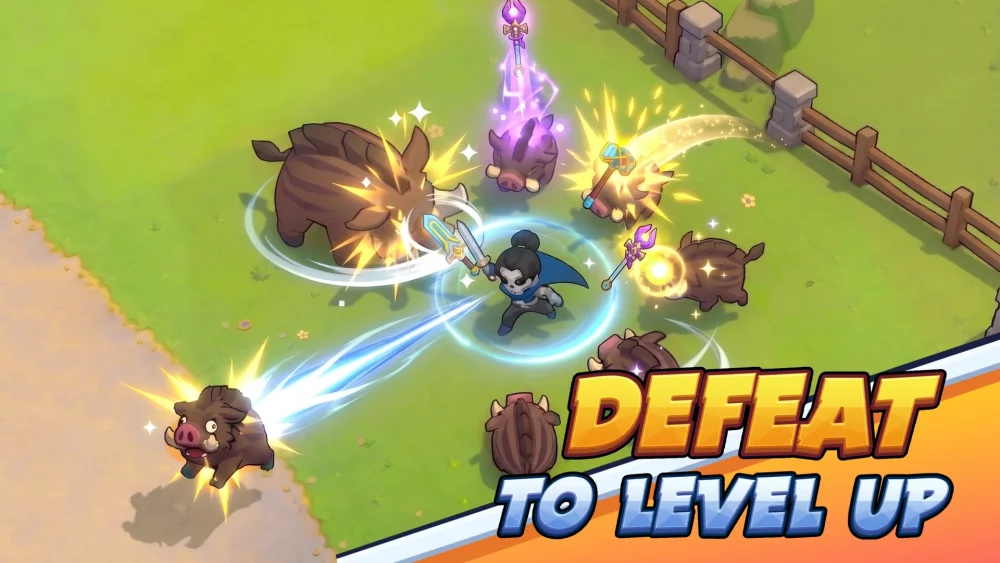
Surviving the relentless, monster-filled waves of Skull Hero requires more than just high-damage weapons; it demands a disciplined approach to movement, threat assessment, and rhythmic engagement. Because Skull Hero features fast-paced, action-oriented encounters, players who rely on "button-mashing" often find their health pools depleted by avoidable chip damage.
To excel in Skull Hero, you must treat your hero’s position as your most important asset. By mastering the timing of your defensive maneuvers and recognizing the telegraphs of aggressive enemy clusters, you can mitigate damage spikes and ensure you arrive at boss encounters with a healthy buffer. This guide provides the tactical framework needed to dominate the mysterious lands of Skull Hero.
Prioritizing Defensive Positioning in Combat
In Skull Hero, your spatial awareness is the first line of defense. The game’s action-focused design often lures players into "chasing" kills, which frequently leads to overextension. To prevent this, always maintain a buffer between your hero and the outer edges of enemy swarms.
- Avoid Cornering: Never allow yourself to be pinned against the edge of a map. Your mobility options drop to zero when you lose the ability to strafe.
- The Center-Screen Rule: Aim to keep your character near the center of the screen. This grants you a 360-degree field of view, allowing you to react to projectiles or lunging monsters before they reach your immediate proximity.
- Dash Discipline: Treat your dash as a defensive reset button, not a traversal tool. If you use your dash to aggressively chase an enemy, you leave yourself defenseless for the duration of its cooldown, making you a sitting duck for incoming area-of-effect (AoE) attacks.
Mastering Rhythmic Combat Pacing
Skull Hero rewards players who treat combat as a rhythmic flow rather than a static slugfest. Every enemy in the game has a "wind-up" animation—a visual tell that signals an upcoming strike. Your goal is to identify these windows of vulnerability.
Attack only when the enemy is "passive" or recovering from their own missed attack. If you find yourself in the middle of a long attack animation when an enemy begins their wind-up, you must have the discipline to cancel your aggression and move. This is the difference between taking "free" damage and successfully clearing a stage. By weaving your attacks into the gaps of the enemy’s AI, you maintain momentum without exposing yourself to unnecessary risk.
Managing Health Through Strategic Retreats
Health is your most finite and valuable resource in Skull Hero. If your health pool drops below 30%, your priority must shift immediately from "damage output" to "survival."
- The Hit-and-Run Strategy: If you are overwhelmed, stop attacking. Focus entirely on dodging until you have created enough space to re-evaluate the board.
- Environmental Funneling: If you are being swarmed, run toward a narrow passage or a corner of the map. By forcing enemies into a single-file line, you limit how many can attack you at once, turning a chaotic 10-on-1 fight into a manageable series of 1-on-1 duels.
- Resource Conservation: Every hit you avoid is functionally equivalent to a healing item. By playing conservatively early in a stage, you preserve your HP for the high-intensity boss encounters that define the end of each run.
Identifying and Neutralizing High-Priority Threats
Not all monsters are created equal. In a chaotic room, you must immediately categorize your enemies into "High Priority" and "Low Priority" threats.
- Ranged Suppressors: These are your #1 targets. Whether they fire projectiles or cast ground-based AoE spells, they prevent you from standing still. Eliminate these first to "clear the air."
- Fast Melee Units: These enemies are designed to pressure you. Use your mobility to bait their lunge, move out of the way, and then punish them while they recover.
- Tanky Units: These are often the slowest monsters. Save them for last. Because they have large health pools and move slowly, they are the easiest to kite around the arena once the ranged threats are removed.
Adapting to Combat Volatility
Skull Hero is unpredictable. Spawn patterns can change, and high-speed enemy types can suddenly replace slower mobs. A successful player adapts their strategy based on the room's composition:
- The "Speed" Room: If you see fast-moving, aggressive monsters, switch your loadout or playstyle to focus on high-mobility and hit-and-run tactics. Do not attempt to stand and trade hits.
- The "Tank" Room: If the room is filled with slow-moving, high-HP monsters, you can afford to be more aggressive, but be wary of surrounding yourself. Keep them in front of you at all times.
Avoiding Fatal Mistakes
Even experienced players fall victim to common pitfalls that end runs prematurely. Avoid these three common errors:
- The "Greed" Trap: Trying to finish one last hit on a boss or elite enemy when your health is low. Always prioritize survival over landing one extra hit.
- Ignoring Trap Mechanics: Many stages in Skull Hero feature environmental hazards. Treat traps as an additional "enemy" on the field. Never dash into an area without checking the floor for trap indicators.
- Underestimating Boss Telegraphs: Bosses follow patterns. Do not panic-dash during their ultimate attacks. Watch for the telegraph, count the rhythm, and dodge precisely when the attack animation triggers.
By prioritizing your positioning, respecting the rhythm of combat, and staying disciplined with your dash usage, you will find that Skull Hero becomes significantly more manageable. Focus on the survival mechanics first, and the damage output will naturally follow as you find more opportunities to strike safely.

Free Skull Hero Codes
Current active codes and how to redeem them.

James Brown
James focuses on Android gaming on PC, emulator setup, controls, performance tuning, and practical troubleshooting for longer play sessions.
COMMUNITY
Player Comments
90 players commented on this guide.
This guide answered the exact question I had.
The tips are practical and easy to follow.
This helped me understand heroes much better.
Nice guide. I am checking the other Skull Hero articles next.