
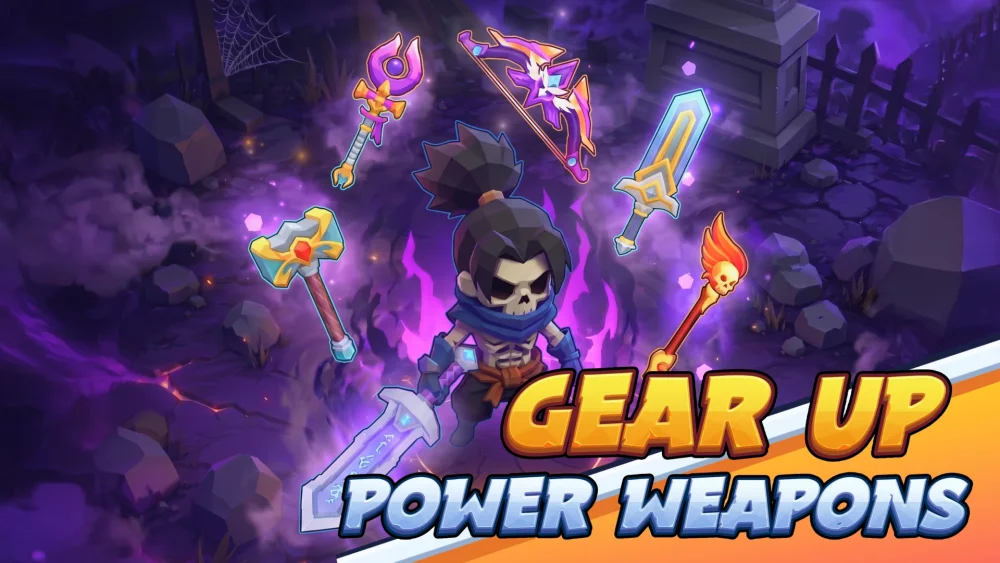
Achieving a sub-16-minute clear in Skull Hero is the ultimate test of mechanical skill, pathing efficiency, and strategic prioritization. While a standard playthrough encourages methodical progression and careful resource gathering, a speedrun requires you to abandon safety in favor of raw DPS and momentum. To reach these elite times, you must treat every room as a puzzle to be solved in seconds rather than a challenge to be survived.
The Philosophy of Speed: Mobility Over Completion
In Skull Hero, time is your most finite resource. Players often lose minutes by over-clearing rooms or indulging in unnecessary combat. The golden rule of speedrunning is that if an enemy does not block your exit, they do not exist.
- Identify the Exit Trigger: Most rooms in Skull Hero only require you to defeat a specific number of enemies or a "gatekeeper" unit to open the door. Learn these trigger points. Once the door opens, leave immediately.
- Dash-Flow Optimization: Movement speed is your best friend. Prioritize gear that increases your dash distance or reduces dash cooldowns. You should be spending more time in the air or dashing than walking, as dashing allows you to bypass ground-based traps and reposition without losing momentum.
- Pathing Efficiency: Never backtrack. The most efficient path through a stage is always the most direct one. If you find yourself running back to pick up gold or a health orb, you are losing valuable seconds that cannot be recovered.
Mastering the "Swap-and-Nuke" Combat Strategy
High-level Skull Hero play relies on a dual-skull system. Instead of focusing on a single "jack-of-all-trades" build, speedrunners use two skulls that complement each other to create a constant loop of high-burst damage.
- The Animation Cancel: Speedrunners use the "dash-cancel" technique extensively. By triggering a dash immediately after a primary attack animation starts, you can cut the recovery frames short. This allows you to chain attacks at a speed that significantly exceeds the game's default animation caps.
- AoE vs. Single Target: Prioritize skulls with wide Area-of-Effect (AoE) potential. A skull that can hit five enemies at once is worth triple the value of one that hits hard but only targets a single enemy. You want to clear entire groups in one or two skill uses to ensure you never have to linger for cleanup.
- Cooldown Cycling: Always look for gear that offers cooldown reduction (CDR). If your primary clear skill is on cooldown, you are essentially "stuck" until it returns. With sufficient CDR, you can rotate through your skills, ensuring that every room encounter is handled by a high-damage ability rather than basic attacks.
Streamlining Boss Encounters
Boss fights are where runs go to die—or where records are set. The difference between a 15-minute run and a 20-minute run is often how you handle the bosses.
- Stop Turtling: Many players wait for boss patterns to finish before attacking. In a speedrun, you must use your dash’s invincibility frames (i-frames) to stay aggressive. Dash through the boss’s attacks rather than away from them.
- Front-Load Your Damage: Use your ultimate abilities and highest burst skills the moment the boss enters the arena. Do not save them for a "safe" moment; the goal is to skip boss phases entirely by pushing their health below the threshold before they can trigger their most time-consuming animations.
- Build Finalization: Do not waste time in shops during the late game. If your build isn't coming together by the end of the second act, you are likely behind the pace. Rely on the items you have and push forward; the time spent rerolling shop inventories is almost always a net negative for your final clock.
Tactical Resource Management
When running for time, your shopping list changes drastically. You aren't building for a "full clear" or long-term sustainability; you are building for a "glass cannon" sprint.
- Prioritize Damage Multipliers: Ignore defensive items or health regeneration. Any gear that doesn't increase your raw DPS or mobility is a distraction. Look specifically for % damage increases that scale with your current skull.
- Strategic Ignoring: Do not stop for gold or minor items unless they are directly on your path to the next room. If a chest requires you to climb a platforming section that isn't on the direct route, ignore it.
- Skull Upgrades: Only upgrade your primary skull if the upgrade provides a massive damage spike. Often, it is better to spend that gold on items that boost your overall output rather than upgrading a single skull that is already performing well enough to one-shot standard mobs.
The Risks of the Glass Cannon Build
Adopting this playstyle means sacrificing survivability. You will be weak, and you will be vulnerable. This is the inherent trade-off of the sub-16-minute chase.
- Know the Telegraphs: You cannot avoid damage if you don't know the boss’s patterns. Before attempting a speedrun, spend time in normal runs specifically observing boss movements. Once you have internalized the "rhythm" of the boss, you can predict exactly when to dash through an attack without looking.
- Muscle Memory: Speedrunning is essentially performing a choreographed dance. If you are still thinking about which button to press next, you are too slow. Practice individual stages until you can clear them on "autopilot."
- Accepting Failure: You will die—a lot. Speedrunning is about consistency. Don't get discouraged by a run that ends in a boss room; analyze where you lost time, adjust your route, and go again.
Final Summary for Success
To shave those final seconds off your Skull Hero run, focus on these three pillars: Aggressive Movement, AoE Burst Damage, and Boss Phase Skipping. By ignoring non-essential encounters and utilizing dash-canceling to maintain constant pressure, you remove the "fat" from your gameplay. Keep your build focused, your pathing direct, and your aggression high. Once you master the rhythm of the game, the sub-16-minute mark is not just possible—it’s inevitable.

Free Skull Hero Codes
Current active codes and how to redeem them.

James Brown
James focuses on Android gaming on PC, emulator setup, controls, performance tuning, and practical troubleshooting for longer play sessions.
COMMUNITY
Player Comments
131 players commented on this guide.
This guide answered the exact question I had.
This saved me time in the early game.
The explanation is clear, especially for beginners.
Can you add more details about heroes in a future update?