
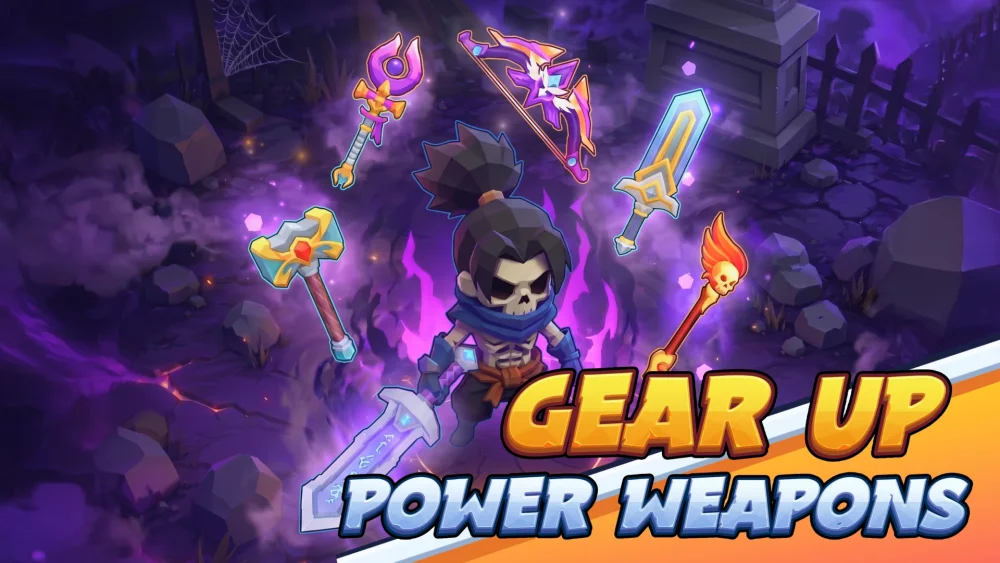
Achieving a sub-13-minute run in Skull Hero requires a fundamental shift from standard, defensive play to a high-tempo, aggressive philosophy. Speedrunning this title isn't just about playing faster; it is about eliminating "dead time"—the seconds spent indecisively in menus, navigating non-optimal paths, or engaging in unnecessary combat loops. By mastering movement mechanics, aggressive damage scaling, and boss neutralization, you can transition from a casual player to a high-level speedrunner.
Prioritizing High-Mobility Skulls for Routing
In Skull Hero, your primary objective is to reach the exit of each stage with the shortest path possible. Your choice of skull is the single most important factor in this process, as it dictates your movement speed and dash capability.
For a speedrun, prioritize skulls that offer innate movement speed bonuses or superior dash distance. Skulls that allow you to dash through dense enemy clusters without getting staggered are essential; getting "bumped" by a minor enemy is a common time-sink that disrupts your momentum. When selecting your primary skull, look for kits that offer burst mobility. If a skull requires a lengthy wind-up animation for a standard attack, it is generally suboptimal for a speedrun. Your goal is to clear immediate threats with low-commitment skills, allowing you to dash toward the next exit screen without hesitation.
Aggressive Item Scaling and Resource Management
To maintain a sub-13-minute pace, you must abandon the "completionist" mindset. Stopping to compare loot drops or inspect shop items for marginal gains is the fastest way to lose a run. Your build must prioritize flat, high-impact damage scaling that allows you to "one-shot" or "two-shot" standard enemies.
- Damage Over Defense: Prioritize items that offer percentage-based attack power or flat damage increases. Survivability items are unnecessary; your goal is to clear the screen before enemies can effectively retaliate.
- The "Skip" Mentality: If an item doesn't contribute directly to your core damage output or movement speed, ignore it. Do not waste time clearing optional rooms for gold unless the path is perfectly linear.
- Gold Efficiency: Spend gold exclusively on rerolling for core damage items or upgrading your primary skull. A disciplined approach to the shop minimizes downtime and keeps your progression curve ahead of the game’s difficulty scaling.
Mastering Boss Engagement and Neutralization
Boss fights are the primary bottlenecks in Skull Hero. A standard boss fight can take minutes if you play reactively, but a speedrun-optimized encounter should be over in seconds. The key is "phase-skipping"—delivering so much burst damage at the start of an encounter that you force the boss into its next phase before it can complete its initial attack animations.
Position yourself at the center of the arena before the boss fight begins. Use your strongest burst abilities immediately to maximize your damage-per-second (DPS) window. When a boss enters an invulnerability phase, do not retreat. Use your dash to stay attached to the boss’s hitbox. Being at the exact point where the boss reappears allows you to resume your assault the millisecond its invulnerability drops. Learning the "tell" animations for each boss is critical; if you know exactly when the boss will become vulnerable, you can pre-load your attacks to ensure 100% uptime on damage.
Movement Tech and Screen Skipping
Elite Skull Hero runners treat the game map as a series of distance challenges rather than combat encounters. Use your dash mechanics not just to avoid damage, but to traverse the map efficiently.
One of the most important movement techniques is the "Swap Momentum" trick. By switching between your two skulls, you can often reset your dash cooldowns or gain a momentary burst of speed. Practice this in the early chapters until it becomes muscle memory. Furthermore, always favor the most direct route to the exit gate. In a speedrun, your health bar is a resource that you should be willing to trade for time. As long as you have enough HP to reach the next boss, the time saved by dashing through hazardous terrain or tanking a minor hit is mathematically superior to playing safely.
Maintaining Momentum into the Late Game
As you progress toward the final chapters, the difficulty scaling in Skull Hero increases significantly. To maintain your speed, you must ensure your build is "online" by the time you reach the midpoint of the run. If your damage output falls behind the health pool of late-game enemies, you will inevitably lose time in mandatory combat rooms.
- Constant Input: If you aren't actively attacking or dashing, you are losing time. Keep your fingers ready on the dash button at all times.
- RNG Adaptability: If your preferred skull hasn't dropped by the end of the second chapter, have a backup strategy. Flexibility in your build path ensures that a run isn't dead simply because of bad luck with loot drops.
- Pre-emptive Navigation: Don't wait for the "Clear" indicator to appear. As you land the final blow on the last enemy in a room, you should already be moving toward the door. This fluidity is the hallmark of a sub-13-minute run.
By focusing on these strategies—prioritizing mobility, ignoring non-essential loot, and forcing boss phase transitions—you will significantly reduce your run times. Practice these techniques consistently, and you will find that the mysterious lands of Skull Hero become much easier to navigate at high speed.

Free Skull Hero Codes
Current active codes and how to redeem them.

Michael Smith
Michael covers live-service games, events, reward systems, and efficient daily routines, turning frequent updates into clear actions for players.
COMMUNITY
Player Comments
125 players commented on this guide.
I wish I had read this before upgrading the wrong thing.
This guide answered the exact question I had.
This helped me understand heroes much better.
The explanation is clear, especially for beginners.