
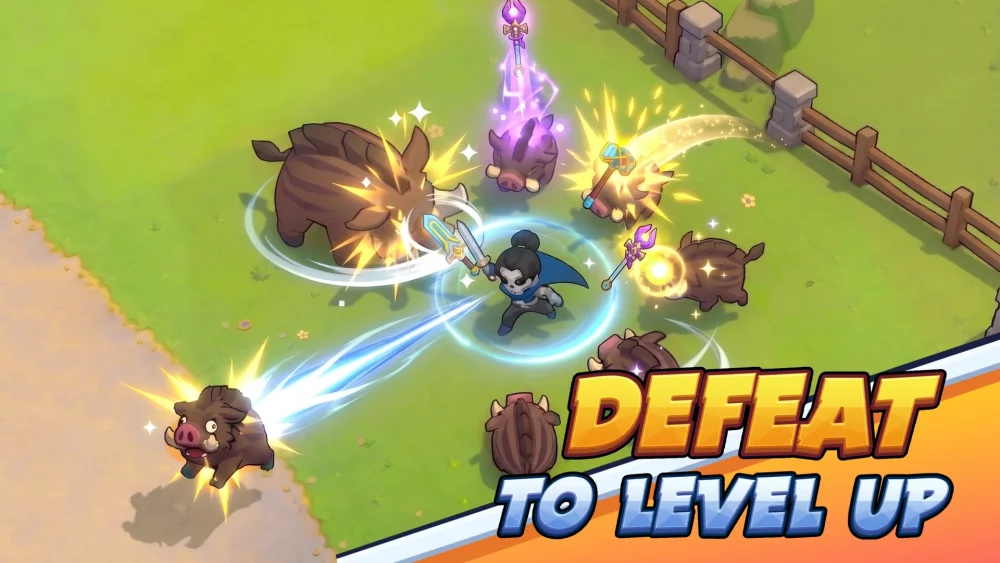
In Skull Hero, true power is built one run at a time. While individual player skill is paramount for dodging attacks and timing abilities, the game’s rogue-lite structure rewards players who treat every attempt as a deliberate step toward long-term growth. By focusing on consistent run cycles, you transform early-game failures into the currency needed to unlock permanent stat boosts, eventually scaling your hero to overcome the game’s toughest boss encounters.
The Foundation of Growth: Dark Quartz Farming
The most important resource for any player in Skull Hero is Dark Quartz. Unlike gold or items, which reset upon death, Dark Quartz is a permanent currency used at the Witch’s shop to purchase global stat increases. These upgrades provide the "floor" for your power level, ensuring that even if you have a poor run regarding item RNG, your base stats remain high enough to survive.
To maximize your Dark Quartz efficiency:
- Clear Every Room: Do not skip combat encounters. Even if you are low on health, the quartz dropped by monsters is vital for your next run.
- Prioritize Survival Upgrades: In the early game, spend your quartz on "Health" and "Damage" nodes. Increasing your survivability allows you to reach deeper biomes, which in turn leads to higher-tier monster spawns and more quartz drops.
- Consistency Over Speed: It is better to complete a safe run that reaches the second or third biome than to rush a high-risk run that ends prematurely.
Mastering the Run-to-Run Cycle
The "Zero-to-Hero" mentality is about learning from the environment. Every time you restart a run, you should have a specific goal beyond just "winning." Use your repeated attempts to study enemy attack patterns and boss telegraphs.
Developing Tactical Consistency
- Identify Your Threshold: If you consistently lose in the Forest or the Castle, stop trying to rush the end-game. Focus on clearing the early biomes without taking damage.
- Synergy Testing: Don’t rely on a single "meta" build. Use your runs to test how different skull rarities interact with various items. You may find that a common skull with a high-synergy item set performs better than a Legendary skull that doesn't fit your current damage type.
- Failure as Data: Every death provides information. If you die to a boss, take a moment to identify which attack pattern caught you off guard. Was it a lack of movement speed? Did you lack burst damage to skip a phase? Use this data to adjust your item build in the next cycle.
Skull Selection and Swap Mechanics
In Skull Hero, your ability to swap between two skulls is your most potent tactical advantage. Many beginners fall into the trap of sticking to one skull for the entire run. To excel, you must view your two-skull setup as a cohesive unit.
Strategies for Effective Swapping
- Damage Type Synergy: Pair a physical-focused skull with a magical-focused one only if your items support both. Generally, it is more efficient to commit to one damage type (Physical or Magic) and pair skulls that benefit from the same items.
- The Utility Swap: Use your swap to trigger invincibility frames. When a boss is about to unleash a massive area-of-effect attack, swapping to your secondary skull can grant you the split-second of invincibility needed to survive.
- Cooldown Management: Use one skull as your "primary" damage dealer and the second as a "cooldown reset" or crowd-control tool. Swap in, expend your abilities, and swap out to keep your DPS uptime high.
Managing Resource Trade-offs
As you progress through a stage, you will encounter branching paths. Learning which path to choose is a critical decision-making skill that separates survivors from those who perish early.
Pathing Priorities
- Bone Fragments: These are essential for upgrading your skulls. Prioritize "Skull" rooms early to ensure you have the materials to push your primary skull to Legendary rarity.
- Gold Nodes: Use these to clear out the shop in the early game. A well-timed purchase of a powerful item can carry you through the mid-game.
- Item Rooms: Only prioritize these if you have a specific item synergy you are trying to complete. If you are already set on your build, prioritize gold or health recovery.
Progression Milestones: A Strategic Roadmap
To keep your progress on track, follow this prioritized roadmap based on your current account experience:
- Runs 1–10 (The Foundation): Focus entirely on Dark Quartz. Do not worry about reaching the end; worry about unlocking the first three tiers of permanent health and damage stats.
- Runs 11–30 (Specialization): Start selecting items that favor either Physical or Magic damage. Learn to recognize which items provide the best scaling for your chosen playstyle.
- Runs 31+ (Optimization): Shift your focus toward "Bone Fragment" farming. By now, your base stats should be high enough that you can afford to take risks in challenge rooms to upgrade your skulls to their final forms.
Common Mistakes to Avoid
- Ignoring Common Skulls: Do not assume a common skull is weak. With enough bone fragments, even the most basic skull can be upgraded to Legendary status, often possessing unique traits that outperform high-rarity drops.
- Hoarding Gold: Spend your gold at the shop before a boss fight. Carrying gold into a boss encounter provides no benefit; spend it on items or health restoration to ensure you survive the encounter.
- Underestimating Traps: Many players focus so much on enemies that they ignore environmental hazards. In later biomes, traps deal significant damage. Train yourself to track the floor as much as you track the enemies.
By treating Skull Hero as a long-term progression project rather than a series of disconnected games, you build a sustainable path to victory. Focus on the grind, prioritize your permanent stat upgrades, and master the rhythm of the swap to conquer the mysterious lands awaiting you.

Free Skull Hero Codes
Current active codes and how to redeem them.

Sarah Williams
Sarah specializes in RPG and collection games, explaining team building, character growth, and beginner-friendly ways to avoid expensive early mistakes.
COMMUNITY
Player Comments
31 players commented on this guide.
I tried this today and it worked better than my old setup.
This guide answered the exact question I had.
Good guide for Skull Hero players. The heroes part was useful.
The tips are practical and easy to follow.