
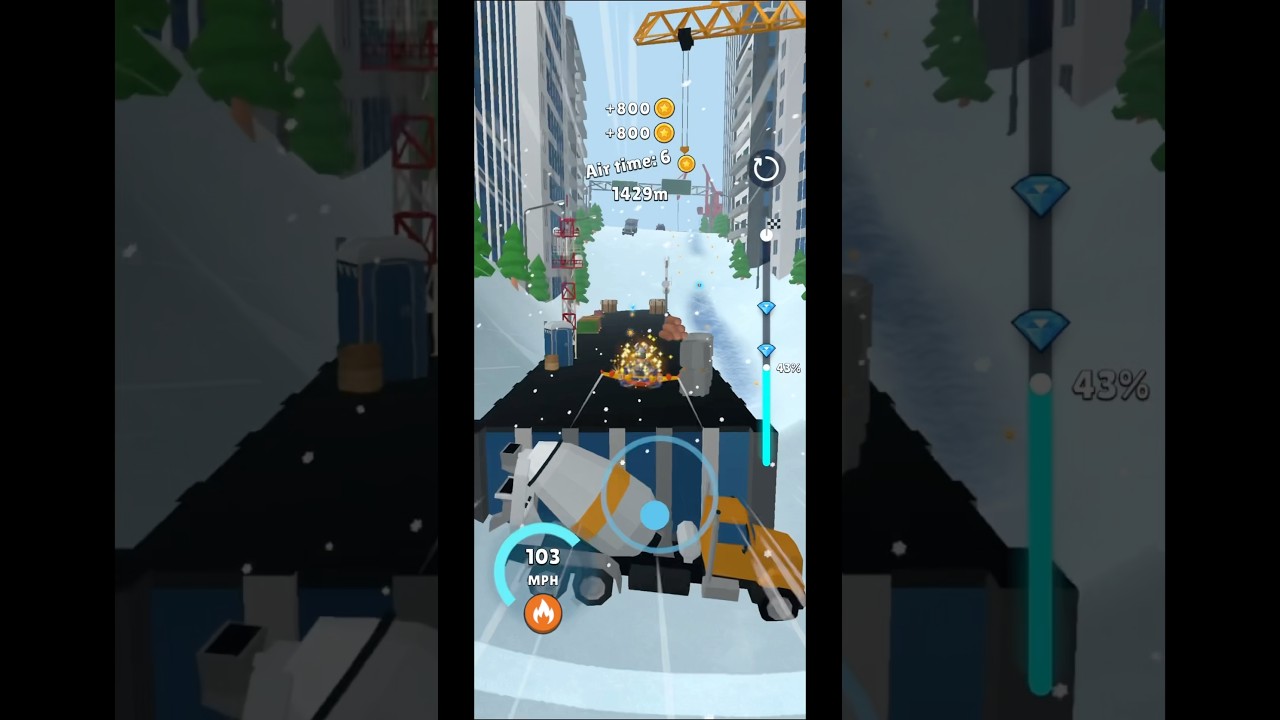
To beat Level 29 in Sled Surfers, aim behind crossing vehicles rather than trying to cut ahead of them, steer through tree corridors using short directional taps, and stay grounded through terrain dips to maintain continuous steering control.
Level 29 combines steep downhill acceleration with horizontal traffic and dense pine groves. Surviving the run requires anticipating road hazards downfield and committing to clear lanes before your sled reaches top speed.
How to Anticipate and Dodge Crossing Vehicles
Vehicles in Level 29 travel at steady speeds along intersecting roadways. Because high downhill velocity shortens your reaction window, fix your focus downfield on oncoming roads rather than watching your sled.
When a car enters your path, steer toward its rear bumper. The vehicle vacates that asphalt space as it moves across the slope, leaving an open crossing window. Cutting ahead of the front bumper frequently leads to collisions if your angle or timing slips.
| Scenario | Primary Danger | Evasion Tactic |
|---|---|---|
| Single Crossing Car | Broadside collision | Aim directly behind the rear bumper. |
| Clustered Traffic Ahead | Trapped between lanes | Move to the outer snow shoulders before the road. |
| Car Blocking Forest Entry | Impact while entering trees | Pre-align toward an alternate tree gap before crossing. |
Navigating High-Speed Tree Lines
Dense tree clusters quickly punish aggressive steering. At high speeds, holding a directional input causes wide, drifting arcs that push the sled into stationary trunks.
- Use micro-steering taps: Tap the direction controls briefly to nudge your heading rather than holding them down.
- Identify wide corridors early: Scan the upcoming timber stand and lock your trajectory onto the widest visible lane.
- Commit before entering the grove: Make any necessary course adjustments before reaching the tree line, then hold a straight line through the trunks.
- Avoid corrective swerves: Attempting a last-second evasive cut between close pine trees almost always clips branches and causes a wipeout.
Controlling Airtime and Ground Contact
Airborne sleds cannot steer, making high jumps fatal when landing zones contain traffic or trees. Terrain ridges located immediately before intersections will launch your sled if taken at full speed.
Route your line through natural terrain dips and hollows to suppress unwanted jumps. If your sled does go airborne off a lip, keep steering inputs neutral while in the air. Angled or sideways landings cause severe speed wobbles and unintended lateral skids. Landing flat on both skis preserves stability and restores immediate steering authority.
Phase-by-Phase Course Breakdown
Tackle Level 29 by dividing the descent into three distinct segments:
- Phase 1: Initial Descent. Establish a stable, centered track right out of the starting gate. Refrain from heavy lateral adjustments so your sled stabilizes as speed builds.
- Phase 2: Roadways and Forest Maze. Hazard density peaks here. Track car movements across the road strips, steer behind crossing vehicles, and line up straight paths through tree groupings.
- Phase 3: Final High-Speed Rush. Sled velocity reaches its absolute peak on the final steep pitch. Stop weaving laterally, lock into the center lane, and ride straight through the finish line.

Free Sled Surfers Codes
Current active codes and how to redeem them.

Sarah Williams
Sarah specializes in RPG and collection games, explaining team building, character growth, and beginner-friendly ways to avoid expensive early mistakes.
COMMUNITY
Player Comments
53 players commented on this guide.
This guide answered the exact question I had.
The tips are practical and easy to follow.
Can you add more details about strategy in a future update?
Nice guide. I am checking the other Sled Surfers articles next.