
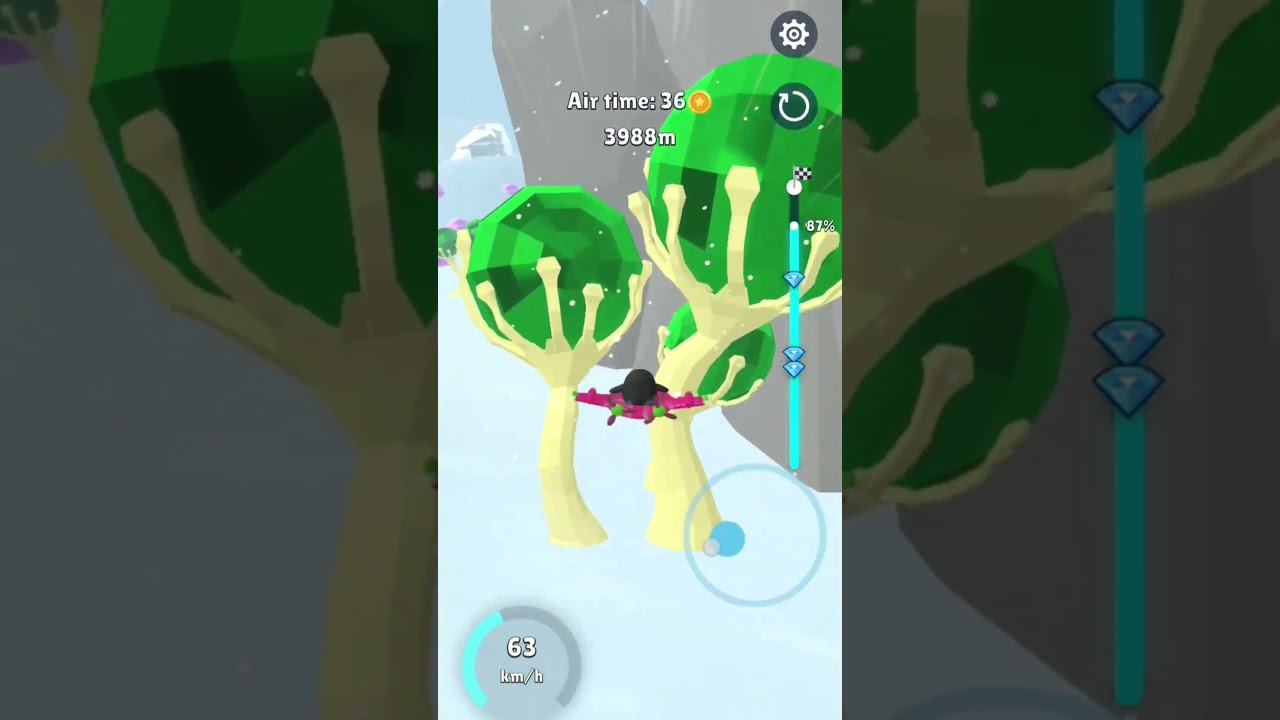
To beat Level 48 in Sled Surfers, release the slingshot at full extension on a flat horizontal axis, tilt your sled to match descending slopes, and reserve your rocket booster for uphill sections. Maintaining momentum across this level requires minimizing friction and avoiding over-rotation on short drops.
Launching with Maximum Slingshot Velocity
The opening drop of Level 48 requires maximum forward velocity to clear the initial snow dip without clipping the upcoming crest.
- Pull the slingshot band backward until the visual tension indicator reaches full extension.
- Keep the drag angle strictly horizontal before letting go. Angling the pull upward lofts the sled into dead air, while pulling downward grounds the sled early.
- Release cleanly without flicking. A straight, full-tension release sets a level trajectory and generates sufficient speed to transition directly onto the first downward slope without burning rocket fuel.
Matching Landing Angles on Steep Downslopes
Landing parallel to the terrain converts vertical fall speed into forward momentum. Level 48 features abrupt elevation drops where unaligned landings wipe out your sled or scrub your speed.
- Nose-down crash: Tilting too far forward causes the sled tip to dig into the snow, triggering a wipeout.
- Tail-heavy bounce: Landing on the rear runners causes the sled to bounce, shedding velocity.
- Flush landing: Tilting the sled forward mid-air until the runners align parallel with the decline triggers the "Nice Sliding" speed multiplier.
Do not attempt acrobatic flips over these drops. The airtime windows on Level 48 are too short to complete full rotations safely, making a stable, flat landing the priority.
Steering Through Trees and Snow Drifts
Dense pine tree clusters and raised drifts occupy the downhill route in the middle of the track. Sudden swerves create lateral snow resistance that drains momentum before the next crest.
- Scan for gaps between tree trunks while airborne before touching down in the hazard zone.
- Use minor steering taps rather than wide cuts to stay within center channels.
- Steer toward an open lane early if an obstacle blocks your line, avoiding last-second panic turns.
Managing Rocket Booster Fuel
Reserve your rocket booster exclusively for uphill counter-slopes and flat terrain. Downhill gravity already accelerates your sled; triggering thrust on a decline makes obstacles difficult to avoid, while boosting off a ramp risks overshooting landing zones.
When your sled hits an uphill incline:
- Tap the booster in short, controlled pulses rather than holding it down continuously.
- Maintain enough thrust to counter the uphill drag until the sled reaches the crest.
- Cut booster thrust once over the ridge to conserve remaining propellant for late-stage slow-downs.
Level 48 Stage Progression
| Course Segment | Primary Obstacle or Feature | Required Input | Target Result |
|---|---|---|---|
| Slingshot Gate | Deep drop and early snow dip | Pull band to maximum backward limit | Clears opening gap with a flat trajectory |
| First Drop | Steep downhill slope | Pitch nose down parallel to terrain | Activates the "Nice Sliding" speed boost |
| Mid Valley | Pine tree clusters and snow drifts | Center the sled using micro-taps | Bypasses hazards without friction loss |
| Counter-Slope | Uphill ridge causing speed loss | Fire short rocket booster pulses | Drives over the crest without stalling |
| Final Descent | Uneven snow leading to finish line | Level out pitch and coast | Crosses the finish gate at top speed |
Free Sled Surfers Codes
Current active codes and how to redeem them.

Emily Johnson
Emily writes practical mobile strategy guides with a focus on resource planning, base progression, and the early decisions that shape a long-term account.
COMMUNITY
Player Comments
98 players commented on this guide.
This helped me understand strategy much better.
Can you add more details about strategy in a future update?
Nice guide. I am checking the other Sled Surfers articles next.
Good guide for Sled Surfers players. The strategy part was useful.