
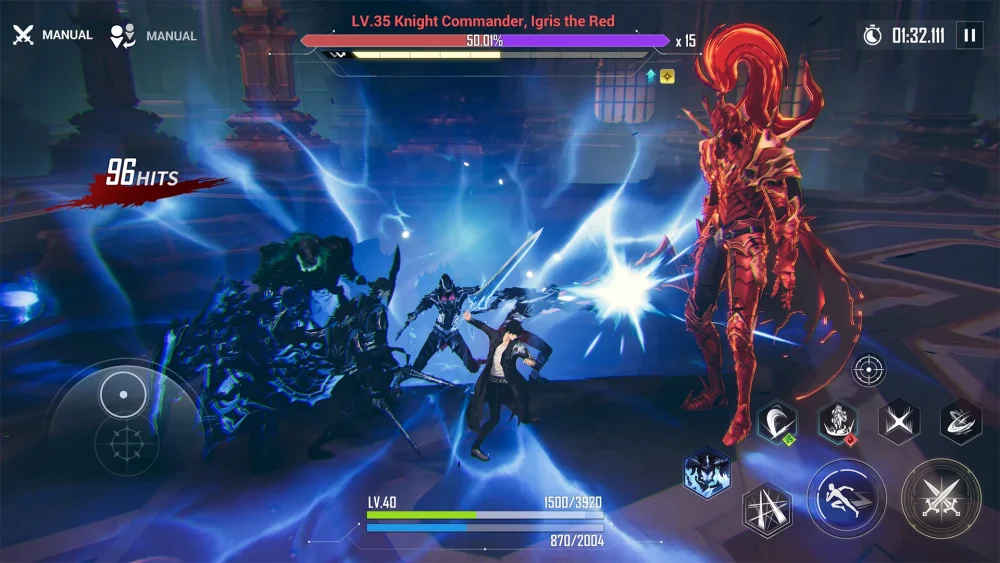
In Solo Leveling:Arise, the Shadow Monarch legacy is not just a narrative cornerstone—it is the ultimate combat framework that dictates high-level play. Whether you are navigating the story modes or pushing through the endgame Workshop of Brilliant Light, understanding how to command the shadows of Sung Jinwoo and his successor, Suho, is essential for clearing the game’s toughest content. This guide explores the mechanical nuances of the Monarch lineage, providing the strategies needed to transition between these powerhouses effectively.
Understanding the Shadow Monarch Legacy Mechanics
The Shadow Monarch legacy acts as a fundamental modifier to your character's combat profile. In Solo Leveling:Arise, this isn't just about raw damage; it is about how you manage "Shadow Energy" and the deployment of your army. The Monarch title grants specific buffs to your summoned shadows, and the key to mastering this is the concept of "Monarch’s Domain."
To leverage this, you must treat your Shadow Army as an extension of your own attack kit. When playing as Sung Jinwoo, your primary goal is to maintain high-uptime on your shadows. The most successful players prioritize artifacts that boost "Shadow Attack Speed" and "Shadow Critical Damage." By focusing on these stats, you ensure that even when you are forced into defensive play, your summons continue to apply pressure, keeping the enemy in a permanent state of stagger.
Strategic Differences Between Sung Jinwoo and Suho
While both characters share the essence of the Shadow Monarch, they function with distinct combat philosophies. Treating them as interchangeable is a common mistake; instead, view them as complementary tactical tools.
Sung Jinwoo: The Control-Heavy Anchor
Sung Jinwoo is designed for high-burst, crowd-control-oriented play. He excels at "Shadow Extraction," a mechanic that allows you to capitalize on enemy weaknesses.
- Best Strategy: Focus on gear that maximizes his ability to chain shadow-based debuffs. He should be your lead in encounters with large mobs, as his ability to lock down enemies creates the perfect opening for high-damage support hunters.
Suho: The Agile Tactician
Suho thrives on mobility and tactical repositioning. His kit is built for scenarios where staying stationary is a death sentence.
- Best Strategy: Prioritize cooldown reduction and mobility-based artifacts. Suho is most effective when he can weave in and out of combat, using his agility to mitigate boss mechanics while his shadows handle the sustained DPS.
Optimizing Shadow Army Synergy in Succession Battles
The core of the Shadow Monarch’s influence lies in "Succession," a mechanic where your damage output scales based on the number of active shadows on the field. To trigger this efficiently, your team composition must be intentional.
- Layering Debuffs: Include hunters in your squad who can apply shadow-linked debuffs. These hunters don't need to be your primary damage dealers; they simply need to be effective at keeping the enemy in a state of "vulnerability."
- Rotation Management: Execute your skills in a sequence that triggers the "Monarch's Domain" effect. This creates a window of time where your Shadow Army receives a significant damage multiplier.
- Active Swapping: Swap between Sung Jinwoo and Suho during this window to reset your skill cooldowns. This cycle allows you to maintain the "Monarch's Domain" buff indefinitely during high-difficulty boss fights.
Managing the Trade-offs of Monarch Power
The power of the Shadow Monarch comes with inherent risks. High-tier players know that relying solely on raw Shadow Monarch damage leads to "glass cannon" builds that can be wiped out in a single boss phase.
- Resource Consumption: The "Shadow Monarch" state is resource-intensive. If you run out of energy, your DPS will plummet. Always maintain a balance between your Essence Stone usage for skill resets and the need for defensive maneuvers.
- The Aggro Problem: Because Monarch-class units generate massive threat, you must integrate support hunters who can handle aggro management. If your lead unit is constantly focused by a boss, you lose the time needed to effectively command your army.
Preparing for Generational Boss Encounters
Bosses that represent the Shadow Monarch arc are designed to test your adaptability. They often feature phases where they gain resistance to shadow damage. To counter this:
- Element Flexibility: Always include at least one non-shadow element hunter in your party. When the boss enters a "Shadow Immunity" phase, this secondary unit becomes your primary damage source.
- Ultimates and Succession: Save your ultimate abilities for the final phase of these boss fights. The "Succession" mechanic provides a massive damage multiplier based on the number of shadows currently active. If you time your ultimate when your full army is present, you can shred through the final health bars of the most difficult bosses.
Common Mistakes to Avoid
- Ignoring Shadow Cooldowns: Never let your shadows sit idle. If they are off the field, you are missing out on the passive damage and debuffs required for late-game scaling.
- Over-Investing in Raw ATK: While ATK is important, artifact sets that provide "Shadow Energy Regeneration" are significantly more valuable for sustained fights.
- Neglecting Support Hunters: Players often focus so hard on their main Monarch unit that they forget to gear their support hunters. A well-geared support hunter can be the difference between a successful clear and a failed attempt due to a lack of utility.
By focusing on the tactical synergy between Sung Jinwoo and Suho, and carefully managing your Shadow Army resources, you can master the legacy of the Shadow Monarch in Solo Leveling:Arise. Remember, success in this game is defined not by the strength of a single unit, but by your ability to command your entire force as a singular, cohesive weapon.

Free Solo Leveling:Arise Codes
Current active codes and how to redeem them.

Sarah Williams
Sarah specializes in RPG and collection games, explaining team building, character growth, and beginner-friendly ways to avoid expensive early mistakes.
COMMUNITY
Player Comments
74 players commented on this guide.
This guide answered the exact question I had.
The explanation is clear, especially for beginners.
Can you add more details about strategy in a future update?
This helped me understand strategy much better.